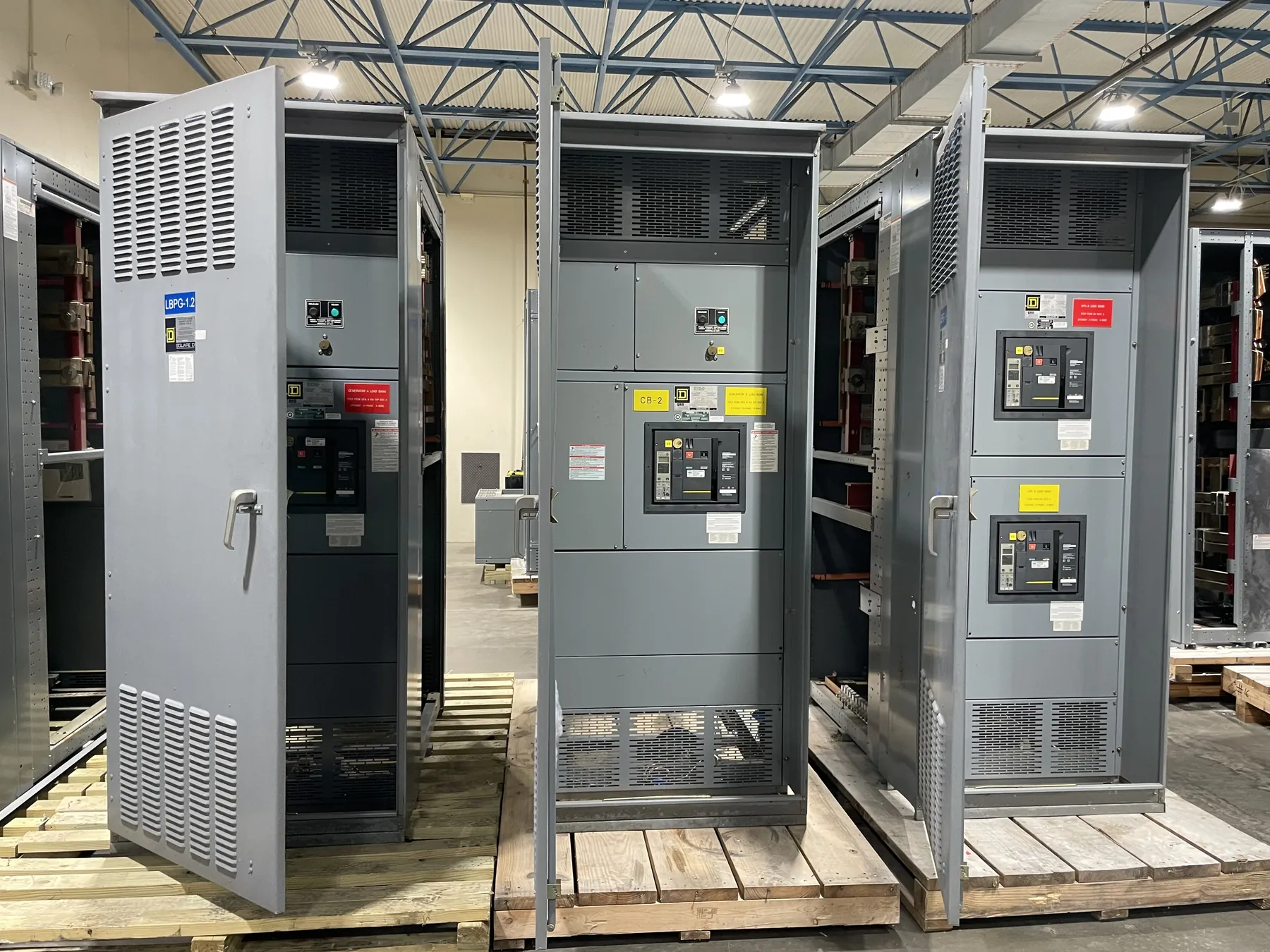
277/480 V Low-Voltage Switchboard Applications
A 277/480 V low-voltage switchboard can distribute three-phase power to facility loads that use either line-to-line or line-to-neutral connections. The rating describes the system voltage arrangement, not the switchboard’s current rating, interrupting capability, or suitability for every installation. Those characteristics must be selected for the actual service and confirmed in the equipment documentation.
In a 277/480 V system, three-phase loads commonly connect line to line, while compatible single-phase loads may connect from a phase conductor to neutral. A 277 V lighting load, for example, may use a line-to-neutral connection where the system and equipment are designed for it. The building’s electrical design, load characteristics, grounding arrangement, and applicable requirements determine which connections are appropriate. Confirm the intended system configuration before specifying or ordering a switchboard.
Service and Feeder Arrangements for 277/480 V
The service section and outgoing feeder sections should reflect how power enters the facility and how it is divided among downstream equipment. A project may require a main device with multiple feeder devices, a distribution section, or another arrangement suited to the one-line diagram and operating plan. The service connection, incoming conductor entry, metering interfaces, and space for feeder terminations are all part of the design discussion.
Feeder selection depends on the connected loads, conductor requirements, protective-device coordination, and the equipment supplied downstream. Motor feeders and lighting feeders can have different load profiles and protection needs; they should not be treated as interchangeable simply because they share a switchboard. Provide the engineer’s feeder schedule and identify any loads that have special starting, continuity, or coordination requirements. The final device and section arrangement must be checked against the project design and available product configuration.
Bus Sizing, Neutral Selection, and Load Mix
Bus sizing requires more than the nominal system voltage. The design team must establish the required current rating from the expected load and applicable design criteria, while considering the service configuration, feeder distribution, ambient and installation conditions, and specified equipment ratings. A bus rating should not be inferred from the 277/480 V designation or selected solely by adding device ratings.
Neutral requirements deserve particular attention when the switchboard serves line-to-neutral loads. The engineer should evaluate the load composition, expected neutral current, nonlinear loads, and any project-specific requirements before specifying a neutral bus. Whether a full-capacity neutral or another arrangement is suitable depends on that analysis and the manufacturer’s documented options. Identify the neutral and grounding scheme on the project documents so that the equipment interface can be reviewed rather than assumed.
Available Fault Current and Protective Coordination — Low-Voltage Switchboards for 277/480 V
The available fault current at the switchboard location is a key input to equipment selection. The project engineer should determine the expected value at the point of installation and compare it with the documented short-circuit ratings of the proposed assembly and protective devices. A device rating alone does not establish the rating of the complete switchboard, and a rating adequate at one location may not be adequate elsewhere on the system.
Protective-device choices also affect coordination with upstream and downstream equipment. The engineer should review the system study, device characteristics, and required coordination objectives for the actual installation. Where series ratings or other rating conditions are proposed, their applicability must be established for the specific combination and documented accordingly. Do not rely on nominal voltage or a general product description as evidence that fault-current or coordination requirements have been met.
UL 891 Scope and Project Documentation — Low-Voltage Switchboards for 277/480 V
UL 891 may apply to low-voltage switchboards when the particular product and configuration fall within its scope. It should not be interpreted as a blanket standard for every switchgear product or every voltage class. For a 277/480 V project, request and review the documentation applicable to the proposed switchboard, including its listing status, ratings, construction, and any conditions or limits that apply to the supplied configuration.
Listing and rating details must be confirmed for the actual equipment being quoted. Project documents should identify the required service voltage, system arrangement, service and feeder devices, bus and neutral requirements, available fault current, and any specified enclosure or installation conditions. A qualified engineer and the equipment manufacturer should review the application; neither the voltage label nor a general statement about a product determines code compliance or suitability for a particular site.
Information to Confirm Before Quotation — Low-Voltage Switchboards for 277/480 V
For a useful equipment review, provide the one-line diagram, load and feeder schedules, system grounding details, available fault-current information, and the required equipment ratings. Include conductor entry and termination constraints, metering needs, environmental conditions, and project documentation requirements. These inputs help identify whether the requested service and feeder arrangement matches an available manufactured configuration and reveal questions that need resolution before release.
Our company manufactures new custom switchboards using all-American components and builds its equipment in the USA. Short lead times are supported, and equipment ships nationwide, including to Nevada. Actual configuration, ratings, listing documentation, and schedule depend on the project requirements and must be confirmed with the equipment documentation and project team.