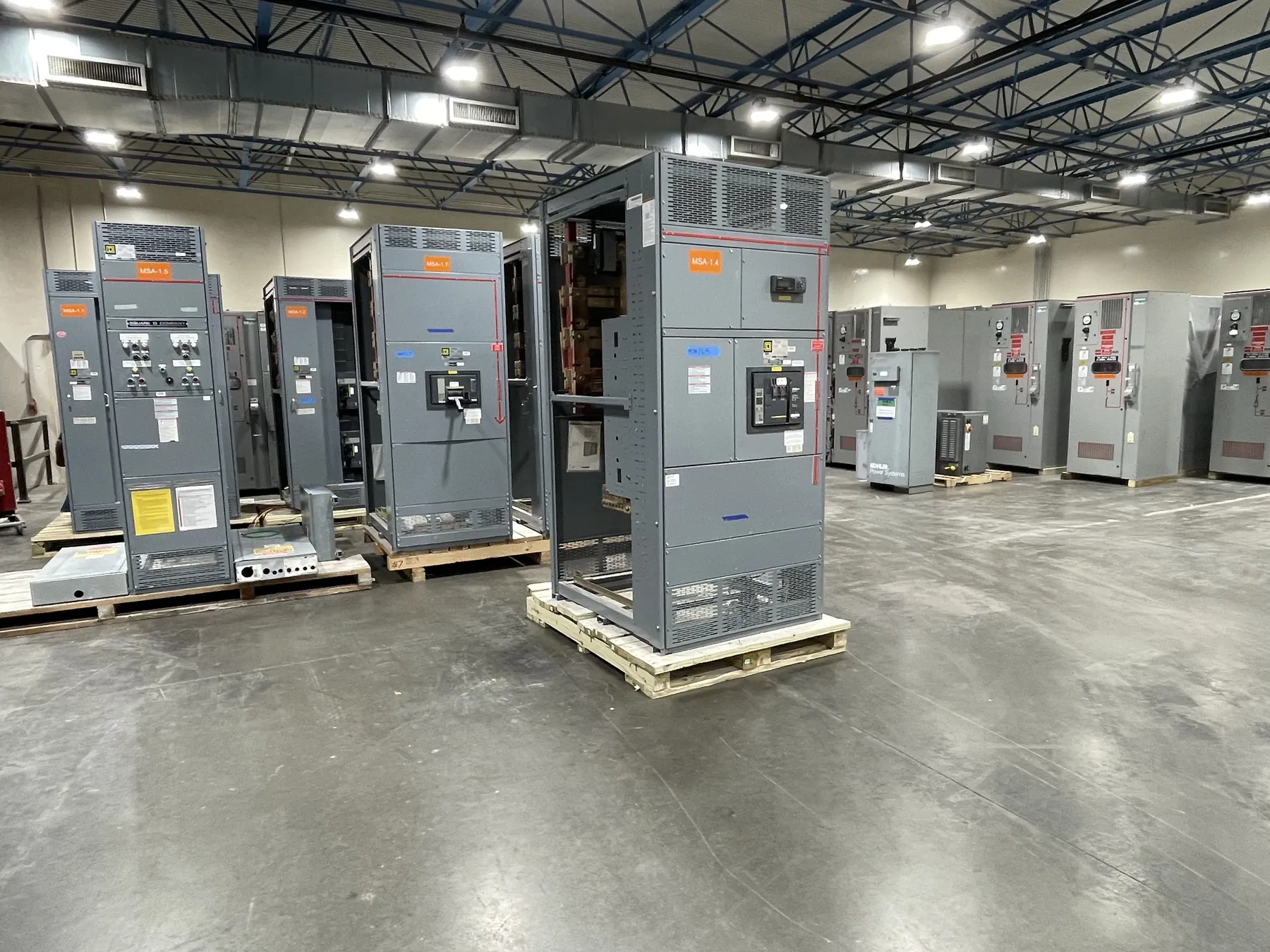
Low-Voltage Switchgear Planning for Yerington Projects
Low-voltage switchgear can be a fit for facilities in and around Yerington that need a coordinated way to control and protect larger electrical distribution systems. The right arrangement depends on the incoming source, connected loads, operating requirements and the conditions at the installation site. Nevada’s climate and site layout may also affect enclosure selection, ventilation, access and equipment placement; those factors should be confirmed for the actual facility rather than assumed from the city alone.
Start with a one-line diagram or a clear description of the existing and planned distribution. Identify the service or transformer interface, system voltage, available fault-current information, major loads and any tie or alternate-source arrangement. System voltage is not the same as a switchgear rating, and ratings, interrupting capability and applicable listings must be selected and confirmed for the project. A qualified electrical engineer should review the design against site conditions and applicable requirements.
Compare Power Circuit Breaker Arrangements — Low-Voltage Switchgear in Yerington, NV
Low-voltage power circuit breaker switchgear is commonly considered where the application calls for larger distribution equipment, coordinated protective devices or maintainability features appropriate to the facility. The project team should compare the proposed lineup and breaker arrangement with the required service configuration, operating practices and maintenance plan. Relevant questions include whether breakers are fixed or drawout, how main and feeder devices are arranged, and whether a bus-tie breaker is needed to support the intended system operation.
Each choice affects more than the panel layout. Drawout construction can provide a way to remove a breaker from its connected position for maintenance, but it requires compatible cell design, clearances and procedures established by the facility’s qualified personnel. Fixed arrangements may suit other project requirements. Neither approach is universally preferable: the electrical design, access, maintainability goals and equipment ratings must be reviewed together.
Match Bus Ratings to Load and Future Growth
Bus selection should reflect the calculated load, demand assumptions, source conditions and the project’s planned operating configuration. The bus rating is a piece of equipment information, not a substitute for system-voltage, fault-duty or protective-device analysis. A design review should also consider the main and feeder ratings, bus-tie configuration where applicable, and how protective devices coordinate across the distribution system. Coordination decisions depend on device data and the complete electrical system; they cannot be settled from a product description alone.
For a Yerington project, document anticipated load growth before finalizing the lineup. Note expected additions, the approximate timing if known, and which areas or processes may need new feeders. Record spare circuits and distinguish an installed spare breaker from a provision for a future circuit. Also identify available floor area, working clearances and any intended space for future lineup extensions. An extension may require compatible bus connections, structural support and room to install and service added sections, so “future-ready” should be defined in project terms.
Consider UL 1558 and Applicable Documentation
UL 1558 may be relevant when specifying low-voltage switchgear, but applicability depends on the equipment design and project scope. A reference to the standard is not evidence that a particular assembly is listed. Confirm the requested product type, applicable standard, ratings and listing documentation during specification and quotation review. UL 891 applies to applicable low-voltage switchboards; it should not be treated as interchangeable with UL 1558 or as a blanket standard for every switchgear product.
Project documents should identify the required system characteristics and clarify what information remains subject to engineering review. This helps keep equipment terminology, performance requirements and submittal expectations consistent among the owner, electrical engineer, contractor and manufacturer.
Provide Useful Inputs for a Switchgear Quote
A useful quotation request includes the project location, equipment scope, one-line diagram, available system data and the desired lineup arrangement. Include known voltage, main and feeder requirements, protective-device preferences, bus-tie needs, metering or control interfaces, cable entry direction and enclosure conditions. Provide available fault-current and coordination information when documented by the project engineer. If any item is preliminary or unknown, mark it clearly instead of treating an assumption as a confirmed design requirement.
Manufacturing custom equipment to order allows the assembly to be developed around the specified project requirements. Assemblies use all-American components, are built in the USA and can ship nationwide, including to Nevada. Lead time depends on the finalized scope, engineering review, component requirements and production scheduling; confirm timing against the project’s current milestones.
Plan Delivery, Placement and Future Access in Yerington
Before release, coordinate the equipment footprint and shipping configuration with the site team. Check the delivery route, unloading method, doorway and aisle dimensions, floor conditions, staging area and the path to the electrical room. Site access and placement conditions vary, so measurements and handling plans should be verified for the specific Yerington facility. Confirm that the proposed lineup leaves the required access and working space and does not obstruct other building systems.
Early coordination helps align the equipment arrangement with installation constraints while preserving room for documented future needs. Final ratings, protective coordination, listings and installation details require review by qualified project professionals using the actual site information.