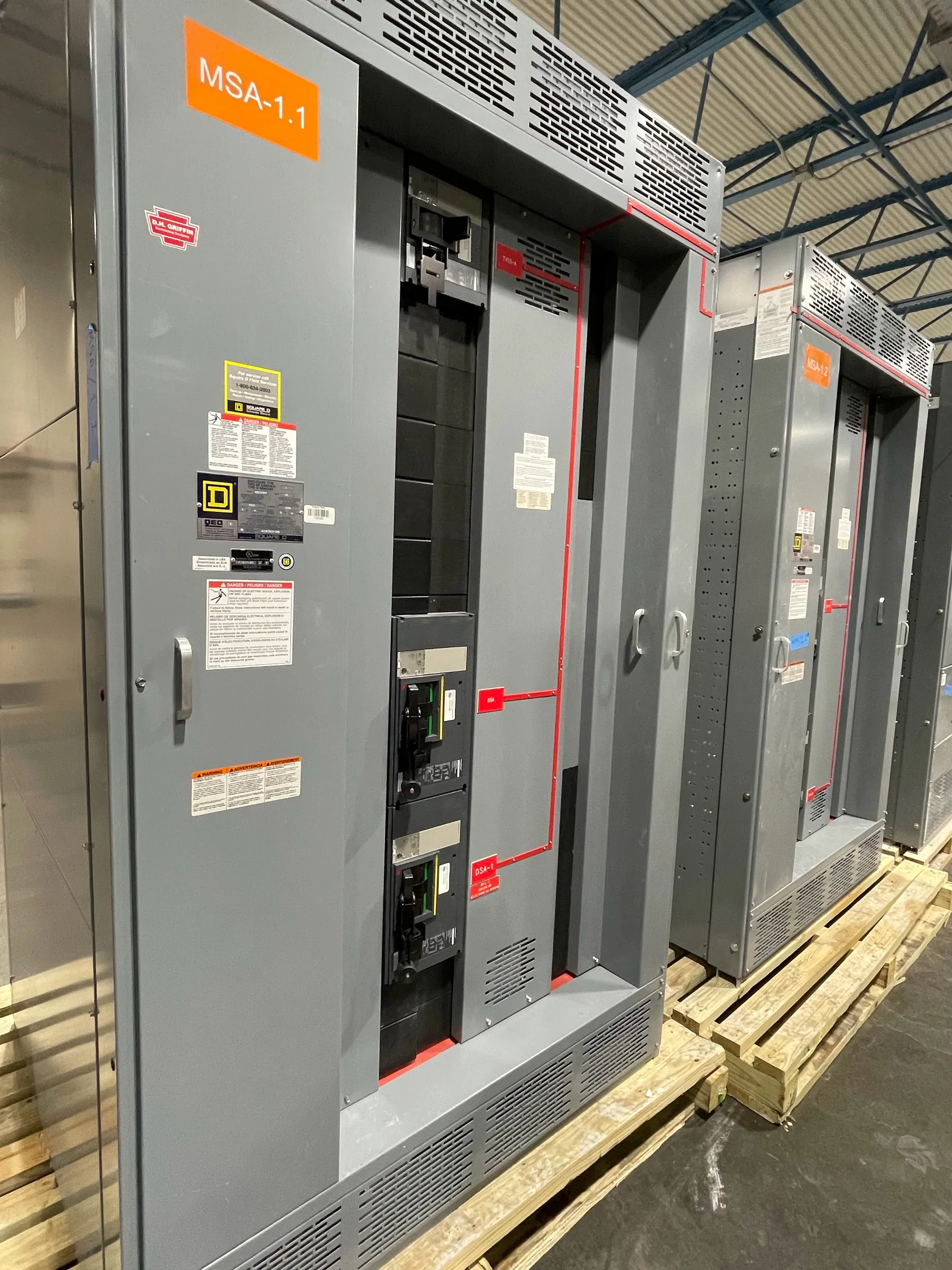
Metal-Enclosed Switchgear for Sparks, Nevada Projects
Metal-enclosed switchgear can provide a coordinated arrangement of switching and protective devices for a facility’s electrical distribution system. For a Sparks project, the appropriate configuration depends on the service arrangement, available fault current at the connection point, downstream loads, and the conditions where the equipment will be installed. A preliminary product description is not enough to establish a suitable design: qualified electrical engineers must review system information, project requirements, and applicable site conditions before ratings and equipment details are confirmed.
Our U.S. manufacturing business builds new custom power-distribution equipment using all-American components. Assemblies are built in the United States, support short lead times, and can ship nationwide, including to Sparks. Final scope, schedule, and shipping arrangements depend on the approved design and order details.
Choosing Switches, Fuses, or Circuit Breakers
A metal-enclosed lineup may use switches with fuses, circuit breakers, or a combination selected for the intended circuits and operating requirements. Switch-and-fuse arrangements can suit applications where the specified fuse provides the needed overcurrent protection and the switching function is defined for the circuit. Breaker-based arrangements may be considered where the protection and switching strategy calls for circuit breakers. Neither option is automatically preferable; the decision must reflect the system study, equipment ratings, protection scheme, and maintenance expectations.
When requesting a design, identify which circuits need switching, what protective devices are expected, and whether the equipment must accommodate particular relaying or control interfaces. Fuse type and rating, breaker characteristics, trip functions, and coordination with downstream devices must be evaluated together. A device’s rating alone does not establish that it will coordinate properly or clear a fault as intended.
Fault Duty, System Voltage, and Rating Review
Provide the available fault current at the connection point, along with the source and system information used to determine it. This value is a key input for evaluating the equipment’s required withstand and interrupting capabilities, but it is not a substitute for a complete engineering review. The system voltage and the equipment’s ratings describe different aspects of the installation; a voltage designation by itself does not prove that an assembly is adequate for the site’s fault conditions.
Share the one-line diagram, service details, grounding arrangement, and relevant short-circuit or coordination study when available. If a utility or project engineer has issued connection requirements, include the applicable documents. Equipment ratings, configuration, and any product listing must be confirmed for the specific assembly and application. UL 891 applies to applicable low-voltage switchboards; it should not be treated as a general standard covering every metal-enclosed switchgear assembly.
Barriers, Compartments, Grounding, and Access
Internal barriers and compartment arrangements affect how devices and conductors are separated and how the lineup interfaces with the facility. The desired degree of separation should be stated in the project specification rather than assumed from the term “metal-enclosed.” Provide requirements for cable entry, terminations, auxiliary wiring, metering, controls, and any connection to other equipment. These details can influence lineup layout, dimensions, and installation planning.
Grounding provisions must suit the system grounding method and the project’s bonding design. Identify the grounding conductors, ground bus requirements, and interfaces with the facility grounding system for engineering review. Also consider how authorized personnel will approach the lineup for inspection and planned maintenance, including door and panel clearances, working space, cable access, and nearby obstructions. Site review is essential; no generic layout can establish suitable access for a particular room or outdoor location.
Metal-Enclosed and Metal-Clad Are Not Interchangeable
Metal-enclosed describes equipment housed within a metal enclosure, but it does not, on its own, define the internal construction or separation of components. Metal-clad construction is a more specific design category with particular construction features. The two terms should not be used interchangeably in a specification or quotation request. If a project calls for metal-clad equipment, state that requirement explicitly and confirm that the proposed design, voltage class, ratings, and applicable standards match the project documents.
Likewise, enclosure choice and environmental provisions should reflect the actual installation. For a Sparks site, report whether the equipment will be indoors or outdoors, the available footprint, access route, exposure to weather or dust, and any known room or site constraints. These conditions inform enclosure and layout discussions but do not establish a particular enclosure rating without engineering confirmation.
Information to Prepare for a Sparks Quotation
A complete request helps align the proposed lineup with the intended installation. Include the one-line diagram, system voltage, available fault current at the connection point, grounding method, circuit schedule, load information, required switch and fuse or breaker arrangements, and any specified barriers or control interfaces. Add installation location, dimensions or space limits, cable-entry preferences, project specifications, and the desired shipment destination in Sparks.
Our team can use these inputs to develop a custom equipment scope for review. Protective-device coordination with downstream loads, ratings, interfaces, and any listing requirements must be resolved with the project’s qualified engineers before design approval. Shipment planning is then based on the confirmed equipment scope and site logistics, not on an assumed local facility or unverified delivery date.