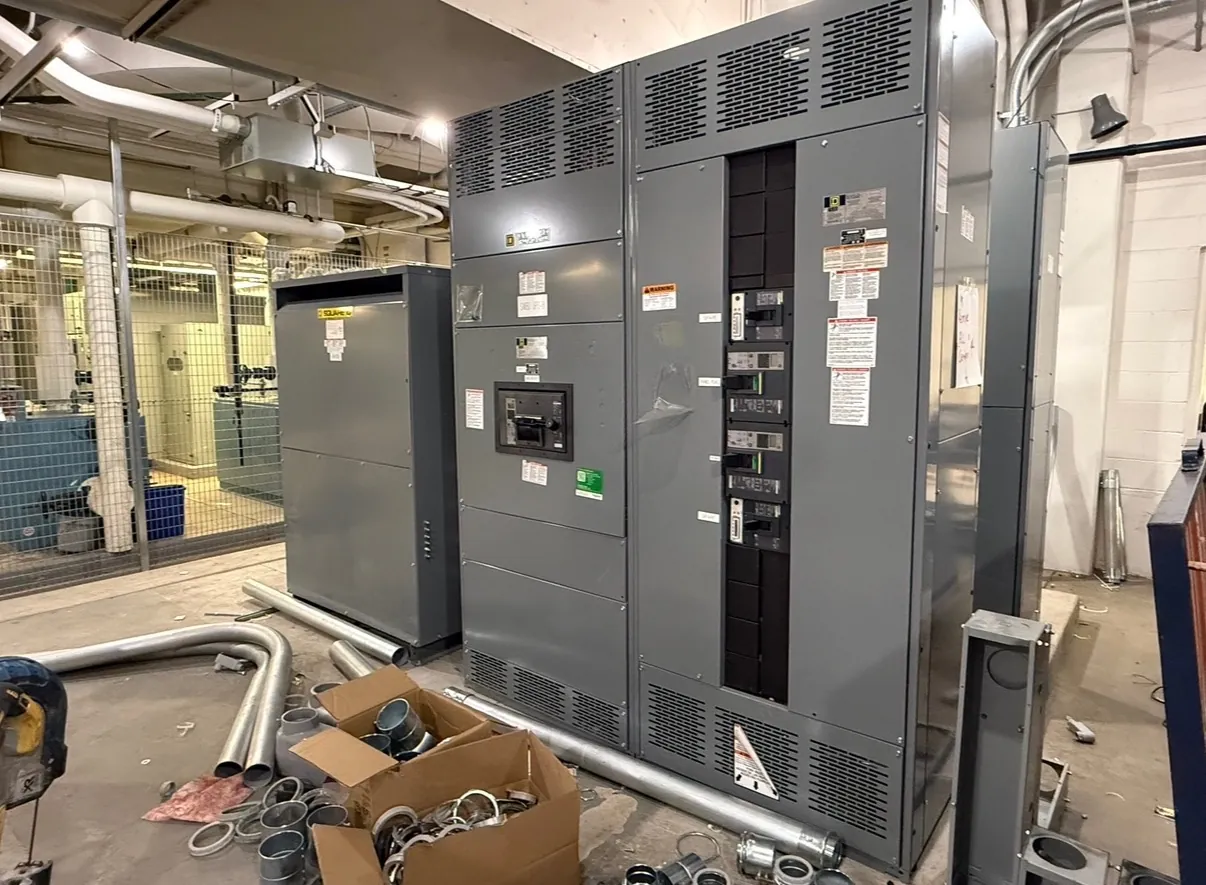
Low-Voltage Switchboards for Sparks Facilities
Low-voltage switchboards distribute power from a building’s service entrance or another supply point to feeders serving panels, mechanical equipment, process loads, and other parts of a facility. For a Sparks project, the right configuration depends on the electrical service, the loads to be served, the available installation space, and the requirements of the serving utility and project engineer. A switchboard should be developed from those project conditions—not selected by nominal voltage alone.
We manufacture new custom power-distribution equipment in the United States using all-American components and ship nationwide, including to Nevada. Early coordination helps align the proposed assembly with the project’s electrical design and site constraints. Final equipment configuration, ratings, applicable listings, and documentation require project-specific engineering review.
Service and Feeder Arrangements for Sparks Projects
A service switchboard may include a main disconnecting means and distribution sections for outgoing feeders. Other designs use a main-lug arrangement or connect to a separate upstream overcurrent device. Which approach fits depends on the service design, one-line diagram, utility requirements, and how the installation is intended to be protected and maintained. The project team should identify the service entrance point, source configuration, and required main-device arrangement before requesting a firm equipment layout.
Feeder provisions also need to reflect actual destinations. A schedule showing each feeder’s load, conductor information, protective device, and connection requirements gives the manufacturer and engineer a clearer basis for section layout. Spare space or future feeder provisions can be considered, but they should be identified explicitly: physical space alone does not establish that a future circuit has an appropriate device, bus capacity, or approved rating.
Bus Sizing, Ratings, and Available Fault Current — Low-Voltage Switchboards in Sparks, NV
Bus selection is an engineering decision tied to the design current, system configuration, temperature and enclosure considerations, and the equipment’s applicable ratings. The bus rating is not the same thing as system voltage, nor does a larger nominal bus rating by itself establish that the assembly is suitable for a particular installation. Required ratings and design details should be checked against the project documents and applicable standards by qualified professionals.
For a Sparks installation, obtain the available fault current at the proposed connection point and provide it with the equipment inquiry. The value and source conditions inform review of the switchboard’s short-circuit rating and the protective-device arrangement. Available fault current can vary with the supply and system configuration; it should not be assumed from a general service description. If the value is not yet established, the project electrical engineer should determine it or coordinate with the appropriate supply-side parties before the equipment rating is finalized.
Protective-Device Coordination with Downstream Loads
Overcurrent devices in the switchboard need to be considered in relation to upstream protection and downstream equipment. Coordination review may involve device types, trip settings, load characteristics, conductor protection, and the project’s selectivity objectives. Motors, transformers, HVAC systems, and other loads can influence device selection and coordination requirements. A device’s frame or ampere rating alone does not demonstrate that the overall protective scheme is suitable.
Provide the engineer’s one-line diagram, load and feeder schedules, and any available coordination or short-circuit study information for review. Final settings and device selections belong to the project’s qualified electrical design team, with site and system conditions considered. The equipment proposal should reflect documented design decisions rather than substitute for them.
When UL 891 May Apply — Low-Voltage Switchboards in Sparks, NV
UL 891 applies to applicable low-voltage switchboards; it should not be treated as a blanket standard for every type of switchgear or power-distribution product. Whether it applies to a proposed assembly depends on the product design and project requirements. A reference to UL 891 in a specification does not, by itself, establish that a particular configuration is listed.
For procurement, identify the required listing or other documentation in the specification and request project-specific confirmation for the proposed switchboard. Confirm the exact assembly scope, ratings, and documentation with the manufacturer and responsible project professionals before approval. Do not assume that documentation for one configuration automatically applies to a different arrangement or rating.
Information to Prepare for a Switchboard Quote — Low-Voltage Switchboards in Sparks, NV
A complete inquiry helps clarify both the design and the physical fit. Useful inputs include the one-line diagram, system voltage and phase information, service and main-device requirements, available fault current at the connection point, feeder schedule, load details, specified ratings, and any project-required listing documentation. Also provide the preferred enclosure and access arrangement, conductor entry direction, and available electrical-room dimensions or layout drawings.
Sparks facilities may have site-specific constraints such as existing equipment interfaces, limited room for installation, or delivery access requirements. Share known restrictions and project milestones early so they can be considered during configuration and shipment planning. Manufacturing lead time and delivery timing depend on the finalized scope and current project conditions; no schedule should be assumed until it is confirmed for the order.