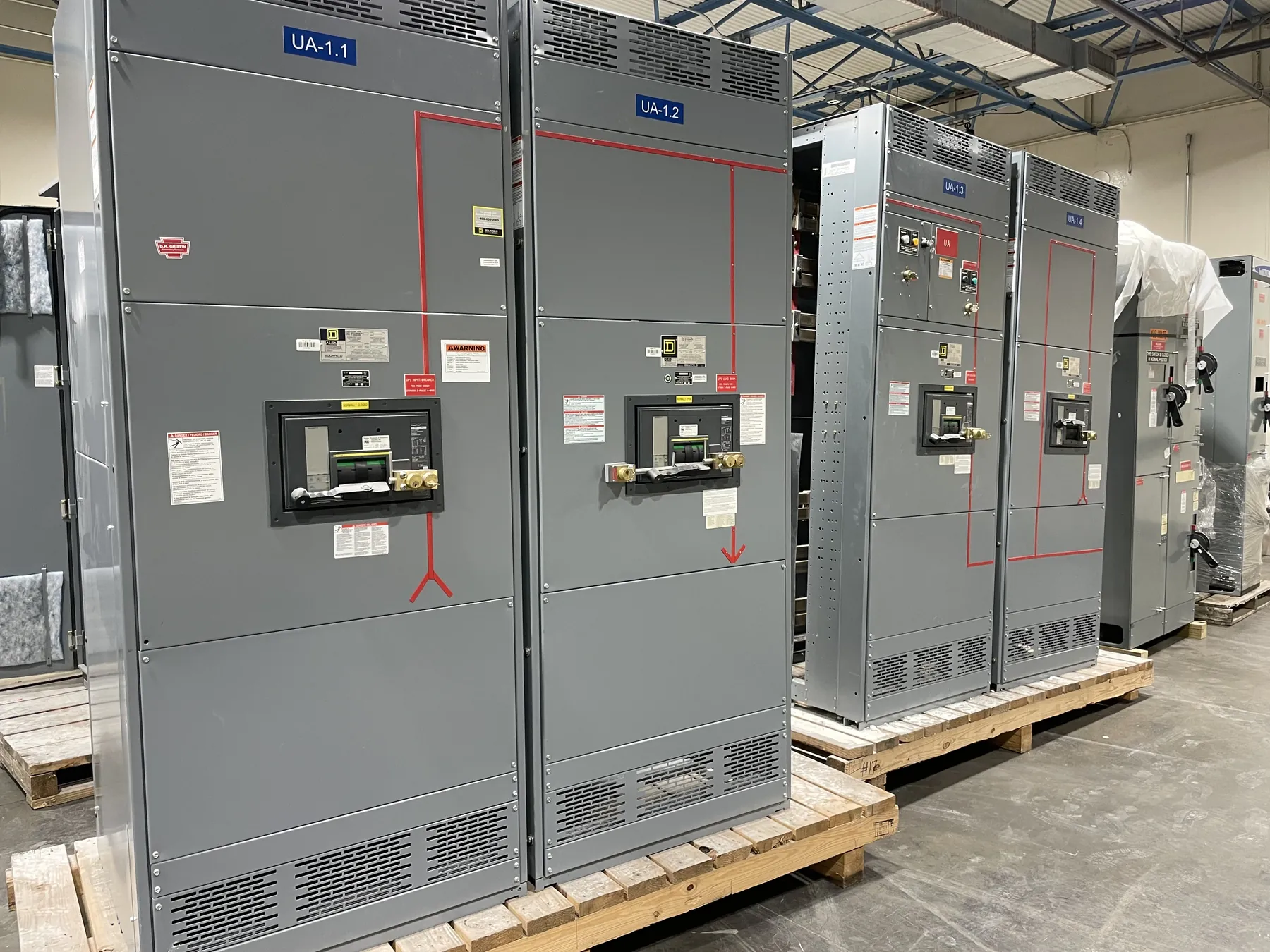
Low-Voltage Switchboards for Reno, Nevada Projects
Reno-area facilities may need a low-voltage switchboard for a new building, a service change, added distribution, or replacement equipment. The right configuration depends on the electrical design and the conditions where the board will be installed—not on the city name alone. We manufacture new custom switchboards in the United States using all-American components and ship nationwide, including to Nevada. Project review establishes the equipment scope, ratings, interfaces, and documentation needed for the specific installation.
Early coordination is especially useful when the switchboard must fit an existing electrical room or connect with equipment supplied by others. Available drawings, utility information, site measurements, and the project engineer’s specifications help define those interfaces. Shipping arrangements and access to the installation location should also be considered, since receiving, rigging, and placement are separate planning steps from manufacturing and shipment.
Service and Feeder Arrangements — Low-Voltage Switchboards in Reno, NV
A switchboard’s service section and distribution sections are arranged around the source, downstream loads, and project requirements. Depending on the design, the equipment may include a service entrance section, feeder breakers or switches, metering provisions, and spaces for future distribution. The one-line diagram should show how the board connects to the source and to downstream panels, motor-control equipment, transformers, or other loads.
For an existing facility, the intended connection point and the condition of adjacent equipment can affect the arrangement. Confirm whether the project calls for a main device, multiple mains, specific feeder types, or provisions for future circuits. These choices influence section layout, bus arrangement, dimensions, and coordination with cable entry and exit paths. Final selection belongs with the responsible electrical engineer and must be checked against applicable codes and the complete project design.
Bus Sizing, Ratings, and Available Fault Current — Low-Voltage Switchboards in Reno, NV
Bus sizing is not simply a matter of matching a nominal ampere value. The design must account for the specified continuous current, connected loads, expected operating conditions, and the equipment arrangement. The engineer should provide the required ratings and design criteria, including any provisions for anticipated expansion. A switchboard rating does not by itself establish the system voltage or prove that the equipment is suitable for every source or load.
Available fault current at the installation point is a key quotation and design input. It must be established from the project’s electrical study or other information provided by the qualified design team. The switchboard’s interrupting and withstand ratings, protective devices, and coordination with upstream and downstream equipment must be evaluated for that system. Do not infer fault-current suitability from a bus rating or from the equipment’s general description; the specific configuration and documentation require review.
UL 891 and Project-Specific Documentation — Low-Voltage Switchboards in Reno, NV
UL 891 applies to applicable low-voltage switchboards; it should not be treated as a blanket standard for every type of switchgear or electrical distribution product. Whether it applies to a particular Reno project depends on the equipment scope and project requirements. Listing status is specific to the equipment and configuration, so it must be confirmed rather than assumed.
For quotation and submittal review, identify the requested standard and provide the project specification, one-line diagram, and any required listing language. The final equipment documentation should correspond to the actual proposed assembly and its ratings. Requirements from the authority having jurisdiction, utility, engineer, or owner may also affect the requested documentation; those requirements need project-specific confirmation.
Reno Installation Conditions: Altitude and Temperature
Reno’s location makes it important to check the actual installation altitude and ambient-temperature design criteria against the equipment ratings. Conditions at the site can differ from general assumptions for the region, and indoor or outdoor placement, room ventilation, heat from nearby equipment, and enclosure conditions may also matter. Provide the installation location and design criteria early so the engineering review can determine whether they affect the specified configuration or ratings.
Do not assume that a standard rating automatically covers every site condition. The responsible engineer should review the installation environment and establish any required adjustments or special provisions. Where the switchboard connects to existing equipment, verify that environmental assumptions and electrical ratings are compatible across the interface.
Information for a Switchboard Quote
A useful request includes the one-line diagram, equipment specification, system voltage, required ampere and fault-current ratings, service and feeder details, and the requested listing documentation. Include available dimensions, cable entry preferences, site conditions, altitude and ambient-temperature criteria, and relevant details about connected equipment. Note any known schedule constraints without treating a shipment estimate as a confirmed delivery date; timing depends on the finalized scope and project review.
We build new custom low-voltage switchboards in the United States and support short lead times, with shipment available nationwide. The project team should confirm the final ratings, listing documentation, interfaces, and installation requirements before release. This review helps ensure the quoted equipment is based on the actual Reno project rather than assumptions about a typical facility.