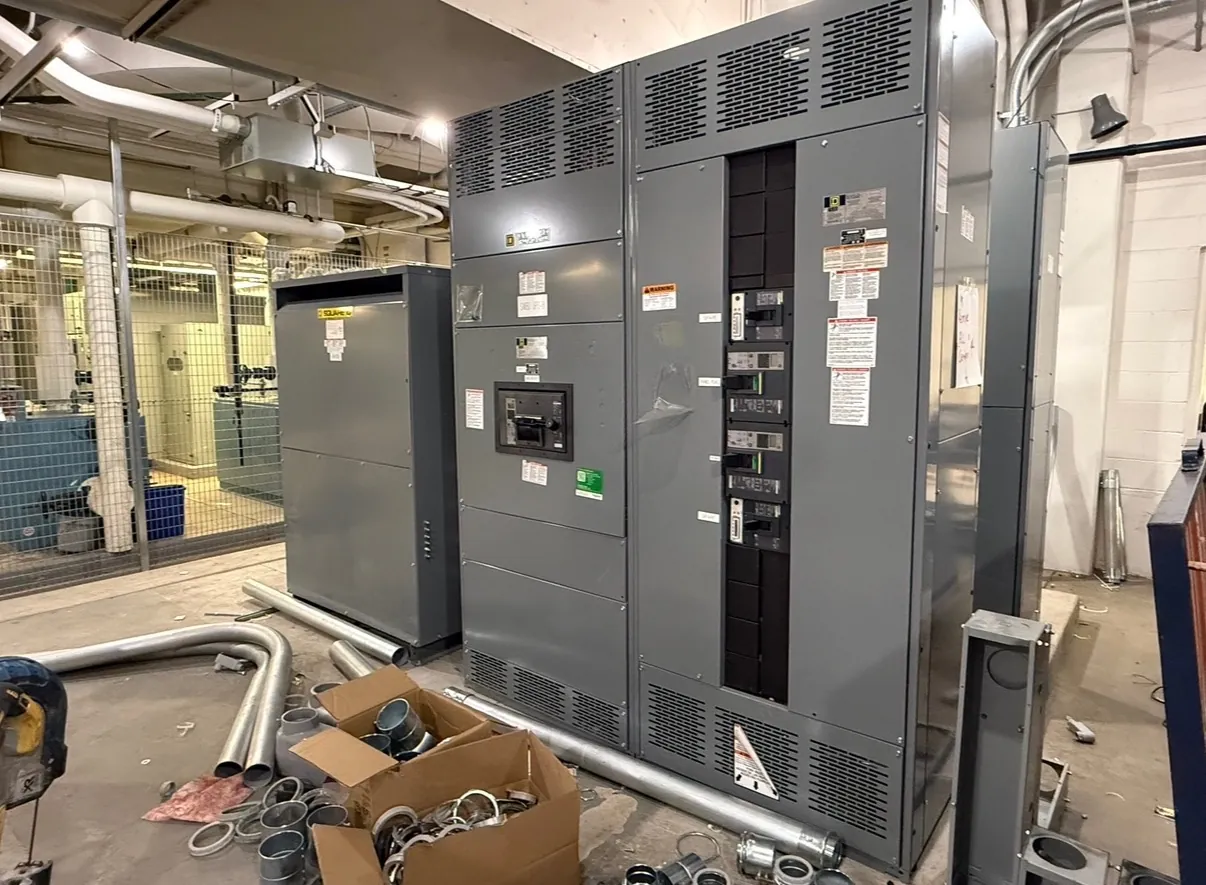
Hospital Switchgear for Reno, NV Projects
Hospital electrical distribution must support patient care, building operations and planned maintenance while meeting the project’s applicable codes and design criteria. For a Reno facility, switchgear selection begins with the electrical engineer’s one-line diagram and the defined loads—not with a generic equipment package. The design team must establish system voltage, available fault current, continuous and short-circuit ratings, protective-device requirements, incoming sources, feeder arrangement and the physical conditions at the installation location.
Our U.S.-manufactured custom switchgear and power-distribution assemblies are built with all-American components and can be shipped to Nevada. Project-specific configuration, ratings and any applicable listing must be confirmed against the drawings, specifications and equipment scope. For low-voltage switchboards, UL 891 may apply when specified and appropriate; it is not a blanket standard for every switchgear assembly or voltage class.
Coordinate Essential Electrical System Branches
NFPA 99 addresses health care facility requirements, including essential electrical system arrangements where applicable. The engineer must determine the required system configuration and classify loads for the project, then coordinate the equipment and feeders serving those loads. Commonly discussed branches include life safety, critical and equipment branches, but their applicability, boundaries and loads depend on the facility, adopted code requirements and design documents.
That classification affects more than panel names. It informs which loads are supplied from each source, how transfer equipment is arranged, how circuits are separated, and how the system responds to an outage or planned work. The switchgear package should reflect the approved one-line diagram, feeder schedules and coordination requirements. Changes to a branch or load after design can affect source capacity, protective-device coordination and the permitted arrangement; those decisions belong with the project’s qualified electrical engineer and authority having jurisdiction.
Plan Source Transfer and Generator Interfaces
Essential-system transfer design connects normal and alternate sources through the specified transfer equipment. The engineer must define which loads transfer, the intended transfer sequence, source conditions, interlocks and any required separation. Generator controls, transfer switches, switchgear, protective relays and downstream distribution must be coordinated as a system. Equipment boundaries should be explicit: a switchgear quotation should state whether transfer equipment, controls, metering, generator interface provisions or only distribution sections are included.
NFPA 110 sets requirements for emergency and standby power systems within its scope, while NFPA 99 addresses health care facilities. The applicable editions, classifications and project-specific provisions must be established by the design team and code authorities. A switchgear manufacturer can build to documented requirements and coordinate defined interfaces, but cannot determine a hospital’s code classification or substitute for engineering review.
Check Reno Site Conditions Against Equipment Ratings
Reno project conditions should be evaluated at the actual equipment installation location. Confirm installation altitude and the ambient-temperature design criteria, including whether equipment will be indoors, in a conditioned electrical room or in a space subject to wider temperature variation. Compare those conditions with the proposed equipment ratings and manufacturer requirements. If conditions require a design adjustment, the engineer and manufacturer should resolve it before the equipment configuration is finalized.
Room layout also matters. Drawings should show equipment dimensions, cable entry and termination space, working clearances, access routes and any constraints on moving sections into the room. Seismic, environmental, enclosure and ventilation requirements should be identified where applicable. Nevada shipment planning can be coordinated around the project schedule and receiving arrangements, but delivery timing depends on the finalized scope and production plan; no local factory or Reno office is implied.
Define Ratings, Protection and Quotation Inputs
Ratings describe equipment capabilities and must not be confused with the system’s nominal voltage. Provide the specified system voltage, bus and feeder requirements, fault-duty information, main and branch device details, enclosure requirements, metering and control needs, and the latest approved one-line and schedules. Include any required performance, labeling or listing criteria rather than assuming they apply. Ratings, listings and project details require confirmation before release for manufacture.
Protection and coordination are especially consequential where essential and nonessential loads share facility infrastructure. The project engineer should establish protective-device settings and coordination objectives, review selective coordination requirements when applicable, and resolve interfaces with upstream utility equipment and downstream transfer or distribution devices. Manufacturer drawings can then be reviewed against those decisions before production.
Assign Commissioning and Handover Responsibilities — Hospital Switchgear in Reno, NV
Commissioning verifies that installed equipment and system interfaces perform as intended under the approved project documents. Responsibilities should be assigned among the owner, engineer, contractor, generator and transfer-equipment providers, switchgear manufacturer and commissioning authority. Plans may address submittal review, installation checks, control and communication interfaces, protective-device documentation, functional demonstrations and records. NFPA 99 and NFPA 110 requirements relevant to the project should be interpreted and incorporated by the responsible design and commissioning professionals.
For a quotation, share current drawings, specifications, site environmental criteria, schedule expectations, shipping destination and identified commissioning scope. Early coordination helps expose mismatched interfaces before manufacture and supports a package suited to the hospital’s documented design—not an assumed standard arrangement.