Casino Switchgear Planning for Reno Facilities
Casino electrical distribution must support a mix of guest-facing spaces, back-of-house operations, building services and loads designated for emergency or life-safety power. For Reno projects, the first design task is to identify how those loads are grouped and served—not to select equipment from a room name or a generic casino template. A custom switchboard or switchgear lineup can be configured around the project’s distribution plan, but its arrangement, ratings and interfaces depend on engineering review of the actual system and site.
Reno facilities may combine gaming areas, food service, hotel functions, event spaces and support systems, each with different operating priorities. The electrical engineer and facility team should define which loads must remain available, which are supplied by emergency power, and which can be interrupted during planned work. That load classification informs feeder organization, protective-device selection, spaces for future circuits and the boundaries between normal and emergency distribution.
Separate Critical, Life-Safety and General Loads — Casino Switchgear in Reno, NV
“Critical” and “life-safety” are not interchangeable labels. Life-safety loads are determined by the applicable codes, adopted requirements and project design; critical operational loads are established by the owner’s continuity needs. General loads may include equipment that can tolerate a planned interruption, while other operational systems may require a documented continuity strategy. Qualified engineers must determine the required classifications and distribution architecture for each facility.
Where the design calls for separation, the equipment layout and feeder schedule should make the intended divisions clear. The team should confirm which loads originate on normal power, which connect to emergency or other alternate sources, and how transfer equipment and downstream distribution fit into the design. Switchgear scope should identify interfaces with generators, transfer switches, transformers, metering, protective devices and remote monitoring, as applicable. The equipment manufacturer can build to the approved design; it should not decide the facility’s code obligations or electrical topology.
Coordinate Emergency Power and Transfer Interfaces — Casino Switchgear in Reno, NV
Emergency-power arrangements depend on the project’s source equipment, transfer scheme, load priorities and sequence of operation. During design coordination, establish which distribution sections receive each source, what transfer equipment is furnished by others, and where control, status or communication connections are required. Confirm responsibility for interconnection details rather than assuming that a switchgear lineup includes every generator or transfer-system component.
Available fault current, system grounding, protective-device coordination and selective coordination requirements can affect equipment ratings and configuration. These items require project-specific calculations and review by qualified electrical professionals. A voltage designation alone does not establish the needed equipment rating. System voltage, continuous-current rating, short-circuit rating, enclosure, environmental conditions and any required listing are separate considerations that must be verified against the approved design and applicable product scope.
Plan Phased Maintenance Around Casino Operations — Casino Switchgear in Reno, NV
Casinos often need maintenance strategies that account for changing occupancy and operational schedules. The owner and design team should identify which distribution sections can be isolated for planned work, what loads would be affected, and whether temporary power or alternate feeds are part of the project plan. Equipment arrangement can support clearer circuit identification and defined distribution boundaries, but it cannot by itself guarantee uninterrupted service or eliminate the need for a qualified maintenance plan.
For phased construction or renovation, provide the intended installation sequence and identify existing systems that must remain in service. Confirm available space, access routes, feeder transition points and the party responsible for connections to existing equipment. Temporary conditions should be engineered and reviewed separately; assumptions about spare capacity or tie points should be checked against current drawings and field conditions. These details help align manufacturing documents and equipment sections with the site’s actual sequence of work.
Verify Reno Site Conditions and Equipment Ratings
Reno’s location makes site-specific environmental review important. Confirm the actual installation altitude and ambient-temperature design criteria, then compare them with the ratings and conditions stated for the proposed equipment. Do not assume that a standard rating automatically accommodates a particular room, enclosure or installation condition. The engineer and manufacturer should review applicable adjustments, enclosure details and project specifications before finalizing the design.
Also document whether equipment will be installed indoors or outdoors, the available room dimensions, cable entry preferences, access clearances defined by the project, and any environmental or seismic criteria specified by the design team. These inputs affect enclosure selection, lineup arrangement and connection planning. Local permitting, adopted codes and utility interfaces are project-specific and should be verified by the responsible professionals; shipping equipment to Reno does not establish local approval.
Prepare a Clear Casino Switchgear Quotation Package
For a useful quotation, provide the one-line diagram, equipment schedule, system voltage, required ratings, source and transfer arrangement, feeder quantities, protective-device requirements, enclosure conditions and any applicable specifications. Include the load classifications, emergency-power interfaces, monitoring points and phased installation constraints that affect the lineup. Identify whether UL 891 applies to the proposed low-voltage switchboard; it should not be treated as a blanket standard for all switchgear or other equipment types. Any listing requirement and its scope must be confirmed for the specific product.
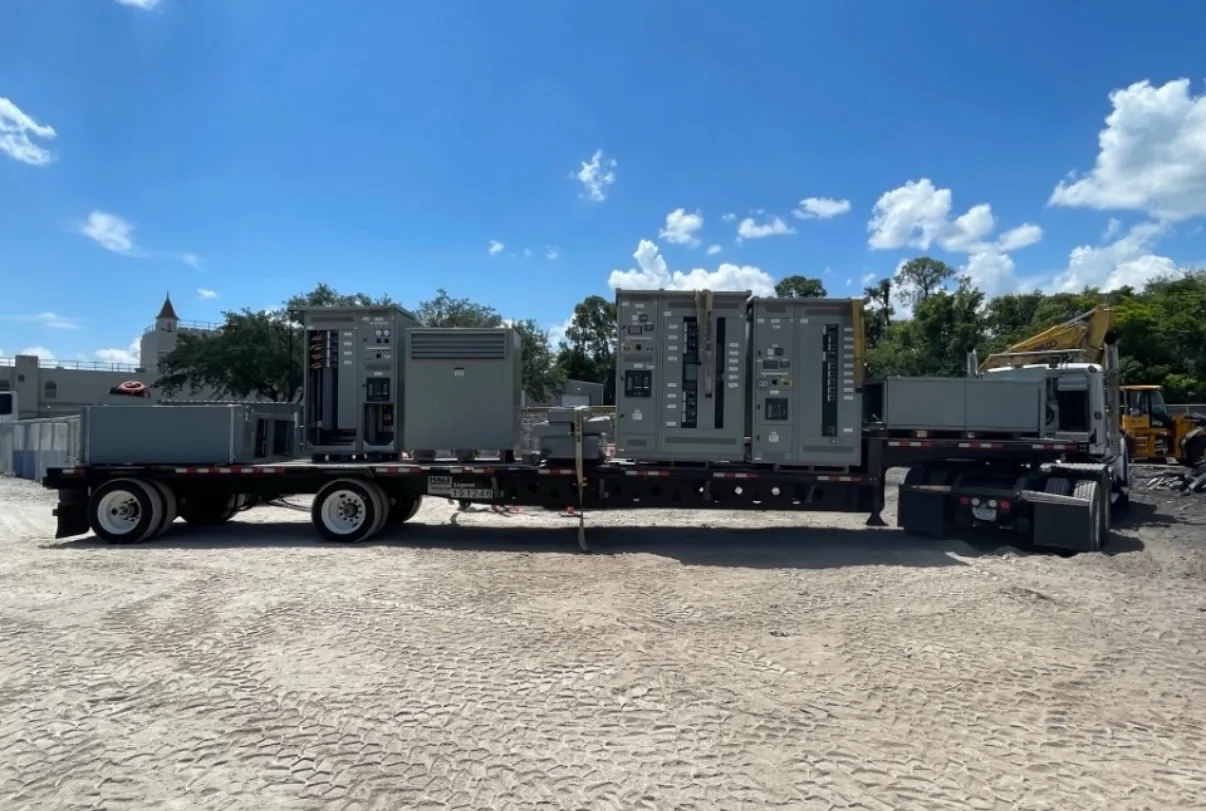
Our company manufactures new custom power-distribution equipment in the United States using all-American components and ships nationwide, including to Nevada. Short lead times are supported, but schedule depends on the approved design, components, documentation and project requirements; no exact delivery date should be assumed without confirmation. Early engineering coordination helps resolve interfaces and site criteria before equipment details are finalized.