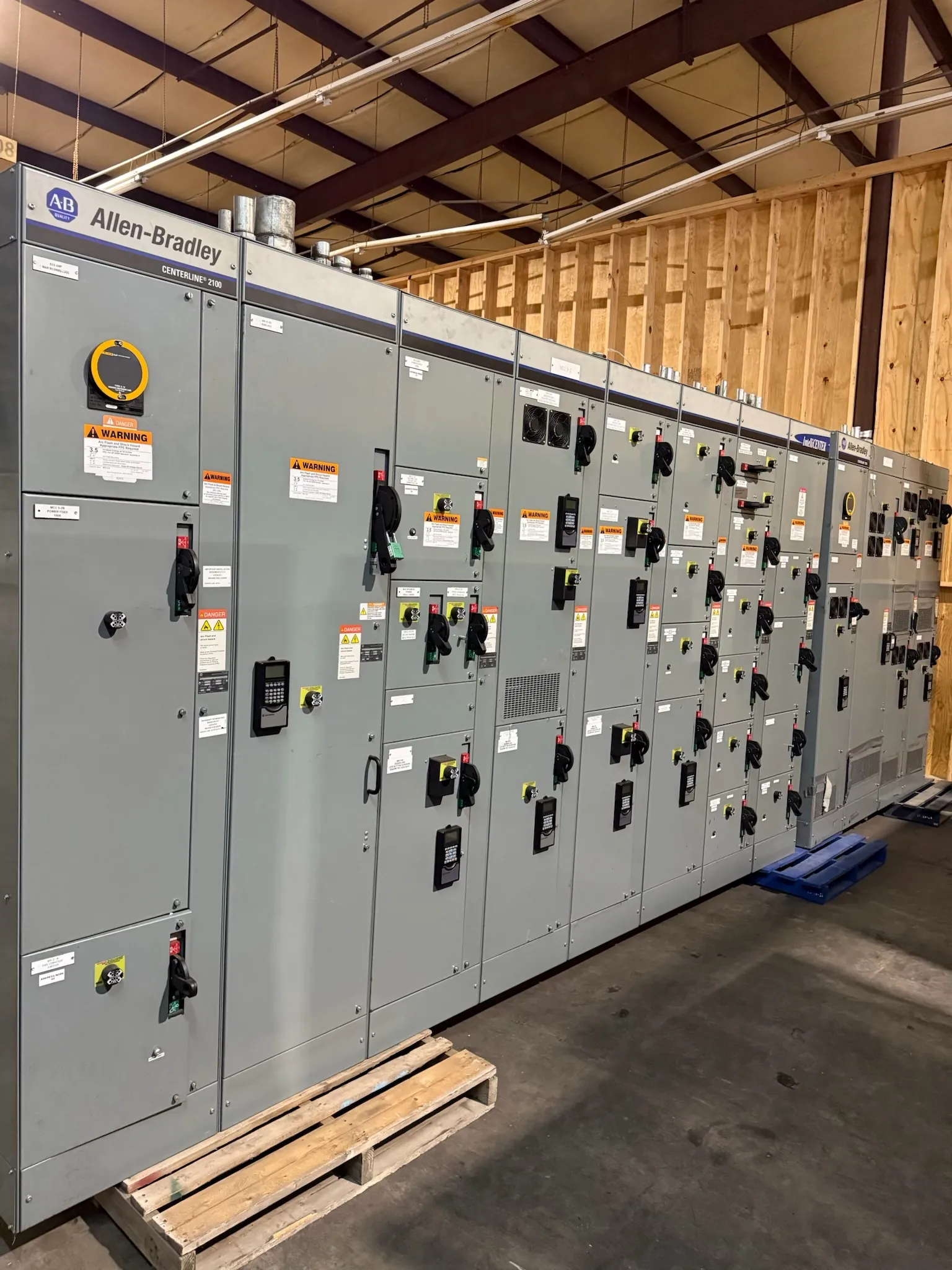
High-Voltage Switchgear for Reno Substation Projects
High-voltage switchgear is part of a substation’s protection and control arrangement, connecting power-system circuits while enabling specified switching and interruption functions. For a Reno project, the right equipment cannot be selected from a product label alone. Engineers need to establish the system voltage, operating conditions, fault duties, switching functions, and interfaces with the utility or other system owner. The required construction may vary by application, and the exact available configuration must be confirmed during project review.
Our U.S. manufacturing operation builds new custom switchgear and power-distribution equipment using all-American components. We serve customers in Nevada and ship nationwide. Project-specific engineering and confirmation determine whether a requested high-voltage arrangement is within the available product scope; no particular construction, rating, or delivery schedule should be assumed before that review.
Define Voltage Class, Insulation, and Equipment Ratings
Begin by identifying the nominal system voltage and the equipment’s applicable voltage class. These terms are related, but they are not interchangeable: system voltage describes the electrical network, while equipment ratings and insulation characteristics describe limits and performance requirements for the specified assembly. The project engineer should establish the required insulation level for the application, including the relevant power-frequency and transient withstand considerations, using the governing system and utility criteria.
Do not infer that a voltage class establishes every other rating. Continuous current, short-circuit withstand or interruption capability, switching duty, and insulation requirements each need to match the application and the equipment construction. A quotation request should identify the requested ratings and their basis, while recognizing that final suitability depends on engineering review of the system data and configuration.
Account for Reno Elevation and Ambient Conditions
Reno’s location makes installation altitude and ambient-temperature criteria important project inputs, not assumptions to resolve from the city name. The project team should provide the actual site elevation and the environmental design conditions specified for the equipment location. Engineers can then compare those conditions with the proposed equipment ratings and applicable design limits, determining whether adjustments or a different construction are necessary.
Also clarify whether the switchgear will be indoors or outdoors, and describe the enclosure location, exposure, ventilation, and any relevant site constraints. Conditions at a project site can differ from general regional expectations. The equipment design should be reviewed against the documented installation environment rather than a presumed Reno-wide value.
Coordinate Protection, Switching, and Utility Interconnection
Switchgear protection must fit the system protection scheme. Useful quotation and design inputs include available fault information, protective-device requirements, relay and control functions, metering needs, and the intended switching sequence. Coordination with upstream and downstream equipment helps ensure that protection functions are evaluated as part of the overall system, rather than treated as isolated component selections.
Utility interconnection requirements can affect the arrangement, control interfaces, metering provisions, and acceptance process. Identify the serving utility or system owner, the project’s interconnection criteria, and any required interface documents early. Utility approval and design acceptance are determined by the relevant authority; they should not be assumed based on a manufacturer’s equipment description. Qualified project engineers and the utility must resolve the final application requirements.
Confirm Applicable IEEE or IEC Requirements
Applicable IEEE or IEC requirements depend on the equipment type, voltage class, intended function, and project jurisdiction. The specification should name the standards and editions required by the owner or utility, and clarify which parts apply to the proposed construction. A reference to a standard does not by itself establish that a particular assembly complies; the exact product scope, design, and supporting documentation must be confirmed.
Likewise, standards and listings are not interchangeable. UL 891 applies to applicable low-voltage switchboards; it should not be treated as a blanket qualification for high-voltage switchgear. Any requested listing, conformity documentation, or test evidence must be evaluated for the specific equipment and applicable requirements. Avoid carrying assumptions from low-voltage equipment into a high-voltage substation specification.
Prepare a Clear Reno Project RFQ
A focused request for quotation helps identify the needed construction and the open engineering questions. Provide the one-line diagram, system voltage and requested equipment ratings, fault and protection data, insulation requirements, utility interface criteria, and applicable IEEE or IEC references. Include site elevation, ambient-temperature design criteria, indoor or outdoor location, enclosure expectations, control and metering interfaces, and any project schedule constraints.
Also specify which items are owner-furnished or supplied by others, such as relays, cables, or associated substation components. These details help clarify scope and interfaces before a configuration is proposed. Ratings, construction, listings, and project suitability require confirmation against the actual design and site conditions. Our team can review the request for new custom equipment, confirm available construction, and discuss manufacturing and nationwide shipping considerations without presuming an exact lead time.