Hospital Electrical Distribution Planning for Pahrump
Hospital power distribution must support patient care while accommodating the distinct loads, backup sources and operating priorities identified for the facility. For a Pahrump project, switchgear planning starts with the building’s electrical design and site conditions—not a generic equipment schedule. Confirm the utility service voltage, grounding approach and available short-circuit current at the proposed point of connection. Those details affect equipment selection, protective-device coordination and the interfaces between normal and alternate power systems. The switchgear manufacturer can develop equipment to an approved project specification; the healthcare design team and other qualified professionals must establish the system requirements.
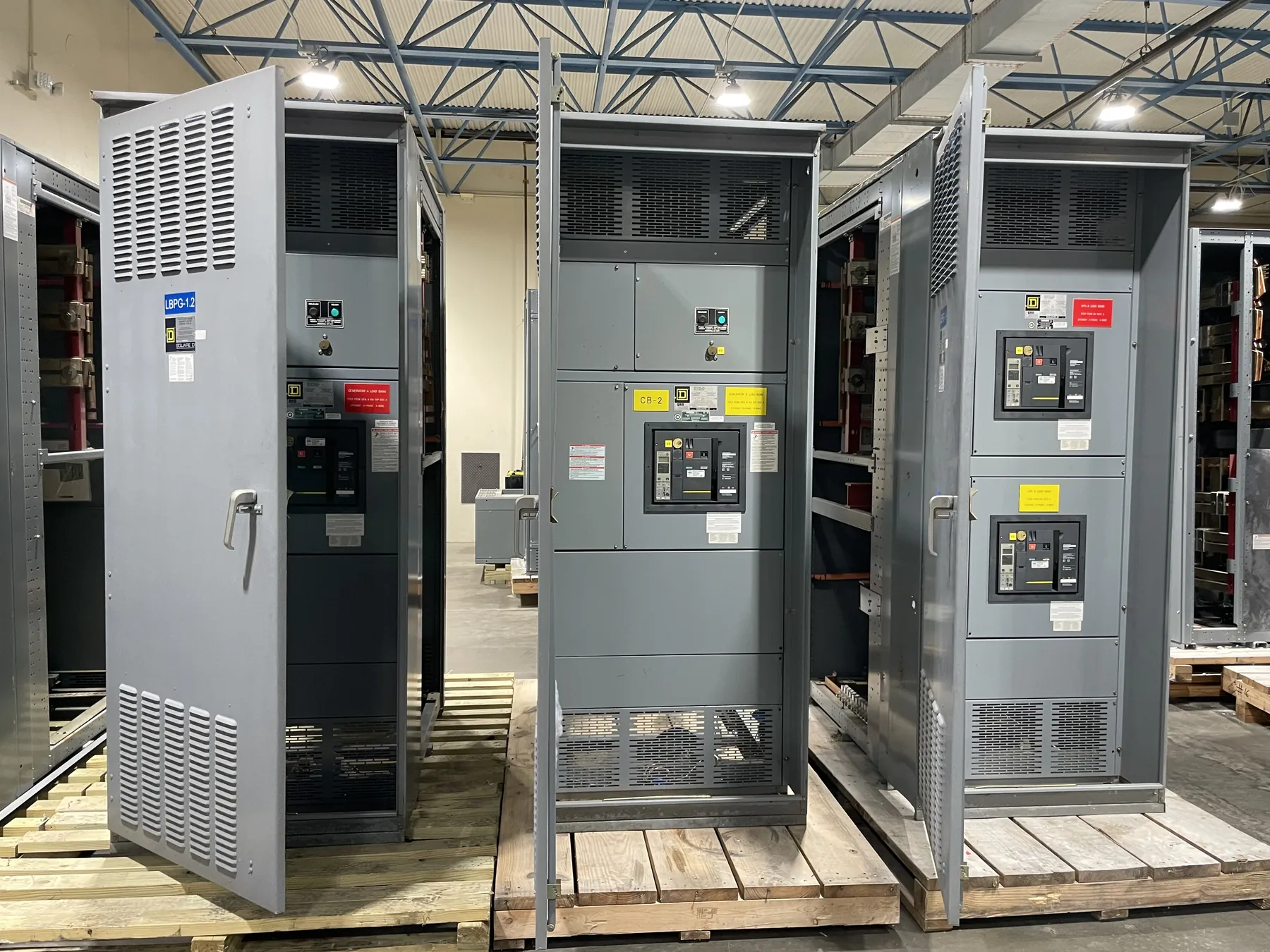
Equipment scope may include low-voltage switchboards, distribution sections and transfer equipment, depending on the project architecture. These products are not interchangeable simply because they serve the same facility. The design must establish system voltage, current and withstand ratings, configuration, incoming and outgoing connections, enclosure requirements, and any applicable listing requirements. UL 891 applies to applicable low-voltage switchboards; it should not be treated as a blanket certification for every assembly or system component. Ratings, listings and project-specific details require confirmation.
Essential Electrical System Branches and Load Assignment — Hospital Switchgear in Pahrump, NV
NFPA 99 addresses healthcare facility requirements, including the essential electrical system provisions applicable to the project. The design team determines which system classification and branch arrangement apply under the adopted requirements and the facility’s use. In a hospital, emergency, critical-care and equipment loads may have different operational priorities and may be assigned to separate branches. The switchgear and distribution layout should preserve those intended divisions rather than combining circuits in a way that obscures their source, priority or transfer behavior.
Load schedules should identify the served equipment, expected operating conditions and designated branch. The design team should also clarify which loads are intended to transfer, whether any load sequencing or shedding is required, and how normal and alternate sources connect to the distribution system. These decisions influence bus arrangements, breaker positions, transfer equipment interfaces and spare provisions. Equipment can be arranged to support the approved design, but branch classification and load assignment are engineering decisions that require review of the facility and applicable codes.
Source Transfer and NFPA 110 Coordination
Emergency power planning involves more than placing a generator connection beside a normal service. NFPA 110 addresses emergency and standby power systems, with requirements that depend on the system’s intended use and applicable project criteria. The electrical engineer must coordinate the generator, transfer equipment, distribution sections and loads as a complete system. The design should specify source arrangement, transfer functions, control and indication interfaces, and any required sequencing. Switchgear documentation should clearly identify how those interfaces are to be implemented.
Transfer equipment selection affects both system operation and equipment arrangement. A project may call for separate transfer devices serving distinct loads or a coordinated assembly with defined sections; the appropriate choice depends on the engineered one-line diagram and applicable requirements. Confirm the normal-source configuration, alternate-source characteristics, interconnection points and control responsibilities before requesting a quotation. The manufacturer needs approved drawings and interface information to avoid assumptions about which party supplies controls, wiring, protective devices or connection provisions.
Pahrump Site Conditions and Equipment Fit
For a Pahrump facility, verify site-specific service information and installation conditions early. The utility service voltage and available short-circuit current must be confirmed for the actual connection point, and the grounding approach must be established by the project design team. Also document the intended installation location, access route, room clearances, environmental conditions and equipment dimensions. These factors can affect enclosure selection, section arrangement, shipping configuration and the practical path from delivery point to electrical room.
Logistics should be coordinated with the construction schedule and site access plan. A delivery to Pahrump can be planned from a U.S. manufacturing operation, with nationwide shipping, but the project team should confirm receiving arrangements, unloading responsibility, storage conditions and the sequence for moving sections into place. Avoid finalizing equipment dimensions or shipping splits before reviewing site access and the approved room layout. Such coordination helps prevent a suitable electrical design from becoming difficult to install at the site.
Quotation Inputs and Engineering Coordination — Hospital Switchgear in Pahrump, NV
A useful request for quotation includes the latest one-line diagram, load and panel schedules, project specifications, service data, grounding requirements, fault-current information and applicable equipment ratings. Include the required essential-system branch arrangement, transfer-equipment scope, enclosure details, metering or control provisions, cable or bus connections, and any specified listings. Identify drawing review milestones, expected submittal content and the parties responsible for controls, field wiring and system integration. Clear inputs help the manufacturer identify scope gaps before equipment details are finalized.
All-American components and U.S. manufacturing can support a domestic supply approach, while short lead times remain dependent on the approved design, component requirements and production scheduling. No lead time should be assumed from a general statement; confirm schedule expectations against the project’s finalized scope. Changes to fault-current data, source configuration or branch assignments after approval may affect equipment design and coordination, so establish a process for reviewing revisions.
Commissioning Responsibilities for Hospital Switchgear
Commissioning verifies that installed equipment and system interfaces align with approved documents and project requirements. Responsibilities should be assigned among the electrical engineer, installing contractor, equipment manufacturer, generator and transfer-equipment providers, controls team and commissioning authority. The plan should identify required submittals, inspection points, test documentation and the records needed for turnover. Functional verification must address the designed source-transfer sequence and the intended distribution of essential loads, under the project’s approved commissioning procedures.
Equipment factory documentation and field commissioning serve different purposes; neither replaces the other. The qualified project team must resolve code applicability, protective-device coordination, system performance and site-specific acceptance criteria. For a Pahrump hospital, early coordination of service data, essential branches, transfer interfaces and installation logistics gives the manufacturer a defined scope and helps the project team review the completed distribution equipment against the facility’s engineered design.