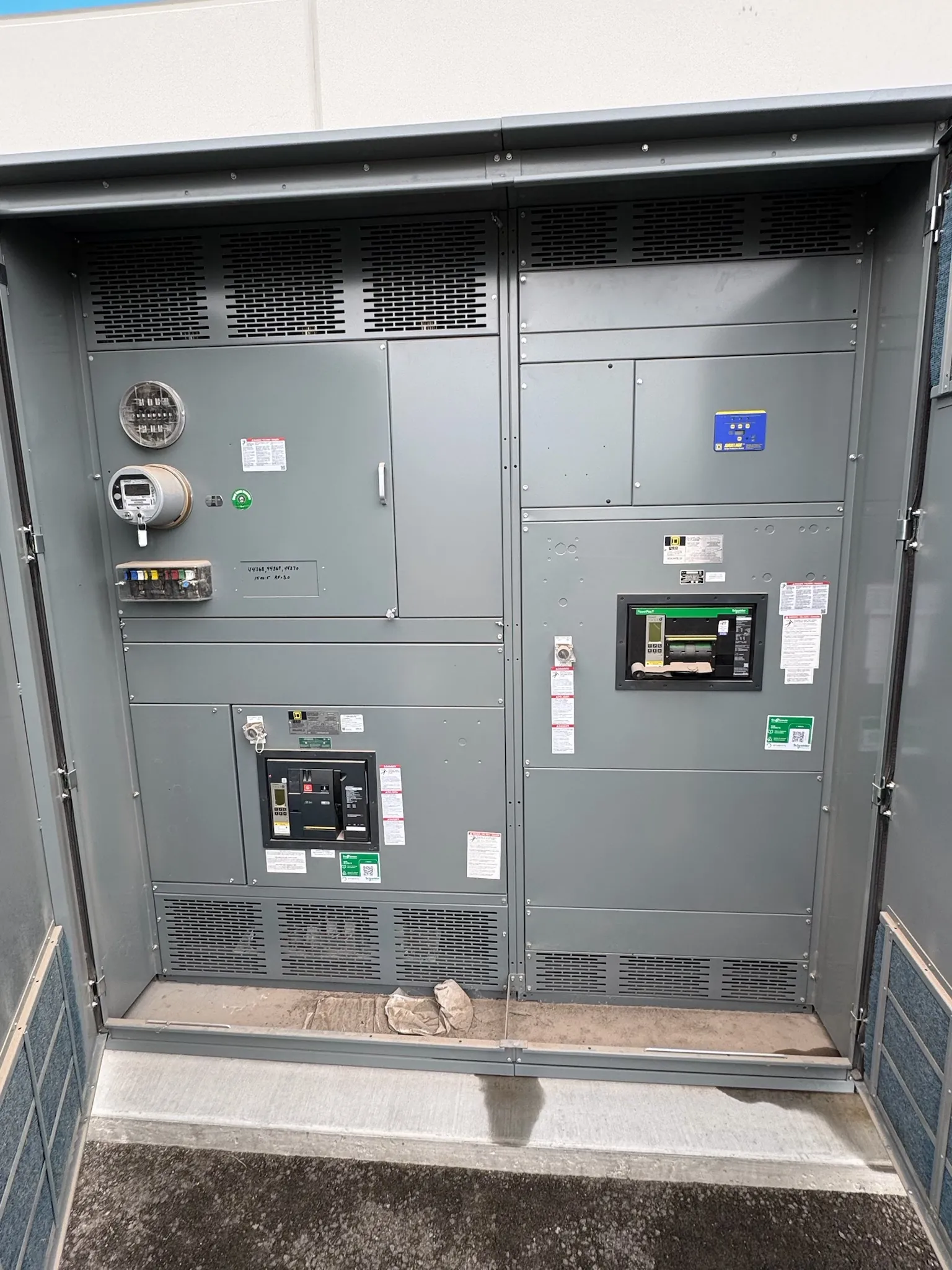
Casino Switchgear for Pahrump, Nevada Projects
Casino electrical distribution has to support more than gaming areas. A Pahrump project may include lodging, food service, kitchens, entertainment, back-of-house operations, security, and building systems, each with different operating priorities. A custom switchgear package can organize these loads into a distribution arrangement that reflects the facility’s operating plan, available electrical service, and emergency-power strategy. The equipment manufacturer can build new assemblies to project requirements and ship to Nevada; the design still needs to be based on verified site information and reviewed by the project’s qualified electrical professionals.
Separate Critical, Life-Safety, and General Loads — Casino Switchgear in Pahrump, NV
Early load classification helps determine which sources and distribution sections need to serve particular functions. Life-safety loads, other critical loads, and general loads should not be treated as interchangeable categories. Their separation affects how equipment is arranged, which loads are transferred to emergency power, and how operators can identify the portions of the system involved in an outage or maintenance event. The project engineer and facility team should establish those classifications from applicable requirements and operating needs, rather than relying on broad labels such as “essential power.”
For a casino, the distinction may matter across guest-facing and support areas alike. Emergency lighting or other designated life-safety functions may have different source and transfer requirements from business-critical systems such as communications, security, or selected operational equipment. Which loads belong in each group is project-specific. A clear one-line diagram and load schedule give the switchgear manufacturer a usable basis for section layouts, feeder provisions, and interface planning.
Coordinate Emergency Power and Transfer Interfaces — Casino Switchgear in Pahrump, NV
Emergency power planning involves more than reserving space for a generator connection. The design team needs to define the intended sources, transfer arrangement, load priorities, and the boundaries between switchgear and associated transfer equipment. Those decisions influence bus and feeder configuration, protective-device coordination, control wiring, and how normal and alternate sources are represented in the equipment documentation.
Where loads are restored in stages, the sequence and control responsibilities should be established before equipment is released for manufacture. The switchgear package must align with the generator, transfer equipment, downstream panels, and control system specified for the project. Confirming these interfaces early can reduce late revisions, but it does not replace system-level engineering or commissioning planning.
Verify Pahrump Site Electrical Conditions
Before selecting equipment ratings or finalizing a quotation, verify the service voltage, grounding approach, and available short-circuit current at the site. These are not details that can be inferred from the city name or from a general building description. The available fault current and protective-device requirements affect equipment selection and coordination; grounding configuration affects system design and equipment connections. The serving utility’s information, site documentation, and the project engineer’s analysis should be reconciled before specifications are finalized.
Keep system voltage distinct from equipment ratings. Voltage describes the electrical system; ratings describe equipment limits and capabilities, such as voltage, current, and withstand performance, as applicable to the specified assembly. The appropriate ratings, any required listing, and compatibility with the project’s system must be confirmed for the particular design. UL 891 applies to applicable low-voltage switchboards; it should not be taken as a blanket standard for every switchgear assembly or for medium- or high-voltage equipment.
Plan Phased Maintenance Around Facility Operations — Casino Switchgear in Pahrump, NV
Casino operations can continue across different areas and schedules, so maintenance planning should be considered alongside the initial distribution design. The facility team should identify which sections can be taken out of service, which loads require continuity, and what constraints apply to planned work. Sectionalization, feeder allocation, spare provisions, and equipment access may all affect how practical a future maintenance window will be. Those choices involve tradeoffs: additional separation or capacity provisions can change the equipment arrangement and scope, while a compact layout may leave fewer options for later changes.
Any maintenance approach involving energized equipment, switching, or temporary power requires site-specific procedures developed and approved by qualified personnel. The switchgear design can support an agreed operating plan, but it cannot determine safe work methods without the facility’s conditions, applicable requirements, and professional review.
Prepare a Complete Equipment Specification
Useful quotation inputs include the one-line diagram, load schedules, service and grounding information, calculated available fault current, protective-device requirements, emergency-power sequence, feeder and termination details, and environmental or space constraints. Include the intended scope boundaries and identify equipment supplied by others, such as transfer systems or generator controls. This helps the manufacturer assess the requested assembly and flag unresolved interfaces before detailed submittals.
The manufacturer builds new custom power-distribution equipment using all-American components, with manufacturing in the United States and nationwide shipping. Lead time depends on the defined scope, approved engineering details, and project coordination; no delivery schedule should be assumed until the requirements have been reviewed. For a Pahrump casino project, a well-coordinated specification is the practical starting point for equipment that fits the site’s electrical conditions and the facility’s operating priorities.