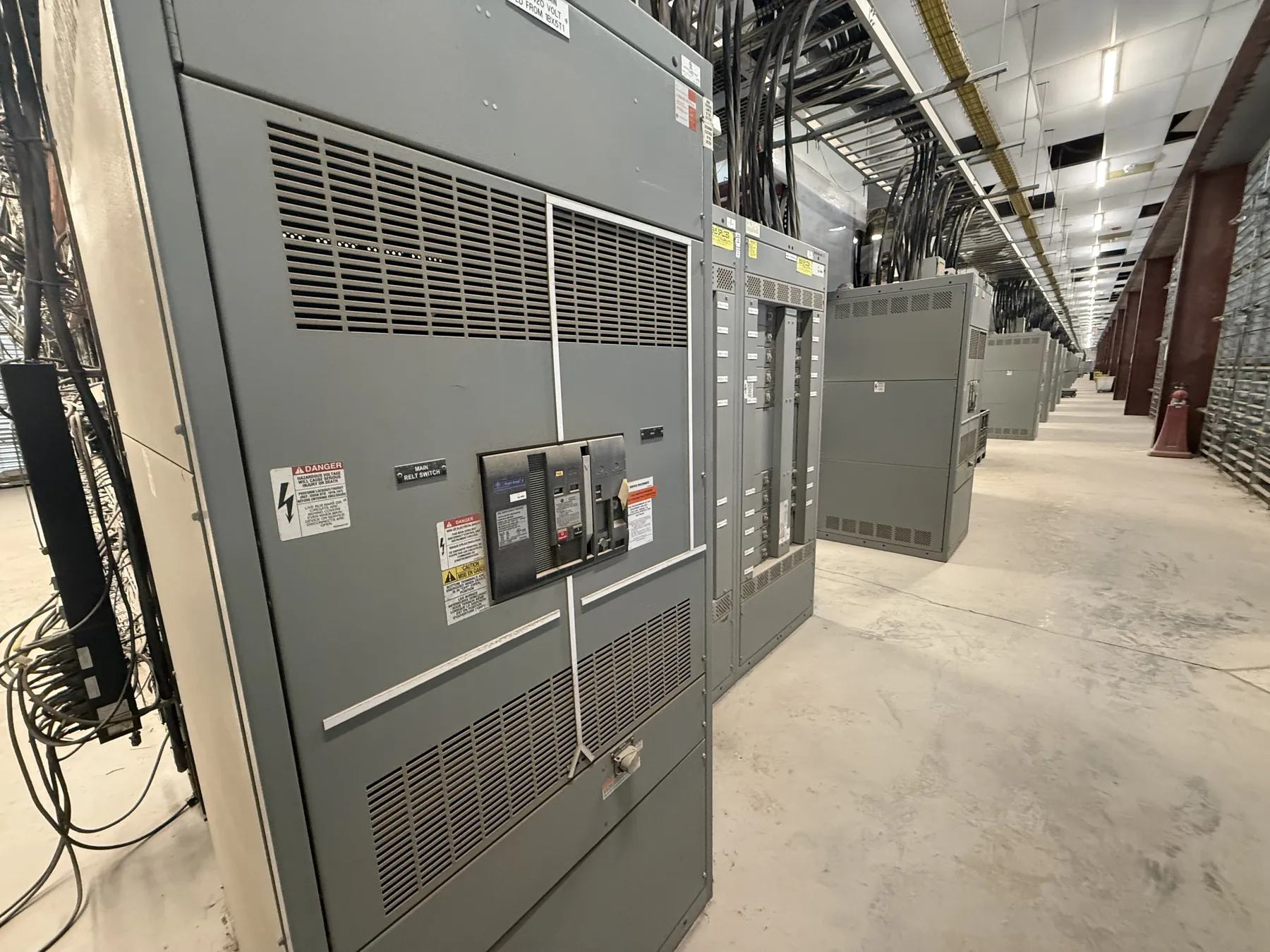
Motor Control Centers for North Las Vegas Projects
Motor control centers (MCCs) bring motor starters, control components and associated feeder protection together in a coordinated lineup. For a North Las Vegas facility, the design starts with the actual motor loads and the way they operate—not simply a count of motors. Pumps, fans, compressors and process equipment can have different starting characteristics, operating schedules and control interfaces. Those distinctions influence starter selection, bus and protective-device ratings, enclosure arrangement and the space needed for future maintenance.
Our company manufactures new custom power-distribution equipment in the United States using all-American components. MCCs are built to project requirements and can be shipped nationwide, including to North Las Vegas. Final configuration depends on engineering review of the equipment schedule, electrical system and installation conditions. A project’s local delivery route and facility access should be considered alongside its electrical requirements, since a lineup that fits the electrical room must also be deliverable to its final location.
Choose Starters Around the Motor and Operating Duty
Motor starter selection depends on motor data and the application. Across-the-line starters may suit some loads, while reduced-voltage starting can be considered where the application or system calls for it. The right choice depends on motor nameplate information, starting torque needs, operating frequency, driven equipment and the electrical system’s ability to support the starting event. The project engineer should verify these conditions rather than selecting a starter from horsepower alone.
For each motor, provide available nameplate data, load description, voltage, phase, control voltage requirements and any known starting or operating constraints. Identify whether the motor is part of a critical process, whether local and remote control are needed, and how it should respond to an interlock or process signal. These details help establish the required starter units, control wiring interfaces and lineup space.
Plan VFD Integration and Control Interfaces
Variable frequency drives (VFDs) can provide adjustable motor speed when the process requires it. Integrating drives into an MCC involves more than reserving a compartment: engineers need to confirm drive input and output requirements, motor compatibility, control signals, communications, protective functions and the surrounding equipment’s thermal and physical constraints. A drive supplied by another party may require coordination of dimensions, wiring terminals, disconnecting means and responsibility for control integration.
Describe the intended speed-control range and operating mode, along with any building-management, PLC or process-control interfaces. Where a drive is not appropriate for a motor or operating duty, a conventional starter may be a better fit. The project team should also review the effects of drive operation on the motor and electrical system. Actual selection and coordination require qualified engineering review of the specific installation.
Coordinate Short-Circuit Ratings and Feeder Protection — Motor Control Centers in North Las Vegas, NV
An MCC’s short-circuit rating must be appropriate for the available fault current at its point of installation and for the protective devices and configuration used in the assembly. It is not the same as the system’s nominal voltage, nor can it be determined from motor voltage alone. Provide the available fault-current information, upstream protective-device details and any project requirements for short-circuit current ratings so the design team can evaluate the proposed arrangement.
Feeder protection should reflect the connected loads and the project’s protection and coordination requirements. The main device, feeder devices, starter protection and any drive-associated protection need to be considered together. If the electrical study or utility information is incomplete, note that status during quotation and resolve it before the design is finalized. Ratings, product listings and coordination details require confirmation for the specific equipment and installation.
Check UL 845 and Project Requirements
Confirm whether the project specification, authority having jurisdiction or other responsible party requires an MCC listed to UL 845. That requirement should be checked early, along with the applicable edition and any project-specific exceptions. UL 845 is associated with motor control centers; it should not be treated as a blanket qualification for every type of switchgear or power-distribution equipment. A requested standard, listing or label must be reviewed against the exact product configuration and documented requirements. Do not assume a particular assembly is listed without confirmation.
Also identify enclosure conditions, environmental exposure, incoming supply arrangement, control-power source and any specified communications or metering. The appropriate configuration depends on the installation and the governing project documents, not just a general description of the facility.
Map North Las Vegas Installation and Access Before Sizing
Before fixing lineup dimensions, map incoming and outgoing cable routes, entry direction, conduit locations and the space needed to terminate conductors. Include working clearances required by the approved design and applicable code, as well as access for inspection and maintenance. Confirm door swing, wall obstructions, overhead services and the path from the delivery point to the electrical room. North Las Vegas facility layouts and access conditions vary, so these details should be verified at the project site rather than assumed from the city location.
For a useful quotation and engineering review, provide the one-line diagram, equipment schedule, motor and drive data, available fault-current information, project specifications, room dimensions, cable-entry preferences and delivery-access constraints. Flag unresolved items clearly. Early coordination among the owner, electrical engineer, installing contractor and equipment manufacturer can help align the MCC lineup with both the electrical design and the realities of installation and future service.