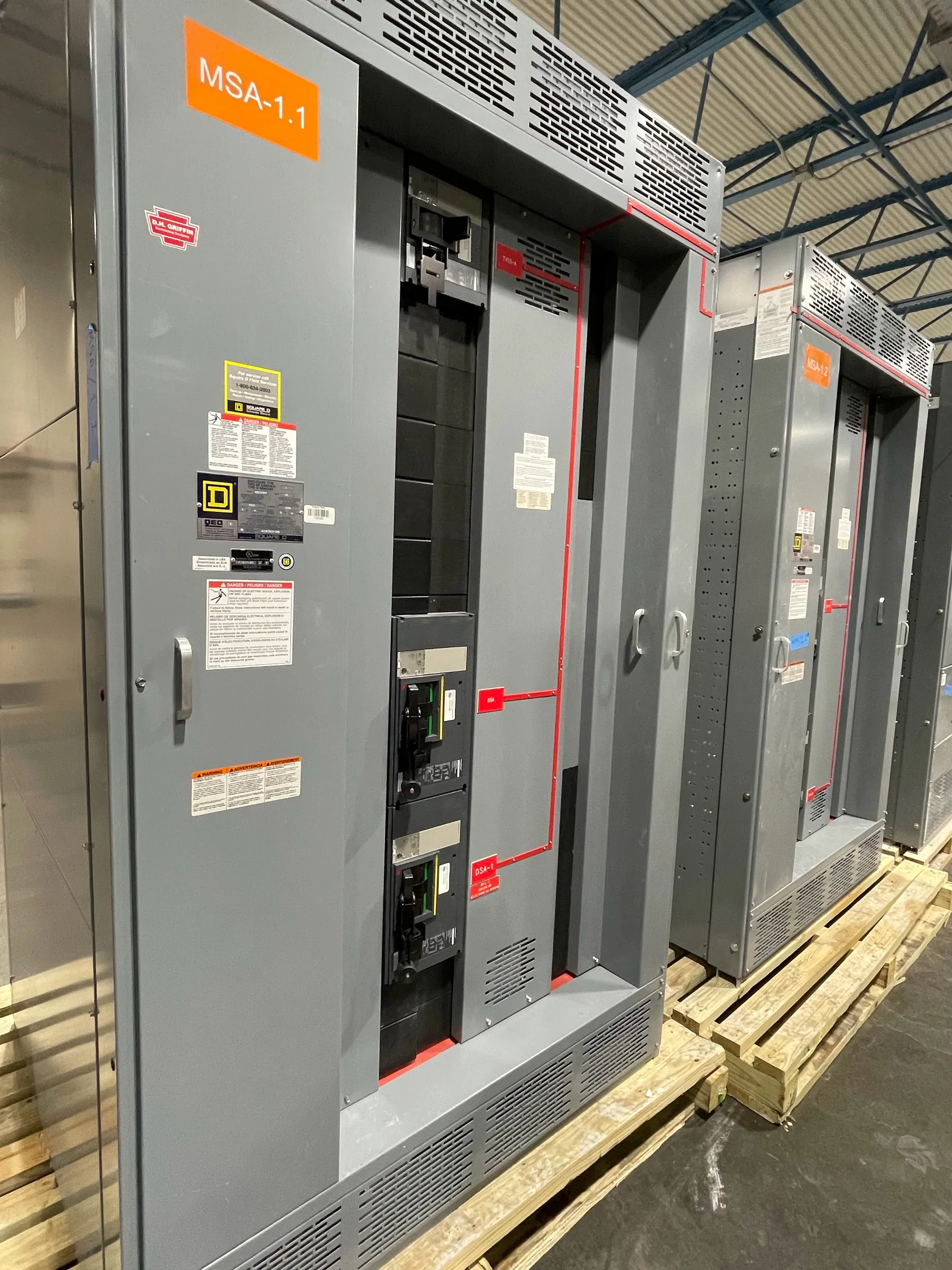
Metal-Clad Switchgear for North Las Vegas Projects
Metal-clad switchgear is a medium-voltage assembly in which major components are separated into grounded compartments by metal barriers. For a North Las Vegas facility, that arrangement can help organize incoming power, bus, circuit breakers and cable connections in a defined lineup. The appropriate configuration depends on the one-line diagram, system conditions, protection strategy, site layout and operating requirements—not on the city alone. Early engineering review helps connect the electrical design to the physical constraints of the building or outdoor installation.
We manufacture new custom power-distribution equipment in the United States using all-American components, and ship nationwide, including to Nevada. A quotation can be developed around the project’s documented requirements. It should not assume that a particular voltage, interruption rating, enclosure, listing or utility interface is suitable until those details are reviewed and confirmed for the application.
Compartmentalization and Breaker Configuration
Compartmentalization separates functions within the lineup, such as the main bus, circuit breaker, instrument transformers and cable terminations. The intended degree of separation and access arrangement should be selected with the applicable equipment requirements and the facility’s maintenance plan in mind. Compartment barriers do not replace a complete hazard assessment or determine how equipment should be operated.
Metal-clad designs commonly use withdrawable circuit breakers that connect to stationary contacts in the switchgear. Breaker type, continuous-current rating, interrupting capability and control features must match the electrical study and system conditions. The breaker’s withdrawable arrangement also affects compartment dimensions, interface details and access needs. These are coordinated design choices, not interchangeable options that can be selected from nominal system voltage alone.
Grounding, Protection and Relay Coordination — Metal-Clad Switchgear in North Las Vegas, NV
Grounding design affects how the switchgear, cable shields, equipment enclosures and system neutral relate to one another. The project engineer should define the grounding method and provide relevant system information, including the available fault conditions and the intended treatment of ground faults. The switchgear design then needs to accommodate the specified grounding and sensing interfaces.
Relay coordination is a system-level task. Protective relays, current transformers, breaker trip characteristics and upstream or downstream devices must be evaluated together so that settings and protective functions align with the project’s engineering objectives. A switchgear manufacturer can use the approved protection requirements to configure the lineup and its interfaces, but relay settings and coordination conclusions require qualified engineering review. Changes elsewhere in the distribution system can affect the study and should be communicated before finalizing the design.
Applying IEEE C37.20.2 to the Project — Metal-Clad Switchgear in North Las Vegas, NV
IEEE C37.20.2 is the relevant standard to evaluate when specifying metal-clad switchgear. Applicability and the required edition should be confirmed against the project specification, equipment scope and governing design documents. The standard is not a substitute for defining the actual system rating, environmental conditions, protective scheme or installation details.
Specify the required ratings and characteristics explicitly, and have the engineering team confirm they suit the system study and intended service. A voltage designation by itself does not establish a switchgear rating or demonstrate suitability. Any required listing, test documentation, control features or interface criteria should be identified in the project documents and confirmed for the proposed equipment. Do not assume that UL 891 applies: it concerns applicable low-voltage switchboards and does not establish requirements for metal-clad medium-voltage switchgear.
North Las Vegas Layout, Cable Routes and Access
Before fixing lineup dimensions, map incoming and outgoing cable routes from the points where they enter and leave the facility. Document cable entry direction, trench or duct locations, termination space, bend and pulling constraints, and obstructions that could affect installation. The project team should also identify required working clearances and any door, wall or structural conditions that influence equipment placement. Clearances must be checked against applicable requirements and the final equipment configuration.
Delivery access deserves the same early attention as cable routing. Confirm the path from the receiving point to the installation area, including door openings, turns, ramps, floor conditions and limits on equipment movement. North Las Vegas site conditions vary by facility, so these details must come from the project team rather than assumption. If the lineup must be divided for transport or installed in stages, the design and delivery plan should address how sections are handled and reassembled.
Information Needed for a Useful Quotation — Metal-Clad Switchgear in North Las Vegas, NV
Provide a current one-line diagram, system voltage, required ratings, available fault information and protection-study requirements. Include the number and function of incoming and outgoing circuits, metering and control needs, cable-entry details, grounding requirements, indoor or outdoor conditions, and project-specific specifications. Site drawings showing routes, clearances, access and installation constraints help establish workable lineup dimensions. Identify required standards, documentation and any specified listing or approval, so each can be reviewed rather than presumed.
With these inputs, the proposed metal-clad switchgear can be developed around the actual distribution scheme and North Las Vegas installation conditions. Ratings, standards applicability, listings, interfaces and final dimensions remain subject to engineering confirmation and project review. Our U.S.-manufactured assemblies use all-American components, support short lead times, and ship nationwide; the project team should confirm schedule and delivery requirements during quotation and order review.