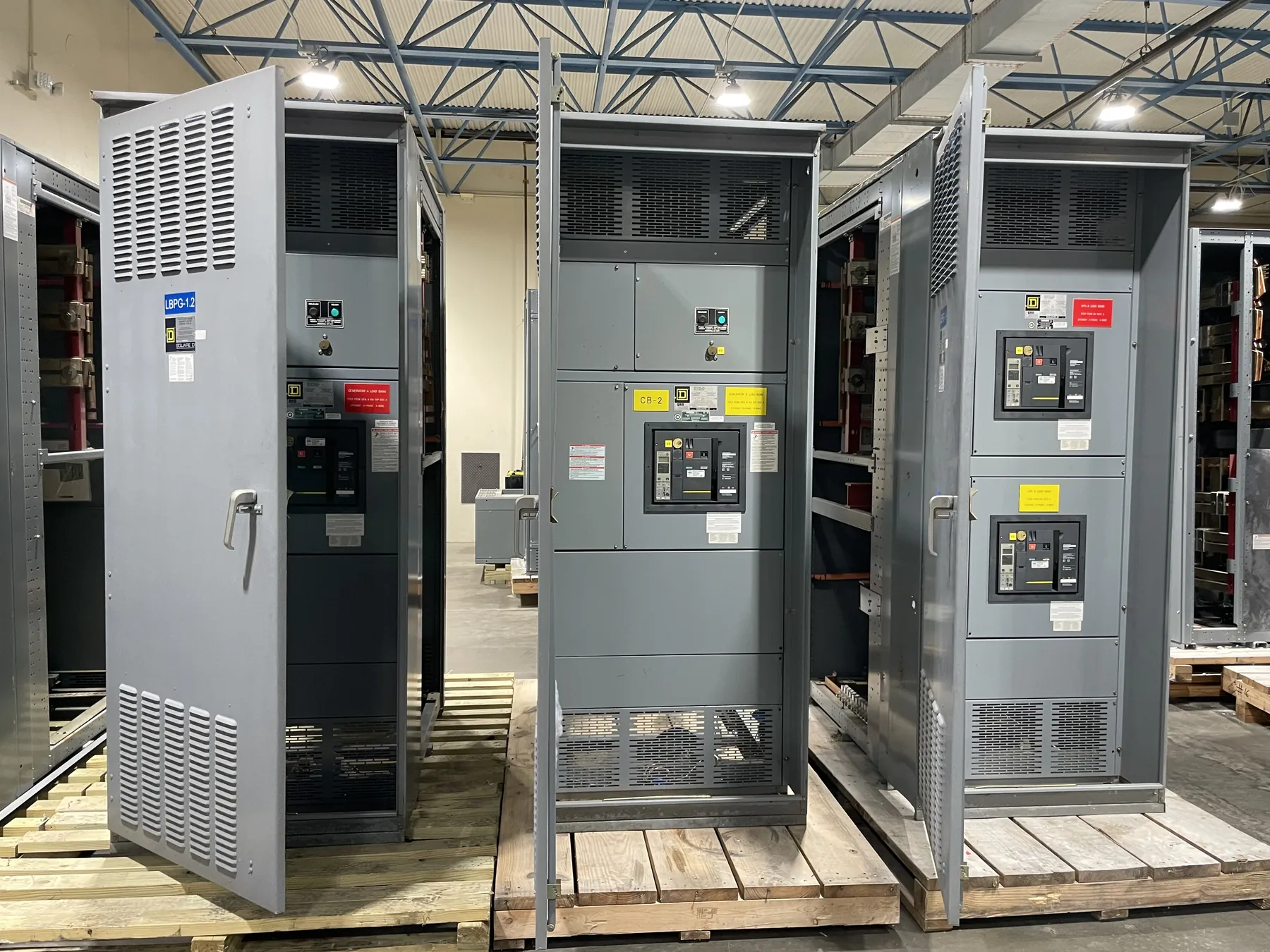
Mining Switchgear for North Las Vegas Operations
Mining-related electrical distribution serving a North Las Vegas project has to reflect the actual loads, site conditions and expansion plans—not just a nominal equipment label. A lineup may need to distribute power to processing equipment, pumps, fans, material-handling systems, workshops or support buildings, with each feeder suited to its assigned duty. Custom switchgear and power-distribution assemblies can be configured around a project’s documented requirements. The equipment manufacturer supplies new manufactured assemblies; the mine owner, electrical engineer, contractor and other project parties establish the system design and installation requirements.
Start with the one-line diagram and load information. Identify the incoming source, bus arrangement, feeder destinations, motor loads, expected operating patterns and any planned spare or future circuits. Motor starting and operating characteristics can influence protective-device selection and coordination with upstream and downstream equipment. A feeder serving a motor group may call for a different arrangement from one supplying general building loads. The final configuration depends on the engineered system, not a generic mining package.
Match Motor and Feeder Duties to the Distribution Plan
For each circuit, provide the connected load, motor data where applicable, starting method, operating sequence and any known duty-cycle requirements. Confirm which loads must operate together and whether the project includes standby generation, transfer equipment, variable-frequency drives or other power-conversion equipment. These interfaces can affect protection, available fault current, harmonics and the way the distribution system is coordinated.
Separate feeder functions clearly in the equipment schedule. Identify circuit quantity, intended load, conductor termination requirements and the protection approach established by the project engineer. Do not assume that a breaker frame, trip setting or bus rating can be selected from motor horsepower alone. System voltage, available fault current, conductor details, equipment ratings and coordination requirements all need review. A manufacturer can use approved project documents to develop a buildable lineup, but cannot determine a complete site design from a brief equipment description.
Protection, Ratings and Engineering Coordination
Protection choices must account for the system’s documented fault conditions and the coordination strategy across the distribution network. The engineer of record and responsible project team should provide the applicable study information, equipment duty requirements and protective-device criteria. Where upstream sources or downstream loads may change, document those assumptions so the selected equipment can be evaluated against the intended operating configuration.
Keep system voltage distinct from equipment ratings. Voltage, continuous-current ratings, short-circuit withstand or interrupting requirements, enclosure details and other selections need confirmation for the specific assembly and application. Ratings are not interchangeable, and a rating stated for one component does not automatically establish the rating of the complete lineup. UL 891 applies to applicable low-voltage switchboards; it should not be treated as coverage for every switchgear assembly or for medium- or high-voltage equipment. Any listing or standard applicable to a proposed product must be confirmed for that product and project.
Dust, Ventilation and Site Environmental Conditions
Mining environments can expose electrical equipment to airborne dust, temperature variation, vibration, moisture or corrosive contaminants. For a North Las Vegas facility, provide the actual installation location and conditions rather than relying on broad regional assumptions. An indoor electrical room, an enclosed process area and an outdoor installation can call for different enclosure and cooling considerations. Dust protection and ventilation also have to be considered together: restricting air entry may affect heat removal, while ventilation openings must suit the environmental conditions and equipment design.
Share the project’s environmental requirements, including expected ambient conditions, exposure to process materials, cleaning methods, altitude where relevant, and any site-specific enclosure or corrosion criteria. Describe whether equipment will be installed near vibrating machinery or in a space with limited air circulation. The project engineer should establish applicable code and design requirements, and the manufacturer should review the proposed construction against those documented conditions before the configuration is finalized.
Map Cables, Clearances and Delivery Access Before Sizing
Lineup dimensions should follow a coordinated room and cable plan. Map incoming and outgoing cable routes, entry direction, conductor landing space and any required routing between adjacent sections. Identify working clearances and access needs from the project layout and applicable requirements. Cable bends, conduit placement, trenches, overhead obstructions and nearby equipment can affect section arrangement or termination access, so these details should be resolved before fixing dimensions.
North Las Vegas delivery planning also benefits from an early review of the route from receiving point to final installation area. Provide door and corridor dimensions, turning constraints, floor or handling limitations, unloading arrangements and any site access restrictions. These are project logistics inputs, not assumptions about a particular local facility. Reviewing them alongside the lineup design can help avoid a configuration that fits electrically but is difficult to move into position.
Information for a North Las Vegas Mining Quote
A useful quotation package includes the current one-line diagram, load and feeder schedule, source and system data, specified equipment ratings, fault and coordination criteria, enclosure and environmental requirements, cable-entry plan, room dimensions and delivery constraints. Include project milestones and any required interfaces with transformers, generators, drives or other distribution equipment. Changes to these inputs can affect design review and manufacturing scope, so identify unresolved items rather than treating them as settled.
The manufacturer builds new custom power-distribution equipment in the United States using all-American components, with nationwide shipping that can serve Nevada projects. Short lead times are supported, but schedule expectations depend on the finalized scope, engineering coordination and project requirements; confirm timing during quotation and order review. Final ratings, product listings, construction details and dimensions require confirmation against the project documents and review by qualified electrical professionals.