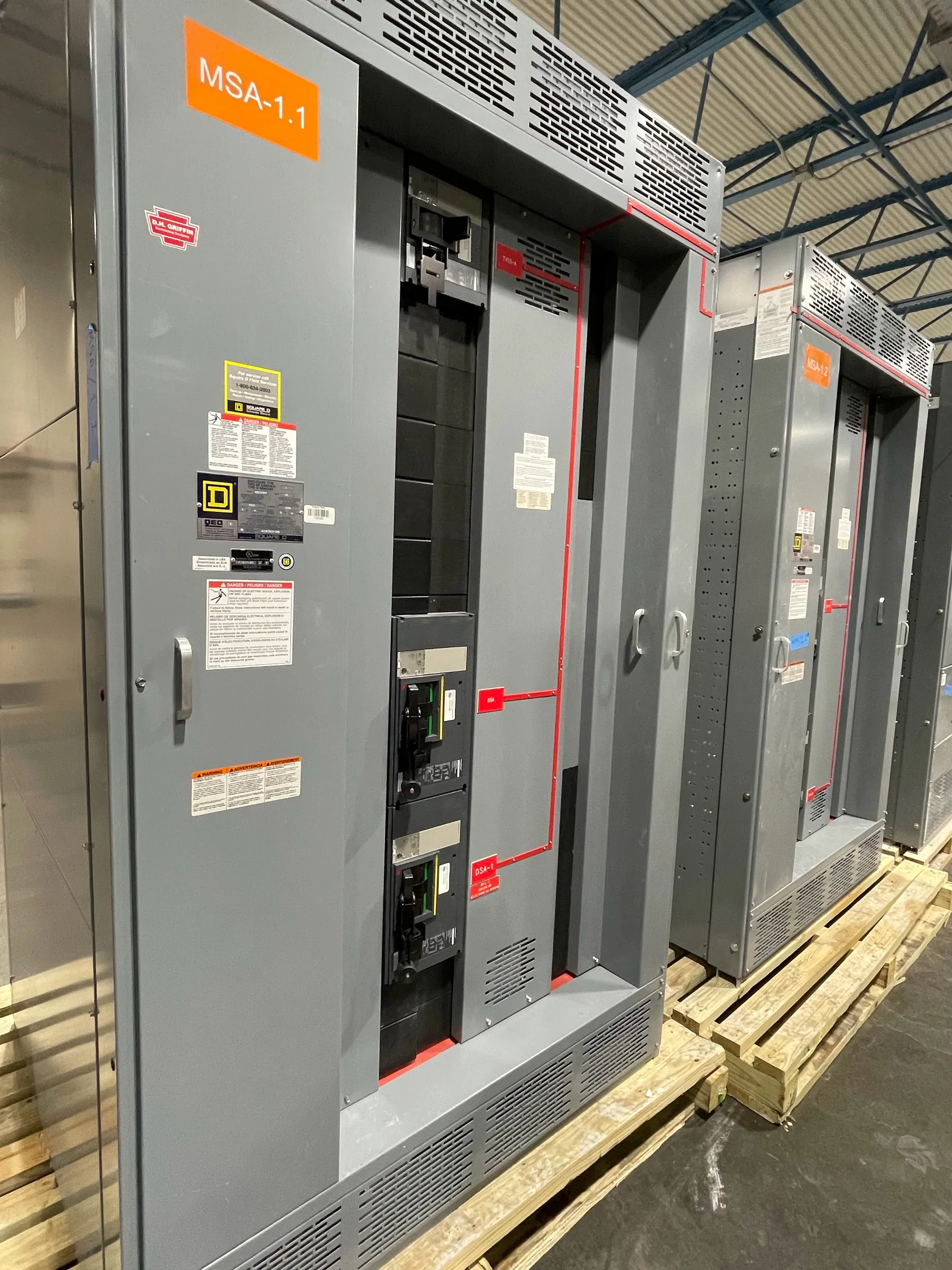
Motor Control Centers for Mesquite, NV, Projects
Motor control centers (MCCs) group motor-control and distribution functions in a coordinated assembly, but the right configuration depends on the loads, electrical system, and installation environment. For Mesquite facilities, planning should account for the equipment served, available room for the lineup, site conditions, and the project’s electrical design. We manufacture new custom power-distribution equipment in the United States using all-American components and ship nationwide, including to Nevada. Final design, ratings, and product requirements must be confirmed for the specific application.
An MCC may serve pumps, fans, compressors, conveyors, or other motor-driven equipment. The number and type of units, the need for spare spaces, and the arrangement of incoming and outgoing connections all affect the lineup. A useful starting point is a current load schedule that identifies each motor’s electrical characteristics, control needs, and operating role. Changes in process equipment or future expansion can influence whether to include provisions for additional units, subject to available space and the overall design.
Motor Starters, Control Methods, and VFD Integration
Motor starters are selected to suit the motor and its application. A project may call for across-the-line starting, reduced-voltage starting, or variable frequency drives (VFDs), depending on load behavior, starting requirements, process control, and the electrical system. These choices are not interchangeable: starting method can affect current demand, equipment coordination, control complexity, and the space and heat generated within the MCC.
When VFDs are specified, provide the intended motor and drive information, required speed-control functions, and any communication or interlock interfaces. Drive selection and integration should account for the drive manufacturer’s requirements, the motor, the driven load, and the installation environment. The project engineer should also review any required input or output components and how control signals connect to the facility’s automation system. The MCC design should not assume that a drive, motor, or control interface is compatible without that review.
Short-Circuit Ratings and Feeder Protection — Motor Control Centers in Mesquite, NV
Short-circuit ratings describe an assembly’s ability to withstand or interrupt fault current under defined conditions; they are not the same as system voltage. The available fault current at the installation point, upstream protective devices, and the selected equipment configuration all matter. A requested rating should be checked against the project’s electrical study and the manufacturer’s published information. Do not infer that a rating applies to every configuration or that a higher value is appropriate without engineering review.
Feeder protection must be coordinated with the loads, conductors, upstream devices, and applicable project requirements. Breaker or fuse choices, trip functions, and coordination objectives can affect both protection and continuity of service. Supply the engineer with the one-line diagram, protective-device information, and available fault-current data where established. The qualified electrical design team should determine the protection scheme and confirm that the specified MCC and its components are suitable for the installation.
Mesquite Ambient Conditions, Ventilation, and Enclosure
For a Mesquite project, compare expected design ambient temperatures and ventilation conditions with the selected equipment’s published ratings. Ambient heat, restricted airflow, nearby heat sources, dust, and enclosure placement can affect component operating conditions. An indoor room, outdoor location, or equipment space with limited ventilation may require different enclosure and thermal considerations. The site team should provide the expected environment and installation details so the design can be reviewed against the applicable equipment documentation.
Do not assume that a standard enclosure or room arrangement will suit every site. Confirm enclosure type, access clearances, cable-entry approach, and any environmental requirements with the project engineer. Ventilation or cooling provisions, if needed, must be evaluated as part of the equipment and facility design rather than added without regard to the manufacturer’s limits.
UL 845, Ratings, and Project Requirements
Check whether UL 845 is required by the project specification, owner, authority having jurisdiction, or other applicable requirement. Its applicability and any listing status must be confirmed for the specific MCC and configuration; do not assume that a standard applies automatically to every assembly. Product markings, ratings, and documentation should be reviewed against the project documents. The relevant standard, voltage, short-circuit rating, and other details require confirmation before the equipment is specified or quoted.
Also distinguish the system voltage from the equipment’s individual ratings. The engineer should confirm the intended system characteristics and ensure that the proposed assembly, protective devices, starters, and drives are suitable together. Code interpretation, electrical design, and acceptance requirements depend on the project and should be resolved by qualified professionals familiar with the site.
Information for an MCC Quote and Installation Planning
To develop a useful quotation, provide the one-line diagram, motor and load schedule, required control approach, project specifications, known fault-current information, and any stated UL 845 requirement. Include the installation location, expected ambient conditions, enclosure preferences, cable-entry details, lineup constraints, and desired spare capacity. If some information is still in development, identify it as preliminary so assumptions can be clearly reviewed rather than treated as confirmed design inputs.
Installation planning should address shipping access, receiving arrangements, final room dimensions, cable routing, and coordination with other electrical equipment. Nationwide shipment can support a Mesquite project, but site-specific transport and handling arrangements should be confirmed with the project team. Final equipment selection, ratings, listing requirements, protection coordination, and installation details remain subject to engineering review and confirmation for the actual application.