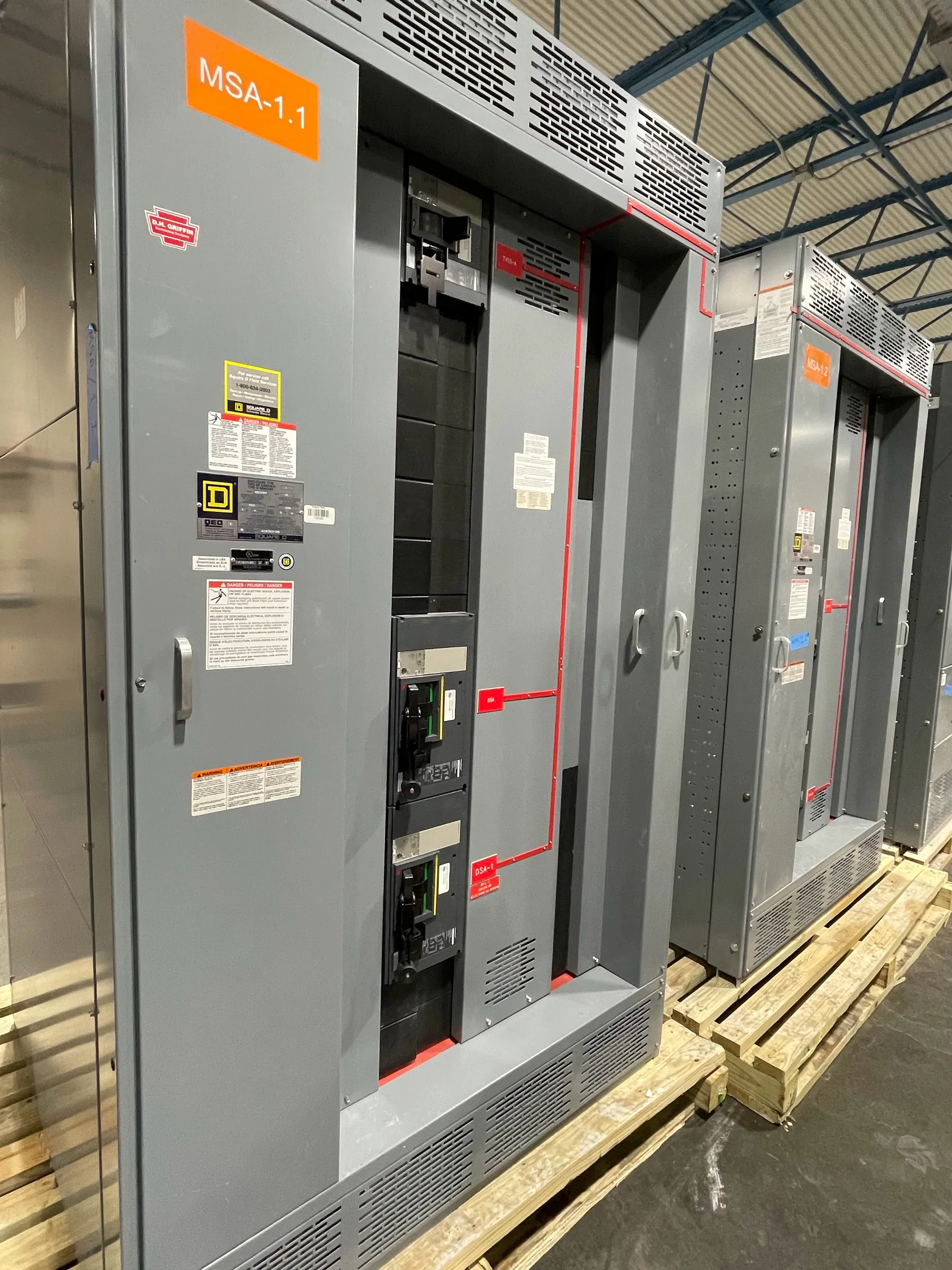
Wastewater Switchgear for Mesquite Pumping and Treatment Facilities
Wastewater electrical distribution must support the equipment and operating sequence of a particular facility, not just its total connected load. In Mesquite, a project may include influent or lift-station pumps, process pumps, blowers, mixers, screening equipment, and building services. Custom-manufactured switchgear and power-distribution assemblies can be configured around the project’s one-line diagram, load schedule, and control interfaces. The appropriate arrangement depends on which loads must operate together, which require standby power, and how the facility is intended to respond to equipment faults or loss of utility power.
We manufacture new custom equipment in the United States using all-American components and ship nationwide, including to Nevada. Project-specific construction and shipping logistics should be confirmed during quotation; the receiving site, access route, unloading arrangements, and installation schedule can all affect coordination. A Mesquite destination does not establish that equipment is locally manufactured or stocked.
Account for Pump and Motor Starting Requirements
Motor nameplate information is an essential starting point, but it is not the full design basis. Engineers need to review motor voltage, full-load current, starting method, duty, and the operating sequence for each significant load. Across-the-line starting, reduced-voltage methods, soft starters, and variable-frequency drives can have different effects on starting current, coordination, heat generation, and upstream equipment selection. The chosen approach must fit the motor, process, controls, and electrical system.
For multiple pumps, the design should clarify whether motors start sequentially, operate in parallel, alternate duty, or remain available as standby units. Simultaneous starting can affect source and distribution requirements; sequencing may reduce concurrent demand but depends on the control strategy. Provide the intended operating scenarios and any drive or starter requirements so the equipment design can be coordinated with the project’s electrical and process engineers.
Coordinate Standby Power and Transfer Interfaces — Wastewater Switchgear in Mesquite, NV
Where a wastewater facility has generator-backed loads, the distribution design needs to distinguish essential loads from those that may remain unavailable during an outage. Pumping, controls, communications, ventilation, and other services may have different backup priorities. The electrical engineer should define the standby source arrangement, transfer method, load sequencing, and any limits on generator loading. Switchgear interfaces must match that documented design; an equipment supplier should not infer the transfer scheme from a general request for “generator ready” equipment.
Useful quotation documents include the one-line diagram, generator and transfer-equipment information, load list, control schematics, and available fault-current data. Confirm who is furnishing interconnections, protective devices, controls, and field wiring. Coordination among the equipment manufacturer, generator supplier, controls integrator, engineer, and installing contractor helps resolve interface details before fabrication.
Match Enclosure Protection to Moisture and Corrosion Exposure
Wastewater sites can expose electrical equipment to humidity, washdown, condensation, corrosive atmosphere, or occasional water intrusion, but conditions vary by room and installation location. An enclosure rating should be selected for the actual exposure and mounting arrangement, not simply because the equipment serves a wastewater facility. Identify indoor or outdoor placement, proximity to process areas, cleaning methods, expected water exposure, ventilation openings, and any chemical or salt-bearing atmosphere. These conditions help the project team determine an appropriate enclosure and construction details.
More protective enclosures can constrain heat dissipation and may require a different cooling or ventilation approach. Conversely, ventilation provisions must not undermine the intended environmental protection. Provide site-specific environmental information and installation constraints so engineers can evaluate enclosure selection, internal temperature considerations, and equipment arrangement together.
Check Mesquite Ambient Conditions and Equipment Ratings
For a Mesquite project, design ambient temperatures and the planned equipment-room ventilation need to be checked against the selected equipment’s published ratings. Outdoor solar exposure, room heat, nearby process equipment, and airflow restrictions can influence operating conditions. Room dimensions, ventilation design, equipment spacing, and heat sources are therefore useful inputs for review. The nameplate rating, application conditions, and any required derating or design adjustment must be confirmed for the actual equipment and installation.
Voltage, current, interrupting, and short-circuit ratings are not interchangeable with system voltage. Selection also depends on the available fault current, grounding arrangement, protective-device coordination, and the project’s electrical design. Ratings and product details require confirmation against the approved documents and site conditions. UL 891 may apply to certain low-voltage switchboards, but it does not automatically cover every switchgear assembly or other product category. Any applicable listing or standard must be confirmed for the specific equipment and scope.
Prepare a Project-Specific Switchgear Quotation — Wastewater Switchgear in Mesquite, NV
A clear request for quotation should include the electrical one-line, equipment schedule, load and motor data, source and standby-power details, fault-current information, enclosure location and exposure, ambient conditions, ventilation assumptions, and applicable project specifications. Include required dimensions, cable-entry preferences, control interfaces, and the intended division of responsibility for field connections. If documents are still developing, identify open design questions rather than treating preliminary values as final.
Custom equipment is developed around the confirmed application and project requirements. Our team can review the supplied information and identify items that need engineering clarification before the configuration is finalized. Final ratings, construction, listing status, and schedule depend on the equipment scope and approved design details. This measured review helps align a wastewater distribution assembly with Mesquite facility conditions, motor loads, standby-power needs, and the realities of installation and operation.