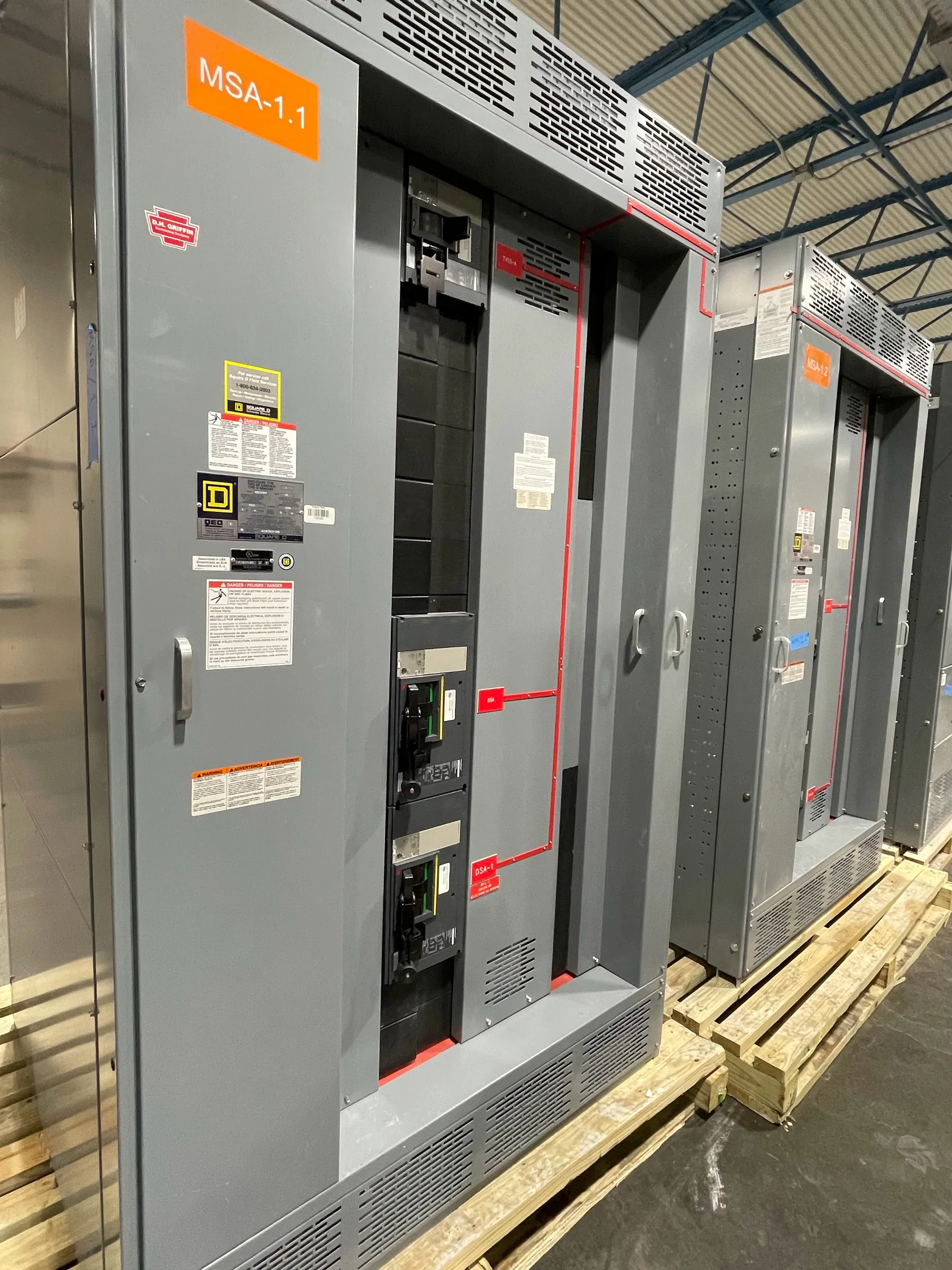
Wastewater Switchgear Must Match the Facility’s Load Profile
Wastewater facilities depend on electrical distribution for influent pumping, process equipment, controls, ventilation, and other site-specific loads. A switchgear or switchboard design should begin with an accurate picture of what each load requires and how the facility expects it to operate. Pump motors can have different starting and running characteristics, while multiple pumps may be sequenced, staged, or operated in response to process conditions. These details affect feeder selection, protective-device coordination, bus arrangement, and the space reserved for future circuits.
For a custom equipment quotation, provide available one-line diagrams, load schedules, motor data, system voltage, and the required equipment ratings when known. Identify which loads are essential, whether pumps operate together or in rotation, and any planned expansions. The design team must review these inputs against the actual electrical system and site conditions; a motor nameplate or nominal system voltage alone does not establish the required switchgear rating.
Coordinate Pump Motors, Protective Devices, and Controls
Motor feeders need to suit the connected equipment and the facility’s protection and control scheme. Relevant considerations can include motor starting method, overload protection, short-circuit protection, control voltage, and the interface with a motor control center, variable-frequency drive, soft starter, or other equipment. The right arrangement depends on the project design. Switchgear should not be assumed to replace motor-control equipment or to provide functions that belong in another part of the system.
Coordination among upstream and downstream protective devices is important to limiting the extent of an interruption when a fault occurs. The engineer responsible for the facility should establish the protection approach using the available system data and applicable requirements. Changes to pump sizes, drive types, transformer arrangements, or utility service can affect the design and should be brought forward before equipment details are finalized.
Plan Standby Power as a System Interface
Where wastewater operations include standby generation, the switchgear design must account for how normal and alternate sources connect to the distribution system. Depending on the project, this may involve transfer equipment, interlocking, source monitoring, control wiring, and provisions for generator connections. Source capacity and the facility’s operating priorities influence which pumps and other loads can run during an outage, and whether loads are started or shed in a defined sequence.
Share generator information, transfer-system requirements, control diagrams, and the intended emergency-load schedule during design review. The equipment configuration must be compatible with the full power system, not just the generator rating. Source transitions, protective settings, available fault current, and the behavior of motor loads during restoration require engineering review. No single switchgear arrangement is appropriate for every standby-power scheme.
Address Moisture and Corrosion Exposure with the Right Enclosure
Wastewater sites can include damp rooms, washdown areas, chemical exposure, outdoor installations, or other conditions that differ substantially from a clean indoor electrical room. Describe the actual location and exposure rather than assuming that every wastewater facility needs the same enclosure. The specified enclosure type and rating should be selected for the installation conditions and applicable project requirements. An enclosure rating is not a substitute for evaluating condensation, corrosive agents, temperature, ventilation, access, or the condition of the surrounding space.
Provide the intended indoor or outdoor location, mounting arrangement, exposure to moisture or chemicals, and any site-specific access constraints. Also identify available room dimensions, cable-entry direction, working clearances, and routing requirements. These details can affect enclosure construction, equipment layout, and installation interfaces. Final suitability requires review by qualified project personnel familiar with the site and governing requirements.
Confirm Ratings, Construction, and Applicable Standards
System voltage and equipment ratings are related but distinct. The project documents should identify the system conditions and the required ratings for the assembled equipment and its components. Available fault-current information, grounding arrangement, service configuration, and specified protective devices are among the details needed for engineering review. Ratings and project requirements must be confirmed for the particular design; they should not be inferred from a facility’s voltage alone.
UL 891 applies to applicable low-voltage switchboards, not to every form of switchgear or to medium- and high-voltage equipment. Whether a particular assembly is within that scope, and what listing or other compliance requirements apply, depends on the product and project specification. Confirm applicable standards, listing expectations, and documentation needs before release. Site conditions, electrical design, and code requirements call for review by qualified professionals.
Prepare Wastewater Project Details for a Custom Quote
A useful quote package includes the one-line diagram, equipment schedule, system voltage, required ratings, available fault-current data, motor and drive information, standby-power arrangement, enclosure requirements, and any specified standards or listing criteria. Add dimensions, cable-entry preferences, control and communication interfaces, and known future feeder needs. If information is preliminary, identify what remains subject to engineering confirmation so assumptions are visible during review.
Custom switchgear and power-distribution assemblies are manufactured in the United States using all-American components and can be shipped nationwide, including to Nevada. Short lead times are supported, but timing depends on the final scope, design review, component requirements, and project documentation. Early coordination helps align the equipment with wastewater process loads, standby-power interfaces, and facility conditions before the design is finalized.