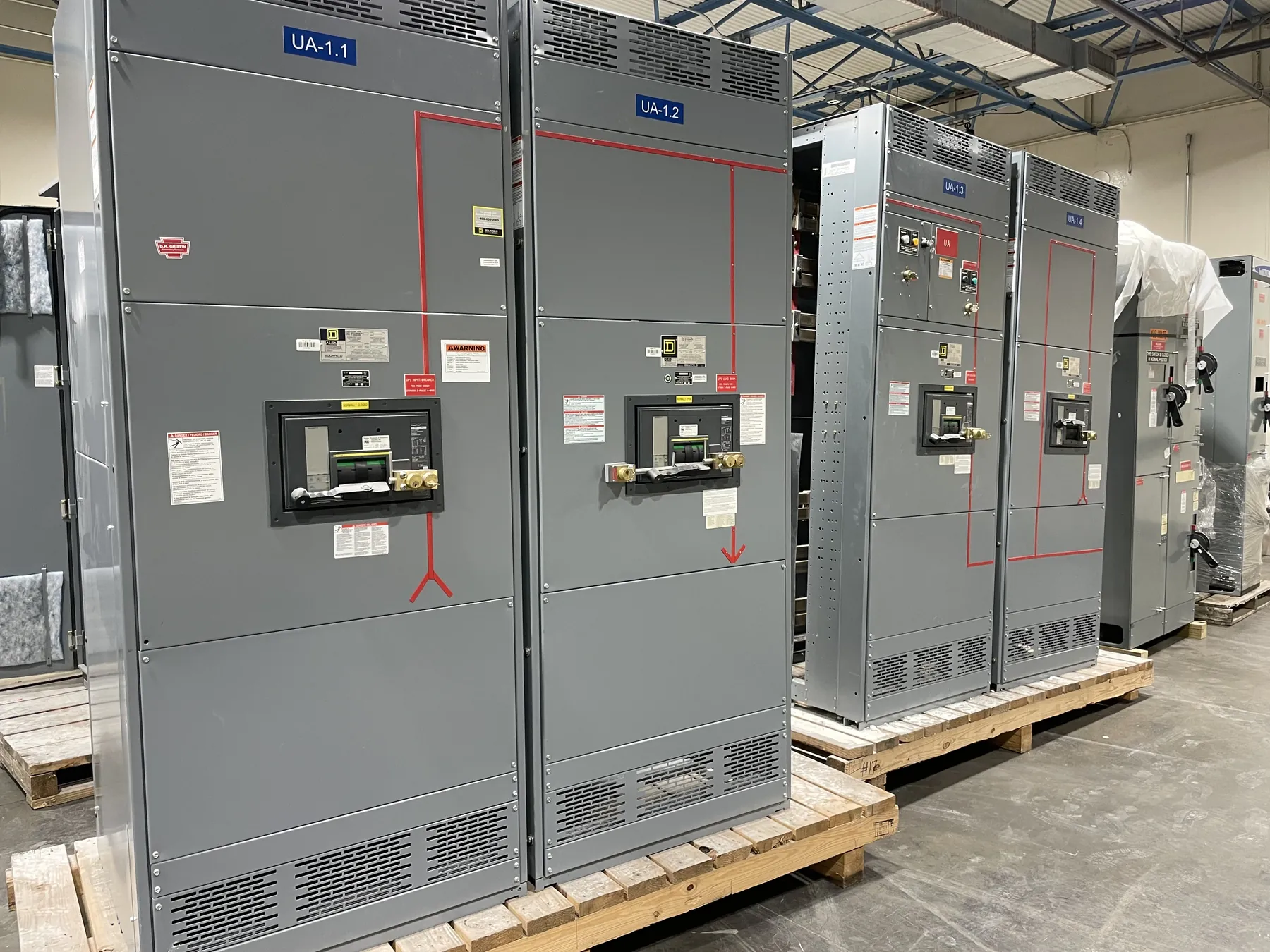
Mining Switchgear for Mesquite, Nevada Operations
Mining power distribution has to match the work performed at the site, not just the nameplate voltage of a supply. For a Mesquite-area project, the distribution plan may need to serve fixed process equipment, ventilation, water handling, material movement, workshops and site services. Each duty brings different load behavior, operating schedules and consequences if power is interrupted. Our U.S. manufacturing team builds new custom switchgear and power-distribution equipment for customer projects, using all-American components and shipping nationwide, including to Nevada. The equipment configuration begins with the project’s electrical design and operating requirements; it is not selected from a generic “mining” package.
Define Motor and Feeder Duties Before Selecting Equipment — Mining Switchgear in Mesquite, NV
Motor feeders should be specified by the actual motor and its starting and operating method. Relevant information can include motor ratings, full-load current, starting characteristics, drive or starter type, duty cycle, expected simultaneous operation and the upstream source. Large motors or groups of motors can influence voltage drop and available capacity, so the engineer should consider both normal operation and starting conditions. A feeder for a variable-frequency drive may require different coordination and connection details from one serving a motor starter.
Identify non-motor loads as well, including lighting, control power, receptacles, communications and ancillary process equipment. Load schedules should distinguish continuous and intermittent duties and identify essential loads, where applicable. This helps establish a practical arrangement of sections, feeders and spare provisions without assuming that unused space or capacity is available. Final selections depend on the project one-line diagram, load study and review by qualified electrical professionals.
Coordinate Fault Protection and Upstream Interfaces
Protective devices must be coordinated with the available fault current, source characteristics, conductor and equipment ratings, and the required protection strategy. A device’s interrupting rating is not the same thing as system voltage, and neither value alone establishes that an assembly is suitable for a particular installation. Provide the available fault-current information at the proposed switchgear location, along with upstream protective-device data and downstream equipment details. If those inputs are preliminary, identify them as such so the design can be revisited when the utility or facility study is complete.
Protection settings, selective coordination, ground-fault functions and arc-flash considerations are project-specific engineering matters. The switchgear configuration should align with the approved protection study and applicable project requirements; no setting or protection scheme should be assumed from a product description. Confirm the required system voltage, bus and feeder ratings, neutral and grounding arrangement, metering, control interfaces and communications before release for manufacture.
Account for Dust, Ventilation and Mesquite Conditions
Mining environments can expose equipment to airborne dust, vibration, temperature variation and maintenance constraints. Describe where the assembly will be installed—such as a controlled electrical room, process building or other site location—and whether the room has filtration, positive pressure, cooling or other environmental controls. Dust exposure at the equipment itself depends on the enclosure and installation conditions. Enclosure selection, ventilation openings and cooling provisions must be considered together; changing one can affect the suitability of the overall arrangement.
For a Mesquite project, check design ambient temperatures and ventilation needs against the selected equipment’s published ratings. The outdoor climate alone does not establish the temperature inside an electrical room, and a nominal equipment rating should not be treated as proof of suitability for every site condition. Provide expected room temperatures, elevation if relevant to the design, solar exposure for outdoor installations, dust-control measures and any unusual corrosive or moisture conditions. Qualified engineers should confirm the environmental assumptions and equipment ratings for the actual location.
Prepare Project Inputs for a Useful Quotation
A clear quotation package helps connect the requested equipment to the mine’s distribution plan. Useful inputs include the one-line diagram, load and feeder schedule, system voltage, bus requirements, available fault current, protective-device preferences, metering needs, enclosure location and environmental conditions. Include motor data and starting or drive details for significant loads, plus required interfaces to control systems or other assemblies. Note applicable project specifications and any required submittal format. If a detail is undecided, mark it for engineering review rather than treating an estimate as a final design requirement.
Ratings, product listings and project-specific details require confirmation. UL 891 applies to applicable low-voltage switchboards; it should not be taken to cover every switchgear configuration or other voltage class. Any requested listing or standard must be checked against the actual product scope and specification. Our team can use the project documents to define the new manufactured assembly and identify open technical questions before the configuration is finalized.
Plan Delivery and Installation Coordination
Mining facilities may have constrained access, staged construction, limited laydown space or installation windows tied to process work. For shipment to Mesquite, provide the delivery location, receiving constraints, unloading arrangements, route or access limitations, and any required coordination with the site contractor. These details help the project team plan logistics without presuming a local manufacturing facility or a particular delivery schedule. Nationwide shipping is available, while timing depends on confirmed scope and production planning.
Before installation, the responsible project team should verify that the delivered equipment matches the approved drawings and that site conditions, feeder connections, protection coordination and ventilation provisions remain consistent with the design basis. Changes to loads, source data or room conditions can affect equipment selection and should be reviewed by qualified engineers. This coordination gives a Mesquite mining project a more dependable path from defined electrical duties to a switchgear assembly suited to its documented requirements.