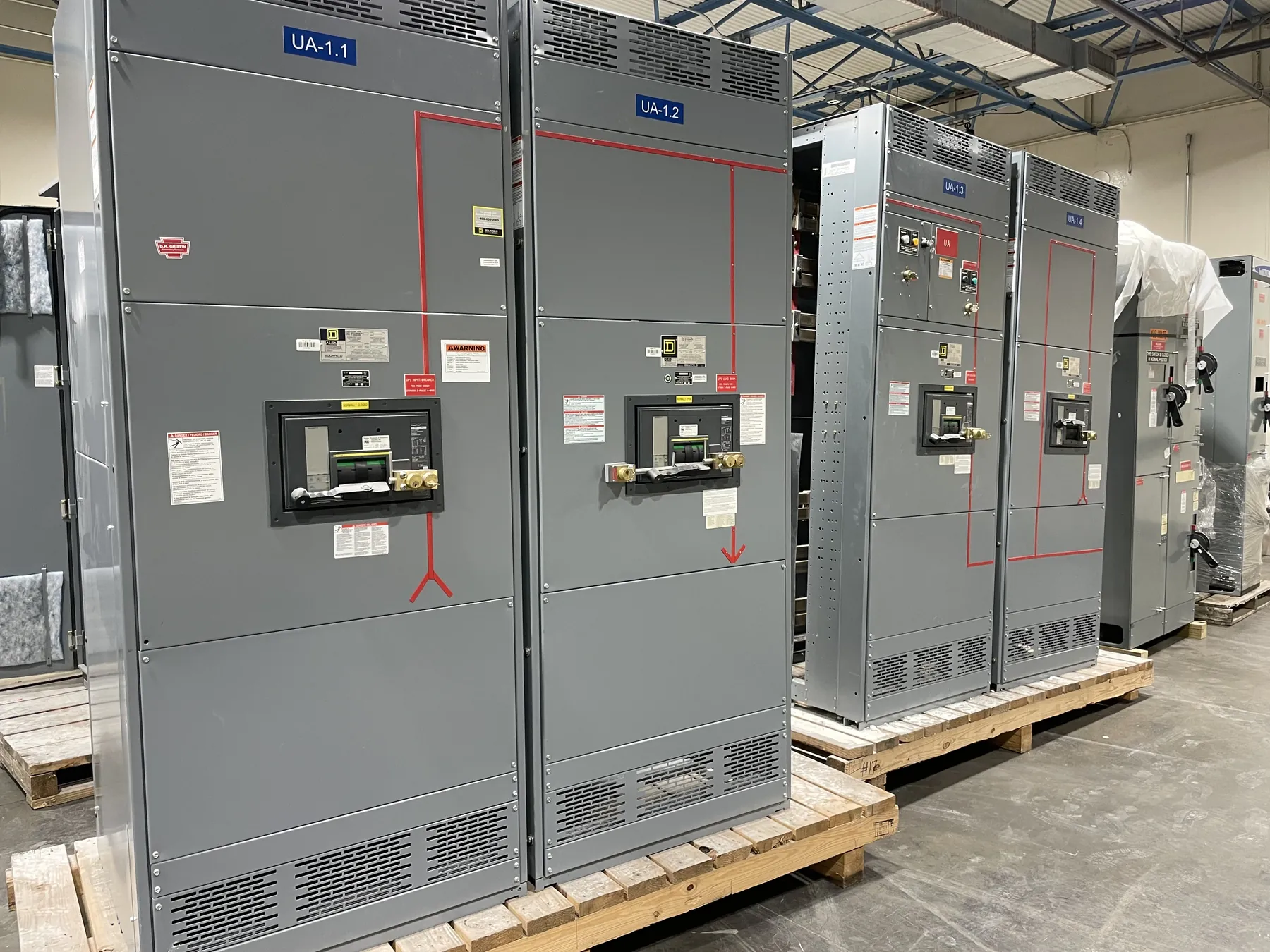
Metal-Enclosed Switchgear for Lovelock, Nevada Projects
Metal-enclosed switchgear can provide a coordinated assembly of switching and protective devices within metal compartments, with the arrangement selected for the electrical system and the site. For a Lovelock project, start with what the equipment must connect, control and protect—not with an enclosure name alone. A one-line diagram, system voltage, available fault current, source and load information, and the required feeder count give the design team a practical basis for developing a configuration.
Site conditions matter as well. Indoor or outdoor placement, available floor space, equipment access routes, environmental exposure and the means of handling sections at delivery can affect enclosure and layout choices. A Nevada destination does not by itself establish the required environmental rating or installation details; those need review against the actual location and project documents.
Switch-and-Fuse or Breaker Arrangements
A switch-and-fuse configuration may suit applications where a fused protective device is appropriate for the connected circuit. Fuse selection must be coordinated with system voltage, load characteristics, fault conditions and upstream and downstream protection. Consider whether replacement access, spare-fuse management and the operating function required at each feeder fit the facility’s maintenance approach.
Breaker-based arrangements offer a different protection and switching approach. The specified breaker type, trip functions, interrupting capability and coordination requirements depend on the application; a breaker should not be treated as an interchangeable substitute for a switch and fuse. For either arrangement, identify the number and purpose of incoming, tie and outgoing feeders, plus any metering, control power or interlocking interfaces. That detail helps prevent a quotation from overlooking a required compartment or connection.
Metal-Enclosed and Metal-Clad Are Not Synonyms
Metal-clad construction is a particular form of metal-enclosed equipment, generally associated with more defined compartmentalization and removable circuit-interrupting devices. Metal-enclosed describes a broader range of assemblies and does not, by itself, promise a specific barrier arrangement or construction detail. Product terminology and applicable standards vary with equipment type and voltage class, so compare the proposed construction and documented features rather than relying on labels alone.
Ask which components occupy separate compartments, what barriers separate them, and how access is provided for inspection or service. The answers affect the equipment footprint, cable routing, maintenance planning and the degree to which work on one section is separated from adjacent sections. Barrier choices must be evaluated as part of the complete design; they do not eliminate the need for qualified engineering review or site-specific operating procedures.
Fault Duty, System Ratings and Grounding
Equipment ratings must be checked against the electrical system and the conditions at the point of connection. A voltage rating is not the same as the nominal system voltage, and fault-current capability cannot be selected from a general product description. The engineer needs the available fault current, system grounding method, source characteristics and protection information to evaluate the required ratings and coordination.
Grounding provisions should be defined for the assembly and its interfaces, including the equipment grounding path, connection to the facility grounding system and any neutral arrangement required by the design. Confirm how incoming and outgoing conductors enter, where terminations occur, and whether cable space and lug arrangements match the specified conductors. Ratings, listings, construction details and project compliance must be confirmed for the actual equipment and application.
Plan Lovelock Delivery and Commissioning Early — Metal-Enclosed Switchgear in Lovelock, NV
Before release, coordinate feeder quantities, section dimensions, shipping configuration and the route from the receiving point to the installation location. Access constraints, unloading equipment, staging space and weather exposure during handling can affect how delivery is planned. Confirm who is responsible for receiving inspection, setting and anchoring the equipment, field connections, control wiring, system checks and commissioning. Those responsibilities may involve the manufacturer, electrical contractor, engineer, commissioning provider and facility team; they should be assigned in project documents rather than assumed.
Provide drawings and interface requirements early, including cable entry direction, conduit locations, control and communications needs, and any connection to existing equipment. Changes made after layout approval can affect section arrangement and field work. A clear division of responsibilities also helps ensure commissioning activities are planned around the approved design and site conditions.
Information for a Project-Specific Quote — Metal-Enclosed Switchgear in Lovelock, NV
A useful quotation package includes the one-line diagram, equipment schedule, system voltage and grounding details, available fault-current information, feeder count and device preferences. Include required enclosure environment, access and barrier expectations, metering and control requirements, cable and termination data, and the applicable project specifications. Identify delivery destination and handling constraints in Lovelock, along with the requested scope for documentation and commissioning support.
Our company manufactures new custom power-distribution equipment in the United States using all-American components, with nationwide shipping and support for short lead times. Actual configuration, ratings, listing applicability, schedule and shipment details require review against the project documents and manufacturing requirements. Early coordination gives the engineering team a clearer basis to develop equipment that fits the electrical design and the realities of installation at the Lovelock site.