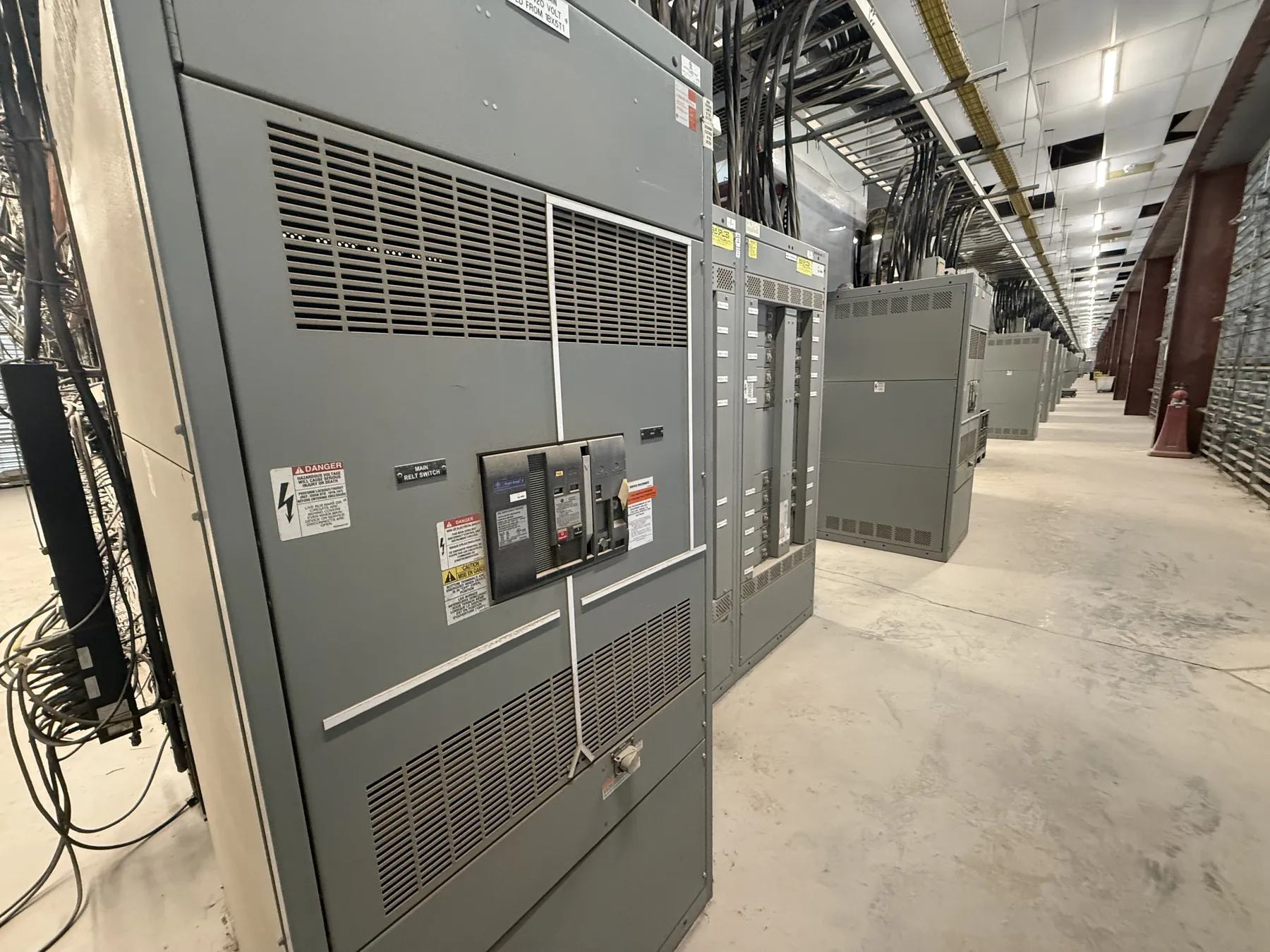
Casino Electrical Distribution for Lovelock Projects
Casino facilities bring together gaming areas, lodging, food service, back-of-house operations, and building systems that may have different continuity and code requirements. For a Lovelock project, the distribution design should begin with a load inventory and a clear account of which systems must remain available during a utility interruption, which are life-safety loads, and which can be interrupted or restored in stages. A switchboard arrangement can support those distinctions, but the equipment cannot establish them on its own: the project’s qualified electrical engineer and code professionals must define the applicable loads, design criteria, and interfaces.
Custom low-voltage switchboards can be configured around project-specific feeder arrangements and distribution needs. Our company manufactures new equipment in the United States using all-American components, with short lead times as a design and manufacturing goal. We ship nationwide, including to Nevada. Final configuration, applicable ratings, listing status, and schedule depend on the reviewed project requirements and must be confirmed before an order is finalized.
Separate Critical, Life-Safety, and General Loads — Casino Switchgear in Lovelock, NV
Keep the load categories explicit in the one-line diagram and equipment schedule. Life-safety circuits are governed by applicable codes and design requirements; critical operational loads may include systems the casino chooses to prioritize, while general loads may be suitable for controlled interruption. These categories should not be treated as interchangeable. The engineer should identify the source for each group, transfer or isolation requirements, feeder destinations, and any required separation in the distribution architecture.
Useful planning questions include whether emergency and normal sources enter separate sections or separate equipment, how loads are grouped for restoration, and whether future expansion requires reserved provisions. The answers depend on the site design and applicable requirements. A proposed switchboard should be reviewed against the engineer’s drawings, fault-current information, protective-device coordination, available space, and connection details. Equipment ratings describe limits under stated conditions; they are not the same thing as system voltage, and a rating cannot be selected from a facility label alone.
Coordinate Emergency Power and Transfer Interfaces — Casino Switchgear in Lovelock, NV
Emergency power planning involves more than identifying a generator connection. The design team should establish the source arrangement, transfer equipment responsibilities, required interlocks and control interfaces, grounding approach, and the sequence for bringing designated loads back online. Confirm which components are supplied by the switchboard manufacturer and which are furnished by others, including transfer equipment, generator controls, protective relays, and field wiring. Clear boundaries reduce gaps between equipment drawings and the broader electrical design.
Load pickup and restoration sequencing matter in a mixed-use casino facility. The engineer may need to account for starting characteristics, demand, and the intended priority of building systems, while operations staff can identify which functions are most disruptive to lose. The manufacturer can work from approved design information to coordinate equipment sections and connection points, but cannot determine site-specific emergency-power adequacy or code compliance without the responsible engineering review.
Plan Phased Maintenance Around Facility Operations — Casino Switchgear in Lovelock, NV
Casinos may need maintenance work staged to limit disruption across occupied areas and operating departments. Early planning should identify which distribution sections can be isolated under the approved work plan, what loads depend on each section, and whether temporary arrangements are part of the engineer’s design. Switching plans, hazard controls, and work on energized equipment belong to qualified personnel following site procedures; they should not be inferred from a product description.
For phased construction or renovations, define the boundaries between existing and new distribution, the timing of feeder cutovers, and the responsibility for temporary power. Equipment sectioning, spare provisions, and feeder routing can affect how later phases are integrated, but each choice has space, coordination, and cost implications. Provide the project team’s sequence assumptions during quotation and drawing review so the proposed assembly can be checked against the intended construction plan.
Confirm Feeder Quantities, Delivery, and Commissioning
Before quotation, provide the latest one-line diagram, feeder schedule, system information, available fault-current data, required equipment ratings, enclosure and installation conditions, and any specified listing or project documentation. Include feeder quantities and terminations, cable or bus connection preferences, metering and control needs, incoming-source details, and spare or future provisions. Identify whether the equipment must fit a particular room, access route, or existing lineup, and share dimensions and constraints for review rather than assuming a standard footprint.
For Lovelock delivery, coordinate the site’s receiving hours, unloading capability, access route, staging area, and sequence for moving equipment into the electrical room. These details can influence shipment planning and packaging requirements; they should be confirmed with the project team and carrier rather than assumed. Establish commissioning responsibilities early as well: identify who will inspect installation, complete field connections, perform required testing, verify settings, and document acceptance. The equipment scope and the commissioning scope should be stated separately so no required task falls between parties.
Review Ratings, Listings, and Project Scope Before Release
Low-voltage switchboards may be designed to applicable UL 891 requirements when specified and confirmed for the particular assembly. That standard does not apply to every type of switchgear or to all distribution products, and no listing or certification should be assumed for a proposed configuration. The project team should confirm required standards, ratings, environmental conditions, and documentation against the equipment scope and governing design.
Our role is to manufacture new custom power-distribution equipment from reviewed project requirements, coordinate the assembly details, and provide drawings for the project’s review process. Nevada projects can be served through nationwide shipping, with delivery and handling planned around site conditions. Final equipment selection and system design remain subject to qualified engineering review, site information, and confirmation of the applicable project requirements.