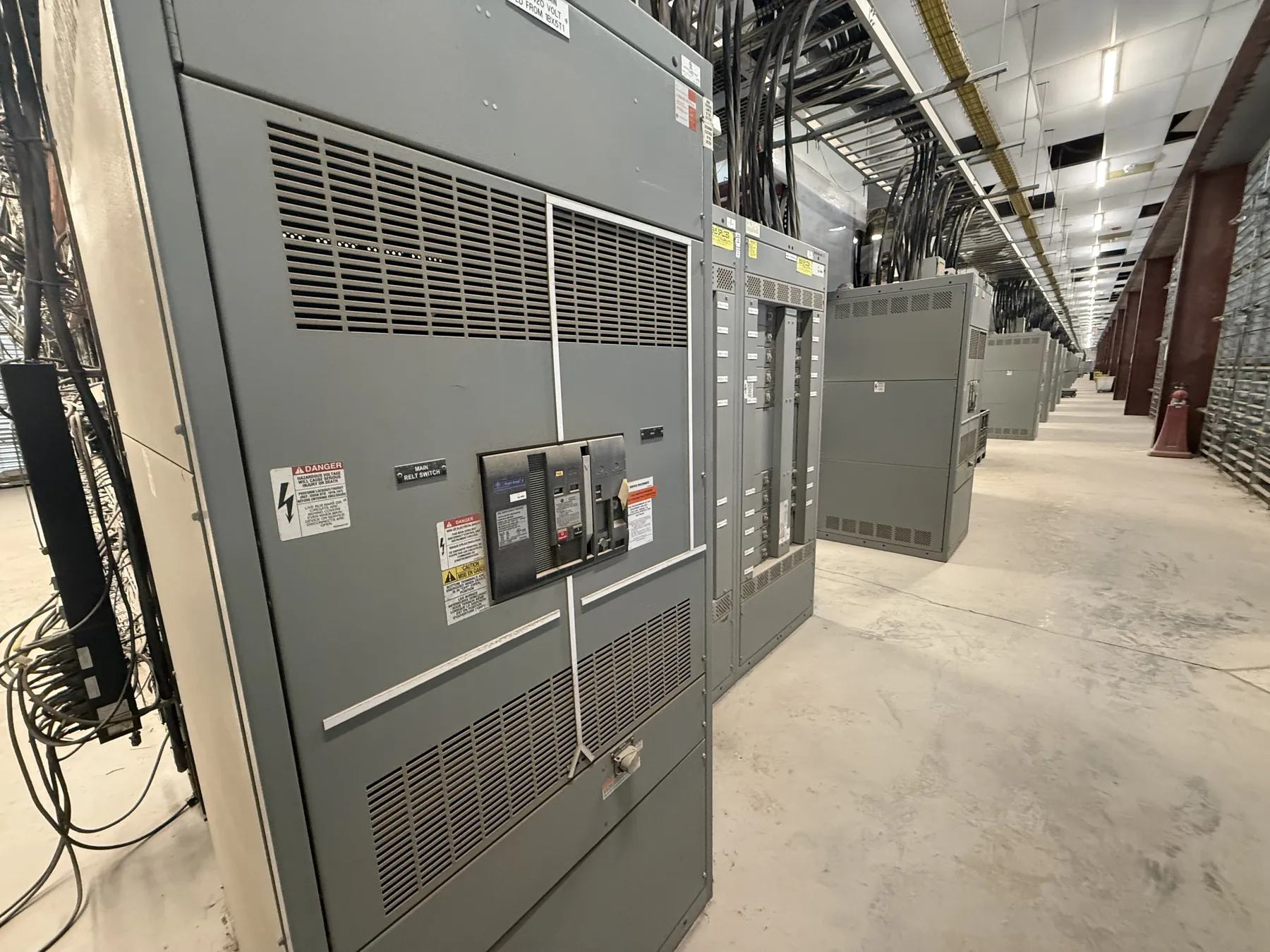
Low-Voltage Switchboards for Lovelock Projects
Low-voltage switchboards bring incoming power and distribution feeders together in a coordinated assembly. For a Lovelock facility, the right arrangement depends on the service interface, the number and type of loads, the electrical design, and the space available for installation. A useful equipment quotation starts with the project’s one-line diagram and a clear account of what the switchboard must connect—not simply a requested ampere rating.
We manufacture new custom switchboards in the United States using all-American components and ship nationwide, including to Nevada. The assembly can be configured around project-defined service and feeder requirements. Ratings, construction details, applicable listings, and schedule assumptions must be confirmed against the final design and project documentation.
Service and Feeder Arrangements — Low-Voltage Switchboards in Lovelock, NV
The service section establishes how the switchboard connects to the source, while distribution sections serve downstream panels, equipment, or other loads. The design team should identify the incoming conductors or bus connection, main-device requirements, metering provisions, and any transition to adjacent equipment. Those interfaces affect section layout, conductor entry, termination space, and how the assembly fits the electrical room.
Feeder quantities and types should be set early. Provide the number of outgoing circuits, their protective-device requirements, intended loads, and any planned spare positions. A feeder schedule that changes late can affect section widths, bus arrangement, component selection, and coordination with downstream equipment. Spare capacity should be defined as a project requirement rather than assumed from unused physical space.
Bus Sizing and Equipment Ratings
Bus sizing is an engineering decision based on the specified system, load calculations, operating conditions, and design requirements. It is not determined by the building’s voltage alone. The equipment’s current rating describes a particular rating of the assembly or component; it should not be mistaken for system voltage or treated as a substitute for a complete design review.
Environmental and installation conditions also matter. Confirm the intended indoor or outdoor application, ambient conditions, enclosure requirements, room clearances, and conductor routing. For Lovelock delivery and installation planning, verify access routes, receiving capabilities, unloading arrangements, and the route from the delivery point to the final equipment location. These details can affect how a custom assembly is divided for shipment and how sections are handled onsite.
Available Fault Current and Protection Coordination
Available fault current at the switchboard location is a key input to selecting and documenting equipment ratings. The responsible electrical engineer should establish the expected value using the project’s source and system information, then confirm that the specified assembly and protective devices are appropriate for that application. Do not infer adequacy from a voltage or bus rating alone.
Protective-device types and settings must also be coordinated with the upstream source and downstream loads. Changes to transformers, generators, utility service characteristics, or feeder lengths can affect the study and equipment requirements. Provide the current one-line diagram, fault-current information, and relevant coordination requirements with the quotation request; final selection remains subject to qualified engineering review and site-specific information.
When UL 891 May Apply — Low-Voltage Switchboards in Lovelock, NV
UL 891 may apply to certain low-voltage switchboards, depending on the product configuration and project scope. It does not establish that every switchboard design—or other classes of electrical equipment—is covered. If the project requires a listed switchboard, identify that requirement explicitly and request project-specific documentation showing the applicable listing and its scope.
Listing requirements should be reviewed alongside the specified ratings, construction, and intended use. Do not assume that a general reference to a standard confirms that a particular assembly is listed or suitable for a specific installation. The project team should verify that final equipment documentation aligns with the contract documents and authority requirements.
Quotation Inputs, Delivery, and Commissioning
A complete request helps resolve design questions before fabrication planning. Useful inputs include the one-line diagram, feeder schedule, service and system details, available fault-current information, requested ratings, enclosure and access conditions, applicable listing requirements, and relevant specifications. Identify the Lovelock delivery location and receiving constraints, including delivery hours, unloading responsibility, site access, and any handling limitations. These details help establish shipping and coordination assumptions without presuming a particular route or delivery date.
Define commissioning responsibilities early as well. Clarify who will install the switchboard, complete field terminations, verify the installed configuration, perform required project checks, and coordinate energization under the site’s approved procedures. The equipment manufacturer, electrical contractor, engineer, and owner may have distinct responsibilities. Confirm those roles in project documents, and have qualified professionals review the design and site conditions before equipment selection and installation proceed.