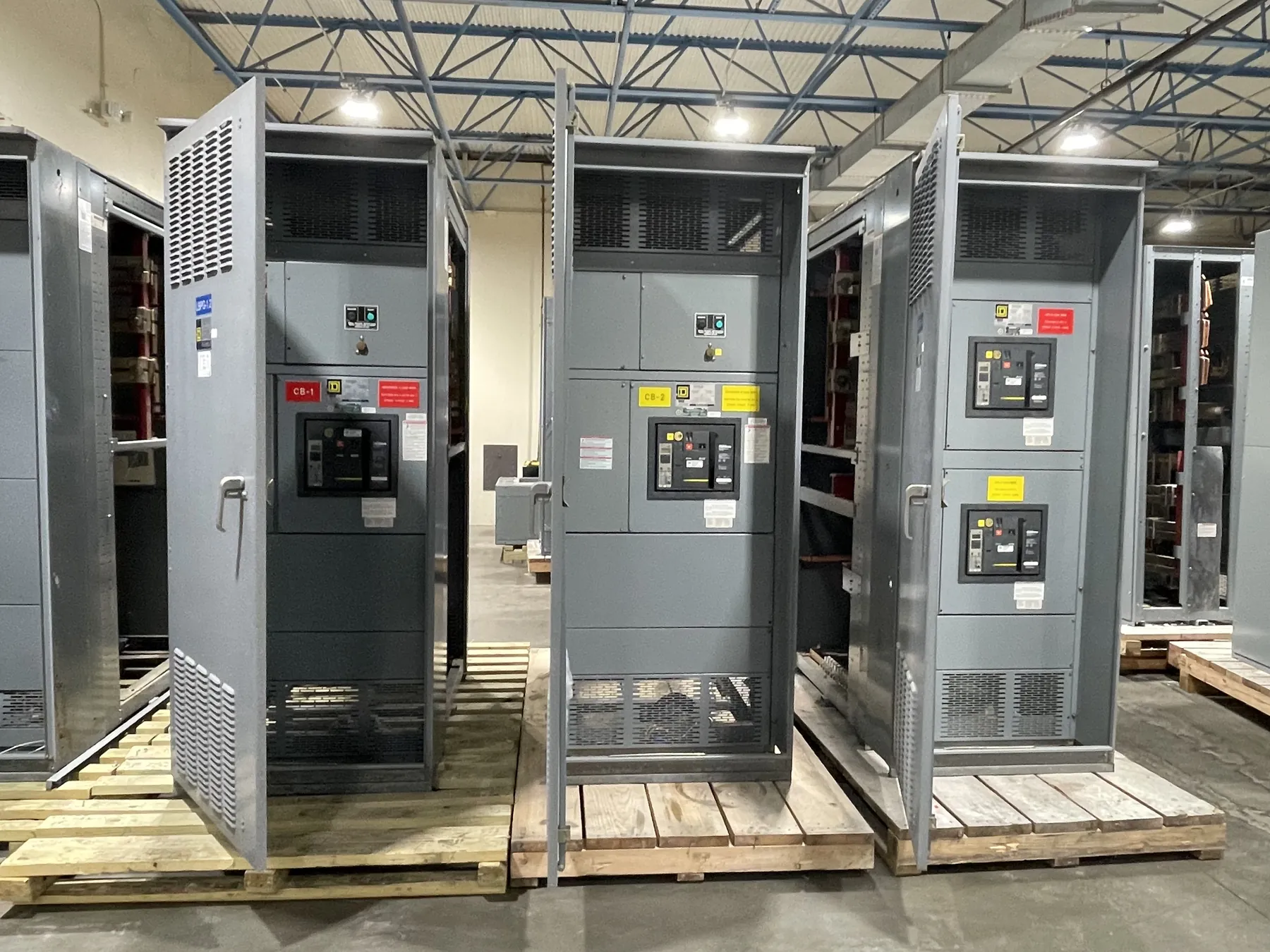
Motor Control Centers for Las Vegas Facilities
Motor control centers (MCCs) group motor starters and related control equipment into sections designed for a facility’s distribution and operating needs. For a Las Vegas project, the right configuration depends on more than the number of motors. Engineers need to understand the service characteristics, expected loads, operating environment, available fault current, and utility metering requirements before sizing the main section. A custom MCC can be configured around those project inputs rather than selected from an assumed standard arrangement.
Equipment is manufactured in the United States with all-American components and can be shipped nationwide, including to Nevada. Site access, unloading arrangements, indoor or outdoor placement, room dimensions, and the route to the installation location can affect section layout and delivery planning. Share these constraints early so the proposed lineup can be reviewed against the facility’s actual installation conditions.
Motor Starters and VFD Integration — Motor Control Centers in Las Vegas, NV
Starter selection begins with the motor and its intended duty. Across-the-line starters may suit some applications, while reduced-voltage starting or variable frequency drives (VFDs) may be appropriate when the process calls for controlled acceleration, adjustable speed, or other drive functions. The choice affects component selection, heat management, wiring, control interfaces, and the space required within the MCC.
For VFD units, provide motor nameplate information, load characteristics, control method, and any required communications or process signals. The drive’s input and output arrangements, bypass expectations, and coordination with upstream and downstream equipment must be evaluated for the application. A bypass configuration, for example, is not a substitute for confirming that the motor and process can operate appropriately under the intended modes. Drive selection and system integration should be reviewed by qualified electrical and controls engineers.
Short-Circuit Ratings and Feeder Protection — Motor Control Centers in Las Vegas, NV
An MCC’s short-circuit rating must be suitable for the available fault current at its point of installation and consistent with the assembly’s tested or listed configuration. It is not the same as nominal system voltage, and it should not be inferred from the rating of an individual starter or protective device. The project team should confirm the available fault current and the rating basis before equipment is specified. Changes to upstream transformers, conductors, or protective devices can affect the coordination review.
Feeder protection is another design decision, not simply a matter of choosing a breaker size. Each feeder and motor branch circuit needs protection appropriate to the connected load and the overall distribution scheme. Coordination with upstream devices, motor starting characteristics, and the facility’s continuity objectives can influence device selection and settings. Engineers should review the one-line diagram and protective-device information together; final choices require project-specific analysis and site review.
Main Section, Service Details, and Metering
Before the main section is sized, confirm the service voltage and phase, frequency, conductor arrangement, available fault current, and the intended service entrance configuration. These are system characteristics; they should not be confused with a component’s voltage or current rating. For a Las Vegas installation, utility metering requirements should also be confirmed with the serving utility and project team before the main section layout is finalized. Metering provisions, service disconnect arrangements, and utility interface requirements can affect the enclosure and internal configuration.
Quotation information should include the service details, load schedule, motor list, requested starter types, VFD requirements, control drawings or narratives, one-line diagram, available fault-current data, and any specified short-circuit rating. Identify applicable project specifications and the intended installation location as well. Where information is preliminary, state what remains unconfirmed so the design team can identify assumptions rather than treat them as approved requirements.
UL 845, Enclosure, and Maintenance Access
Ask whether UL 845 is required by the project specification, owner, or authority having jurisdiction. Its applicability and the required product configuration must be verified for the proposed MCC; a reference to the standard alone does not establish that a particular assembly is listed. Confirm the requested listing and ratings during engineering review, along with enclosure type and environmental requirements. Heat, dust, moisture, and ventilation conditions at the installation site can influence enclosure and drive choices, but the appropriate configuration depends on the actual location.
Maintenance access should be considered while planning the room and lineup. Review aisle and working-space requirements with the project’s qualified electrical professionals, and account for door or unit access, cable entry, ventilation, and the path for installation and future service. The MCC layout must also fit the available wall space and connect sensibly with incoming and outgoing feeders. Final dimensions and access requirements should be reconciled with the site plan and applicable codes before release.
Engineering Review and Equipment Quote
A useful quotation starts with coordinated project documents and clearly stated requirements. Provide the latest one-line diagram and schedules, identify open design questions, and note any required utility coordination, control-system interfaces, or site constraints. The manufacturing team can use those inputs to develop a proposed MCC arrangement for engineering review. Ratings, listing requirements, configuration, and interfaces remain subject to confirmation against the project documents and applicable requirements.
For Las Vegas projects, early communication about service and metering, installation conditions, and delivery access helps reduce avoidable layout revisions. Once qualified engineers have reviewed the design and site information, the equipment can be configured for the project’s motor loads, protection scheme, and operating needs. Lead time depends on the confirmed scope and production requirements; it should be established for the specific quotation rather than assumed.