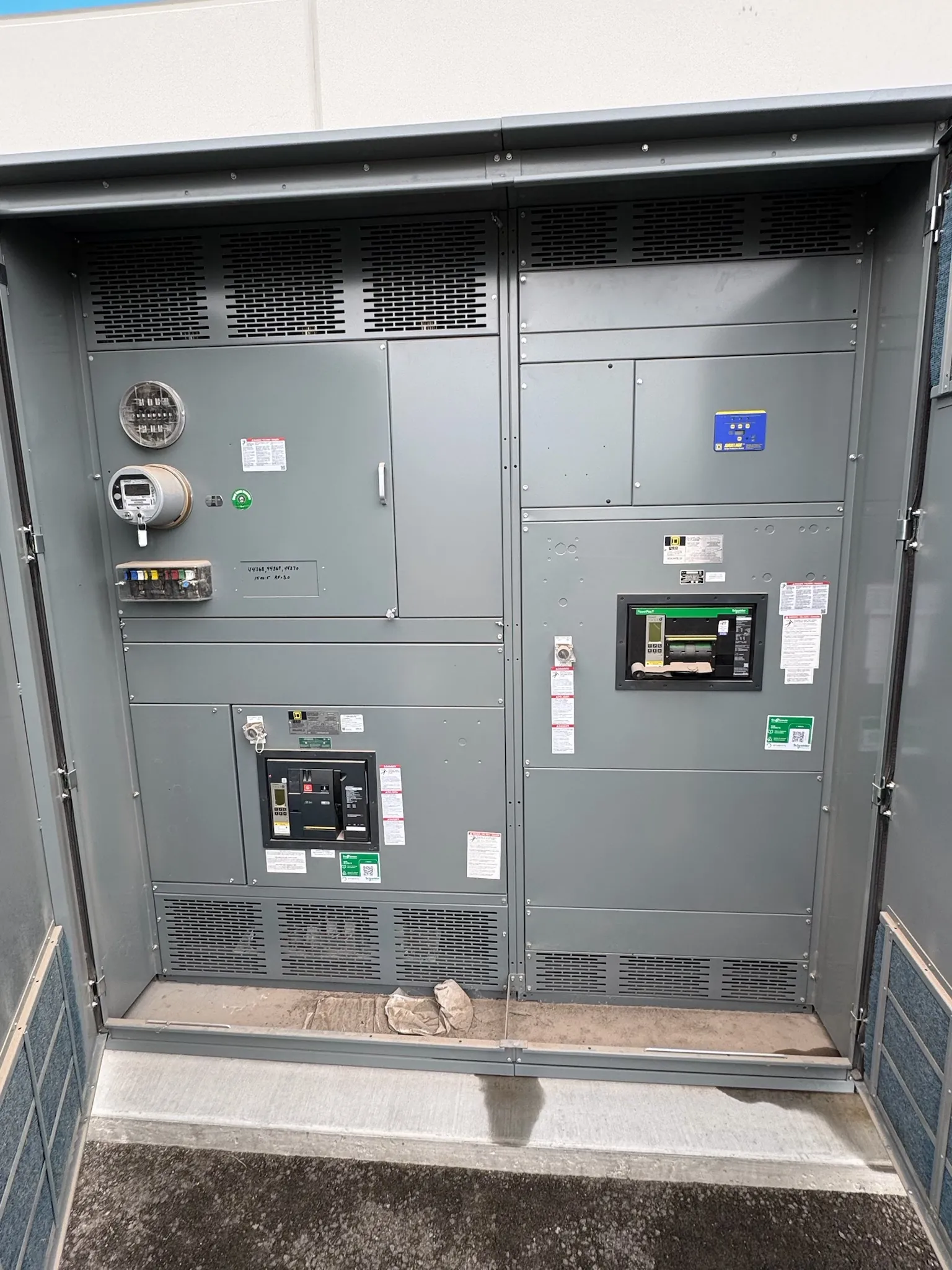
Henderson Wastewater Switchgear Starts With the Pumping Duty
Wastewater facilities depend on electrical distribution that fits the actual work of pumps, motors, process equipment and supporting systems. For a Henderson project, switchgear selection should begin with a clear account of what the facility must operate, under which conditions, and how that duty may change. A pump’s motor nameplate is important, but it is not a complete basis for sizing an assembly. The engineering review also needs connected loads, demand assumptions, operating sequences, starting characteristics where applicable, and the effects of simultaneous operation.
Document which loads are essential, which may operate together, and which can be deferred during constrained conditions. Identify planned pump additions, treatment upgrades or other expansion early. Those assumptions inform bus and feeder capacity, protective-device provisions, physical space and the practical limits of future modifications. A design based only on present-day demand can leave too little room for the facility’s intended next phase.
Separate Normal, Standby and Process Loads
Wastewater distribution often has to account for normal utility service and a separate standby-power arrangement. The one-line diagram should show how the normal source, standby source, transfer equipment and downstream distribution relate. The project team should define which loads require standby service, whether they must operate together, and what operating priorities apply. These decisions affect feeder arrangements, transfer interfaces and the demand expected on each source; they should not be inferred from a general description of the facility.
Motor loads deserve particular attention. Starting and operating demands, control methods, duty cycles and the selected motor-control equipment can influence feeder and protective-device choices. Switchgear interfaces must also align with equipment furnished by others, such as generators, transfer switches, motor control centers and process control systems. Confirm responsibility boundaries, electrical characteristics, control signals and connection details during design coordination rather than leaving them to field interpretation.
Choose Enclosures for the Actual Room Conditions
Moisture, condensation, washdown, chemical exposure and corrosive atmospheres can vary significantly across wastewater sites. A dry electrical room has different enclosure needs from a location exposed to damp air, splashing or process chemicals. Describe the intended installation location and the conditions equipment may experience, including ventilation, temperature, housekeeping practices and proximity to wet processes. Where corrosion or moisture exposure is present, the design team can assess suitable enclosure construction and materials for that specific environment.
An enclosure rating is not a substitute for describing the exposure. The appropriate rating depends on the installation and the relevant requirements, and it must be confirmed for the actual assembly and application. Also clarify whether the equipment will be indoors or outdoors, how cables enter, and whether access, working clearance or room dimensions constrain its arrangement. Environmental protection should be considered alongside serviceability, heat management and maintainability.
Coordinate Ratings, Protection and the Distribution Path
Bus and feeder capacity should follow the documented load and expansion assumptions, not a guessed future allowance. The project’s engineer should review demand, source characteristics, available fault information and protective-device coordination across the distribution path. Device ratings, interrupting capabilities, system voltage and assembly ratings are distinct details; a rating should never be treated as a statement of the system voltage or as proof that the complete installation is suitable.
For low-voltage switchboards, UL 891 may be relevant when applicable to the specified product. It does not apply to every form of switchgear or establish the suitability of a medium- or high-voltage assembly, busway or complete facility. Any required listing, standard, rating and project-specific configuration must be confirmed for the exact equipment. The engineer of record and equipment manufacturer should coordinate these details with the site’s electrical design and applicable requirements.
Prepare a Useful Henderson Project Quotation Package
A focused quotation review is easier when the request includes the latest one-line diagram, load schedule, equipment specifications and available fault-current information. Provide the intended system voltage and phase, normal and standby source details, major motor loads, control and metering requirements, feeder quantities, cable-entry preferences, enclosure conditions, and room or access constraints. Include connected-load and demand assumptions, along with the timing and scope of planned expansion. Identify interfaces and equipment furnished by others so the proposed distribution assembly can be coordinated with the broader project.
For Henderson facilities, site access, delivery routing, unloading arrangements and installation sequencing are practical planning inputs. They can affect how equipment is configured and moved into its final location, but they do not determine electrical design. Confirm dimensions, shipping sections and handling constraints with the project team before finalizing the room layout. No assumed local facility condition should replace site documentation.
Manufactured Equipment, Reviewed for the Project
We manufacture new custom switchgear and power-distribution equipment in the United States using all-American components, with short lead times as a stated manufacturing advantage and nationwide shipping, including to Nevada. The equipment configuration, applicable ratings, listing requirements and schedule depend on the final project information and review; no delivery date or technical suitability should be assumed from a general description.
Early coordination among the facility owner, electrical engineer, contractor, generator or transfer-equipment supplier, and switchgear manufacturer helps expose conflicts before procurement and installation. With loads, source interfaces, exposure conditions and future plans documented, the project team can evaluate an assembly that supports wastewater operations while fitting the Henderson site’s actual electrical and physical requirements.