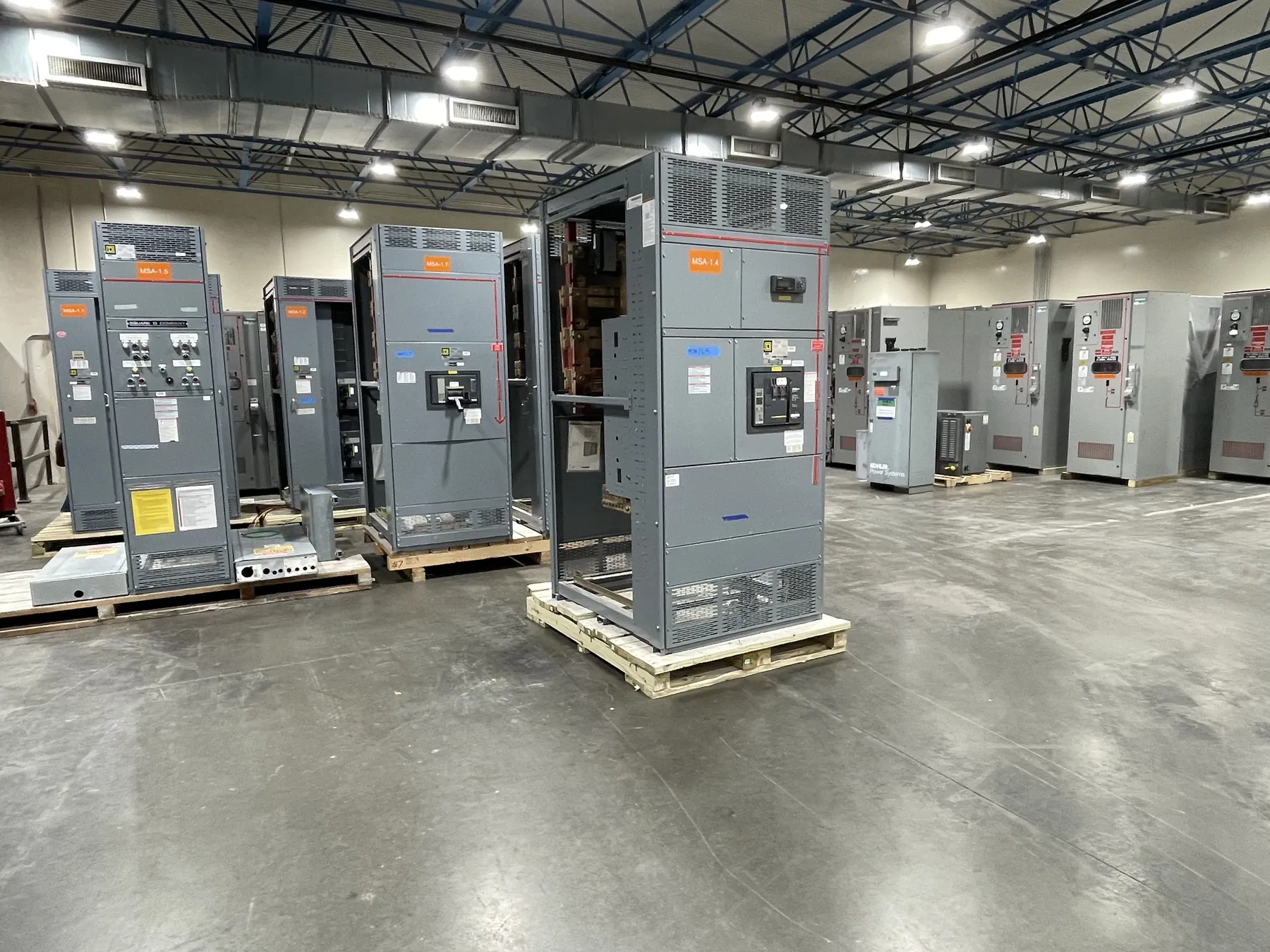
Mining Switchgear for Henderson-Area Project Requirements
Mining electrical distribution must reflect the loads, operating conditions and expansion plans of the specific site—not simply the name of the industry or city. For a Henderson project, begin by documenting what the equipment will serve, where it will be installed and how the facility expects to operate. A custom switchboard or switchgear assembly can then be evaluated against the project’s distribution arrangement and interface requirements. We manufacture new custom power-distribution equipment in the United States using all-American components, with shipping available nationwide, including to Nevada. Final configuration, ratings and applicable listings require review against the project documents.
Define Motor Duties and Feeder Loads
Identify each significant motor and feeder, its connected load, expected operating pattern and relationship to other loads. Pumps, fans, conveyors, crushers and process equipment can place different demands on a distribution system, so a general equipment list is not enough to establish feeder requirements. Provide motor nameplate information where available, starting or control-method details, and any known operating sequences. Also identify loads that are intermittent, continuous, critical to process continuity or expected to operate together. These inputs help the project engineer assess feeder arrangements and protective-device coordination; they do not, by themselves, determine a final design.
Document connected load separately from demand assumptions. Explain the basis for expected simultaneous operation, any diversity assumptions and loads planned for future phases. If production changes or equipment additions are anticipated, describe their likely timing and scope rather than relying on an unspecified allowance. This information helps engineers consider bus and feeder capacity alongside the present installation, available space, upstream supply and downstream distribution needs.
Establish Fault Protection and Coordination Interfaces
Protection choices depend on more than nominal system voltage. The available fault current, upstream protective devices, downstream equipment and required coordination approach all affect device selection and equipment ratings. Share available utility or facility fault-current information, upstream one-line diagrams and relevant device data with the project’s qualified electrical engineer. Confirm which party is responsible for providing or validating each item, especially when the source or system configuration may change.
Interrupting ratings and assembly short-circuit ratings are distinct from system voltage, and neither should be assumed from a product description alone. The engineer must evaluate the applicable system conditions and project requirements. Where selective coordination or continuity of service is important, provide the stated objectives and operating constraints early. Final settings, protective-device coordination and suitability for the installation require engineering review of the complete electrical system.
Address Dust, Ventilation and Site Conditions — Mining Switchgear in Henderson, NV
Mining-related environments can expose electrical equipment to airborne dust, process residue, temperature variation, moisture or vibration. Conditions differ from one facility and installation area to another, including at sites serving Henderson, so specify the actual location and exposure rather than relying on a broad label such as “mine duty.” Describe whether the assembly will be indoors or outdoors, the enclosure location, surrounding equipment, ventilation arrangements and any known environmental limits. Include project requirements for enclosure construction, access, cable entry and space for inspection or maintenance.
Dust management and heat dissipation can influence enclosure and room requirements. A more enclosed arrangement may affect ventilation and thermal considerations, while room airflow and nearby heat sources can affect the equipment environment. These factors need to be considered together with the manufacturer’s design information and site engineering. Do not assume an enclosure is appropriate for a particular exposure without confirming its specified construction and the project’s environmental requirements.
Coordinate Space, Connections and Future Expansion
Provide the latest available one-line diagram, equipment schedule, room or pad layout, cable approach, upstream and downstream connection details, and any governing project specifications. Identify incoming and outgoing feeder counts, termination preferences, available working and service space, and constraints on equipment dimensions or access. Where a mining process uses separate areas or staged distribution, clarify how each section interfaces with the broader system. Changes to a source, feeder route or load list can affect the assembly configuration, so document known revisions and unresolved decisions.
For planned expansion, distinguish confirmed future loads from possible additions. Describe whether future capacity is expected to require spare feeder provisions, additional distribution sections or a different bus arrangement. The right choice depends on the electrical design, physical layout, operating plan and applicable ratings—not simply on reserving the largest practical bus. Qualified engineers should review expansion assumptions against the anticipated system configuration.
Prepare a Project-Ready Quotation Package — Mining Switchgear in Henderson, NV
A useful quotation request includes the project location, required equipment type, system information, load and feeder schedules, fault-current data, environmental conditions, drawings, specifications and requested delivery milestones. Note what remains preliminary, who will provide final engineering documents and whether any listing or project-specific compliance requirements apply. UL 891 concerns applicable low-voltage switchboards; it should not be treated as a blanket qualification for every switchgear assembly or voltage class. Any requested listing, ratings and scope must be confirmed for the specific product and project.
Complete inputs help clarify design boundaries and reduce avoidable revisions during review. Our role is to manufacture new custom equipment to the confirmed project requirements; engineering decisions and suitability for a particular installation require qualified professional review. Once the scope and documents are sufficiently defined, the equipment configuration and quotation can be evaluated for the Henderson-area project, with logistics planned for shipment to Nevada.