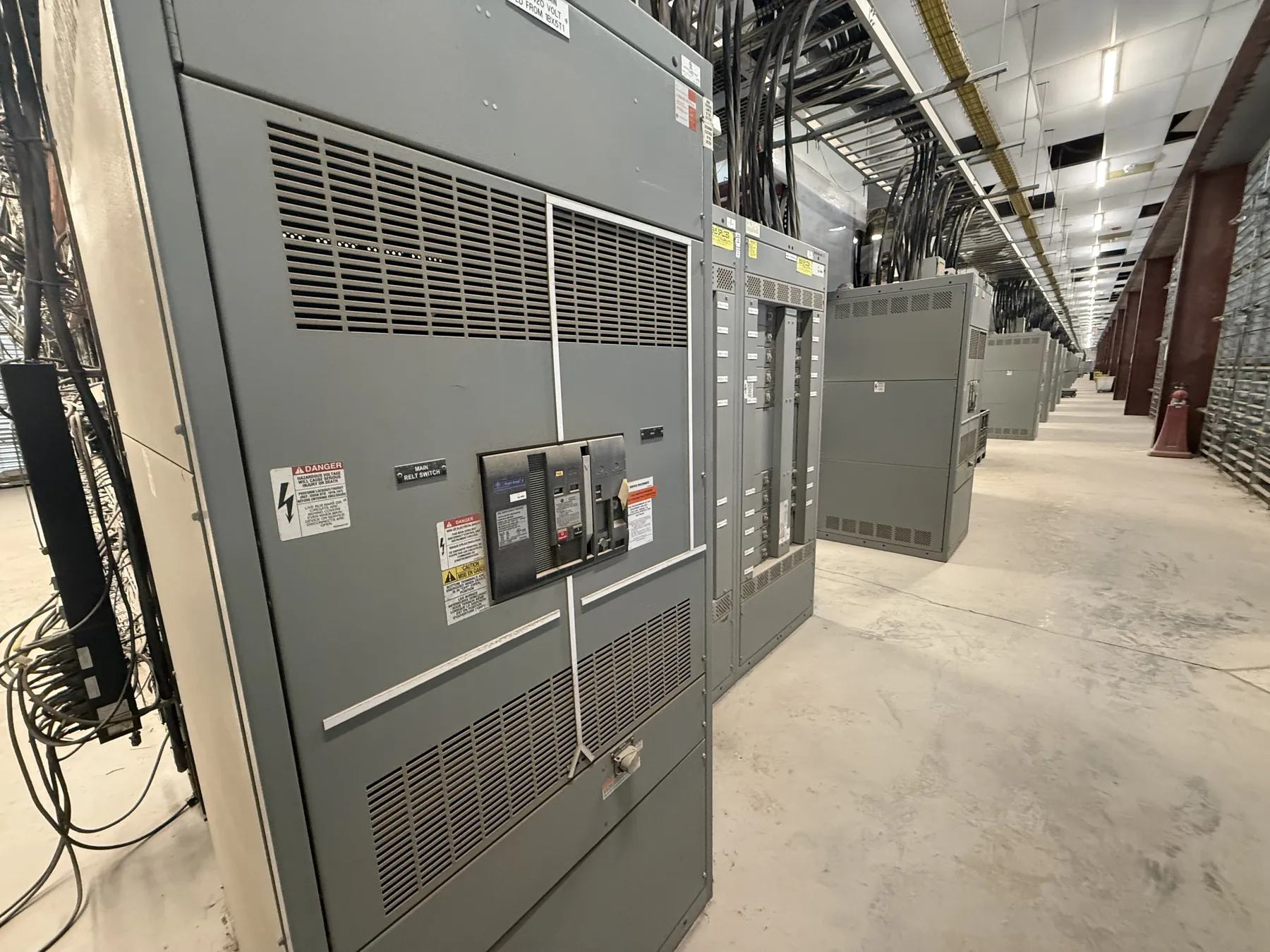
High-Voltage Switchgear for Henderson Substation Projects
Henderson projects that connect substantial loads to a utility or on-site generation system may require high-voltage substation switchgear to control, isolate and protect parts of the electrical network. The appropriate equipment depends on the project’s actual system design—not simply a voltage label or the city where the facility is located. Utility service arrangements, available fault current, environmental conditions and the intended operating configuration all affect what construction is suitable. Our U.S. manufacturing operation builds new custom power-distribution equipment and ships nationwide, including to Nevada. The exact high-voltage construction available for a project must be confirmed against its specifications and engineering requirements.
Start by identifying the system voltage and the equipment’s required ratings as separate items. Voltage classification describes the system context; ratings address the conditions the equipment is designed to withstand or interrupt. A proposed assembly also needs a defined function, such as switching, protection or connection to a transformer or other substation apparatus. Confirming these distinctions early helps prevent a quotation from treating unlike equipment as interchangeable.
Voltage Classification, Insulation and Equipment Construction — High-Voltage Switchgear in Henderson, NV
For a Henderson project, the one-line diagram and utility service documents should establish the nominal system voltage, grounding arrangement and equipment location. The engineering team can then determine the applicable voltage class and insulation requirements. Insulation coordination considers more than nominal voltage: it must account for the system’s expected stresses, grounding, protective devices and the characteristics of connected equipment. Required insulation levels should be specified and reviewed by qualified electrical engineers rather than inferred from a broad product category.
Construction choices may include the switching and interruption technology, compartment arrangement, bus configuration, enclosure design and interfaces to transformers, instrument transformers, cables or overhead connections. Those options are not universally available in one standard assembly, and their suitability depends on the project’s voltage class, duty and site conditions. Provide the intended installation arrangement and connected equipment so the manufacturer and project engineers can confirm which construction can be quoted. Do not assume a low-voltage switchboard standard applies to high-voltage substation equipment.
Bus and Feeder Capacity Starts with the Load Basis
Before selecting bus and feeder capacity, document connected load, demand assumptions and planned expansion. A connected-load list describes the equipment that could draw power; the demand basis explains how the project expects loads to operate together. Include major motors, process loads, building services, generation and any staged additions. Identify anticipated operating modes or load transfers that could change the current carried by particular feeders or bus sections.
These inputs help engineers evaluate bus and feeder ratings, arrangement and future provisions. A larger nominal rating alone does not resolve questions about fault duty, temperature limits, protective-device selection or physical interfaces. Expansion plans can also influence whether spare feeder positions, additional sections or a different bus arrangement are appropriate. Share the load schedule, one-line diagram, growth assumptions and any design criteria available at quotation time; unresolved assumptions should be identified rather than silently treated as confirmed.
Protection, Coordination and Utility Interconnection
Protection design must reflect the complete system, including upstream utility devices, transformers, downstream feeders and any on-site generation. Relay functions, instrument-transformer ratios, breaker characteristics and trip interfaces require coordination so that faults are detected and isolated in a way consistent with the project’s protection philosophy. The final settings and coordination study depend on verified system data and engineering review; they cannot be established from a location or product name alone.
Utility interconnection requirements can shape the switchgear arrangement and control interfaces. Obtain the utility’s current service and protection criteria, fault-current information, metering requirements and any required drawings or review milestones. Confirm responsibility for relays, controls, wiring, communications and commissioning interfaces among the equipment manufacturer, engineer, contractor and utility. Utility acceptance or approval is project-specific and should not be assumed as part of a general equipment description.
IEEE or IEC Requirements and Project Documentation
Applicable IEEE or IEC requirements depend on the equipment type, voltage class, intended duty and governing project specification. The engineer of record should identify the standards and editions required for the project and confirm how they apply to the proposed construction. A standards reference is not, by itself, proof that a particular assembly has a listing, certification or utility approval. Request documentation that identifies the quoted equipment’s scope, ratings, applicable standards and any required review or verification.
For a useful quotation, provide the one-line diagram, service voltage, grounding details, available fault-current data, load and demand basis, expansion plan, protection criteria, utility requirements and site arrangement. Include cable entry direction, termination preferences, indoor or outdoor placement, ambient conditions and space constraints where known. Henderson sites may have different access, environmental exposure and installation limitations; confirm actual conditions rather than relying on assumptions about the city or region.
Quoting and Shipping High-Voltage Switchgear to Henderson
Our assemblies use all-American components, are built in the USA, support short lead times and ship nationwide. Project scope and engineering inputs affect what can be offered and the production schedule; no exact configuration, listing, rating or delivery date should be assumed before review. Clear documentation can help identify open decisions early, including the precise voltage classification, insulation requirements, bus and feeder capacity, protection interfaces and applicable standards.
Equipment selection and installation require qualified engineering review of the full system and site. Share the project’s current documents and identify which items are preliminary so the proposed high-voltage switchgear can be evaluated against the Henderson project’s actual utility interface, load plan and installation conditions.