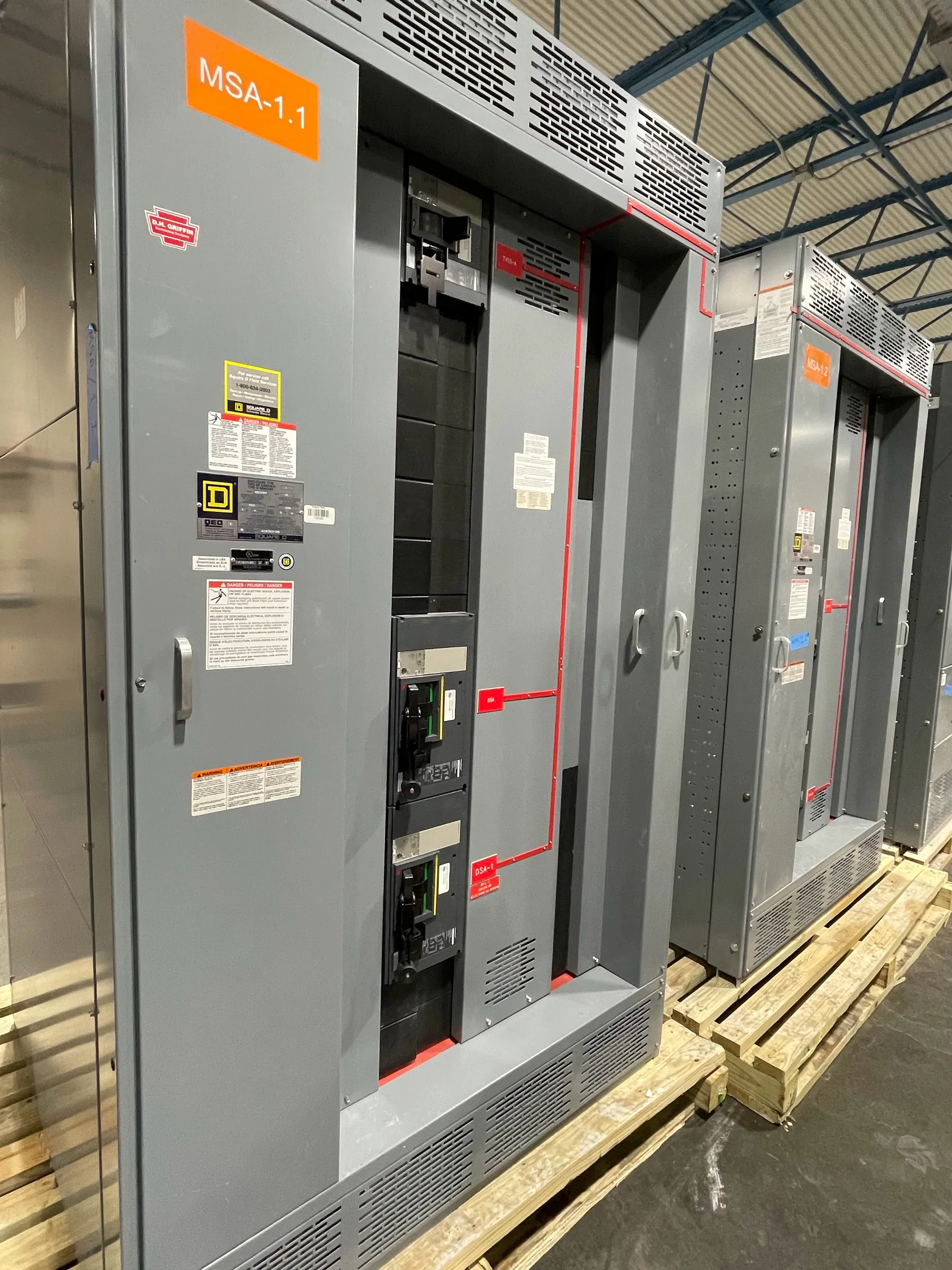
Motor Control Centers for Hawthorne, NV Projects
A motor control center (MCC) brings motor starters, feeder devices, control components and associated wiring together in a coordinated assembly. For a Hawthorne facility, the right design depends on the equipment being served, the electrical source, the installation environment and the way operators and maintenance personnel need to access each section. A new custom MCC can be configured around those project conditions rather than treated as a one-size-fits-all lineup.
Early planning should establish whether the MCC connects to a single source, multiple sources or a transfer arrangement, and how the assembly interfaces with upstream distribution and downstream motors. Source configuration affects lineup organization, protective-device coordination and the treatment of any ties or alternate feeds. Actual system voltage, available fault current, grounding method and operating requirements need review by qualified electrical professionals using project documents and site information.
Starter and VFD Selection for the Motor Loads
Motor starters provide a means to switch and protect motor loads; the appropriate starter type depends on motor characteristics, starting requirements, control scheme and the driven process. Across a lineup, a project may call for different starter arrangements to suit individual loads. The motor nameplate data, expected operating pattern and control interface help define the required unit configuration and protection.
Where variable-frequency drives (VFDs) are needed, their integration requires more than reserving a bucket space. The design should account for drive ratings, input and output connections, control signals, network interfaces, heat dissipation and any project-specified filtering or bypass functions. VFD selection and application depend on the motor, load and system design; these details should be confirmed with the responsible electrical engineer and equipment suppliers. The enclosure and lineup arrangement must also accommodate the selected components and provide suitable maintenance access.
Short-Circuit Ratings and Feeder Protection — Motor Control Centers in Hawthorne, NV
An MCC’s short-circuit rating is not the same thing as the nominal voltage of the electrical system. The required rating must be evaluated against the available fault duty at the installation point and the proposed protective-device arrangement. A higher rating should not be assumed to resolve coordination or system concerns by itself. Source characteristics, upstream devices, feeder protection and the assembly configuration all matter.
Feeder devices should be selected and coordinated for the loads and conductors they serve, while also fitting the overall protection strategy. Coordination studies, fault-current information and applicable project requirements may inform device choices and settings; the equipment manufacturer should not substitute for the engineer responsible for the system design. Final ratings, device combinations and any listing conditions require confirmation for the specific assembly and application.
UL 845 and Project Requirements — Motor Control Centers in Hawthorne, NV
Ask whether UL 845 is required by the project specification, owner, authority having jurisdiction or other applicable requirement. If it is, confirm that the proposed MCC construction and configuration can meet the requested scope. A standard reference alone does not establish that a particular assembly is listed, nor does a listing claim apply automatically to every product or configuration. The applicable product scope and documentation need to be checked for the actual design.
Project review should also identify governing electrical codes, site standards, control requirements and any limitations imposed by the installation. Hawthorne site conditions may affect enclosure selection, ventilation, environmental protection or access planning, but those choices should follow documented conditions rather than assumptions about the city or facility. Required ratings, listings and project-specific details are confirmed during engineering review.
Maintenance Access and Facility Interfaces
Access affects both lineup dimensions and day-to-day serviceability. During layout, establish the available floor space, required working and maintenance clearances, cable entry and exit paths, door and aisle constraints, and the route for bringing the equipment into the building. Site review is important where existing structures, adjacent equipment or limited access could restrict installation or future component service. This planning does not replace qualified personnel’s site-specific assessment of electrical safety and applicable clearance requirements.
Control interfaces deserve similar attention. Identify local and remote control points, interlocks, alarm contacts, communications protocols and any connections to plant systems. Documenting interface ownership and signal expectations can reduce uncertainty between the MCC, controls integrator and facility electrical team. Also consider how spare spaces or future expansion needs affect lineup length, feeder planning and usable access.
Information to Prepare for a Hawthorne MCC Quote
A useful quotation package includes the one-line diagram, source arrangement, system voltage, available fault-current data, motor schedule, feeder requirements and control documentation. Include the requested short-circuit rating, specified standards or listing needs, enclosure conditions, cable-entry preferences, dimensions, site access constraints and delivery destination. If some information is still being developed, identify it as preliminary so assumptions can be reviewed rather than treated as final design criteria.
Our company manufactures new custom motor control and power-distribution equipment in the USA using all-American components. Assemblies can be configured from the project information provided and shipped nationwide, including to Hawthorne. Lead times depend on the approved design, component requirements and production planning; confirm timing and scope during quotation. Final equipment selection and application require review by qualified engineers with the relevant system and site details.