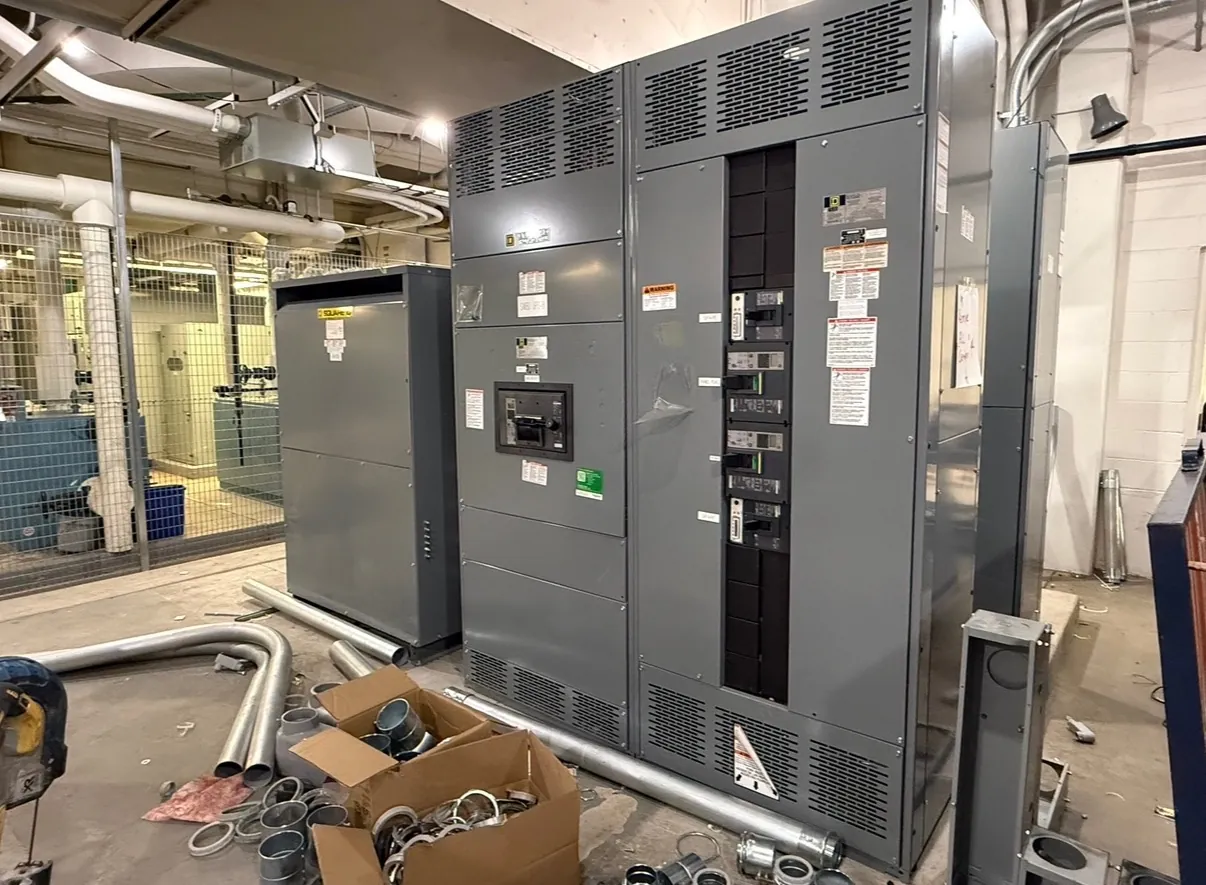
Metal-Enclosed Switchgear for Hawthorne, Nevada Projects
Metal-enclosed switchgear can be configured to suit a project’s source arrangement, connected loads and operating needs. For a Hawthorne installation, the first design conversation should establish what the equipment must connect to and what it must control—not simply select an enclosure from a catalog. Source voltage, available fault current, feeder count, load characteristics, indoor or outdoor placement and the project’s operating plan all influence the appropriate arrangement. A qualified electrical engineer must confirm the design against site conditions and applicable requirements.
We manufacture new custom switchgear and power-distribution equipment in the United States using all-American components, with short lead times as a manufacturing goal and nationwide shipping. Equipment can be developed around project requirements, but ratings, configuration, listing status and delivery timing must be confirmed for the particular quotation. Hawthorne-bound freight and the receiving site’s access should also be considered early, especially where unloading space, equipment access routes or installation sequencing may affect delivery planning.
Switch, Fuse or Breaker: Choose the Protection Around the Source
A switch-and-fuse arrangement and a breaker-based arrangement serve different protection and operating objectives. A fused switch may be considered where the project’s protection scheme and available fault duty are compatible with the selected switch and fuse combination. Fuse selection is not interchangeable by appearance alone: its electrical characteristics must coordinate with the source, connected equipment and upstream and downstream protective devices.
A breaker arrangement may offer adjustable or otherwise coordinated protection functions, depending on the selected device and assembly design. That flexibility brings decisions about trip functions, settings, coordination and maintenance practices. The project engineer should define what must be protected, how the equipment relates to other protective devices, and whether selective operation is a requirement. Neither a fuse nor a breaker should be specified from nominal voltage alone. The complete assembly’s ratings and the devices’ capabilities must be evaluated together.
Fault Duty, Ratings and the Hawthorne Source Arrangement
Available fault current at the proposed connection point is a key input to equipment selection. It depends on the source and electrical system, so it cannot be inferred from a location name or a general service-voltage description. The project team should provide the source configuration, utility or upstream equipment information when available, transformer details, and a study or other engineering basis for the fault-duty value. Changes to the source arrangement can change the required equipment design.
Distinguish system voltage from equipment ratings. A switchgear assembly’s voltage, current and short-circuit ratings each describe different limits and must be checked against the project’s conditions. The engineer should also review the grounding method, neutral requirements and any ground-fault protection needs. These choices affect equipment connections, protection coordination and interfaces with the rest of the distribution system. Final suitability requires qualified engineering review; a quoted rating is not, by itself, confirmation that an assembly fits a particular installation.
Barriers, Compartments and Access Requirements
Metal-enclosed equipment can incorporate partitions or barriers to separate sections and limit exposure between components, but the design should reflect the project’s actual arrangement and maintenance objectives. Specify which equipment belongs in each section, the required cable-entry and termination locations, and whether barriers are needed between switching devices, bus or cable areas. The selected construction affects enclosure layout, service access and the space needed for connections.
For a Hawthorne facility, site review should account for the installation environment and the people who will inspect or maintain the equipment. Confirm indoor or outdoor use, environmental exposure, available working and service clearances, cable routing, access restrictions and the path from delivery point to final location. These details can influence enclosure and access choices. They do not replace the project’s code review or the manufacturer’s confirmation of the proposed design.
Metal-Enclosed and Metal-Clad Are Not the Same Term
Metal-enclosed switchgear is a broad construction description; it should not be treated as synonymous with metal-clad switchgear. Metal-clad equipment is a more specific construction category with defined compartmentalization features. The distinction matters when project documents call for a particular construction, maintenance approach or application. A metal-enclosed design does not automatically meet a metal-clad specification, and a product label alone does not establish compliance.
When reviewing a specification, identify the required construction type and the applicable standard or listing language, then confirm that the offered equipment matches. UL 891 applies to applicable low-voltage switchboards; it does not establish coverage for all switchgear or for medium- or high-voltage equipment. Any requested listing, standard, voltage class or construction feature must be reviewed for the specific product and project rather than assumed across product categories.
Information for a Hawthorne Switchgear Quotation — Metal-Enclosed Switchgear in Hawthorne, NV
A useful quotation package describes the intended service, source arrangement, nominal system voltage, required continuous-current and fault-duty ratings, feeder quantities, protective-device preferences, grounding requirements and connection details. Include one-line diagrams and specifications when available, plus enclosure location, access constraints, environmental conditions and any site-specific review requirements. Note required interfaces with transformers, generators, utility service, control systems or downstream distribution equipment.
We use those inputs to develop a proposed configuration and identify items that need engineering confirmation before release. The completed scope should make clear the equipment arrangement, ratings, selected devices, barriers, access provisions and any project requirements that remain open. Manufacturing in the United States and nationwide shipping can support projects in Hawthorne, but freight coordination, lead time, listing details and final ratings are specific to the confirmed order. Clear project information helps align the equipment with the installation rather than relying on assumptions.