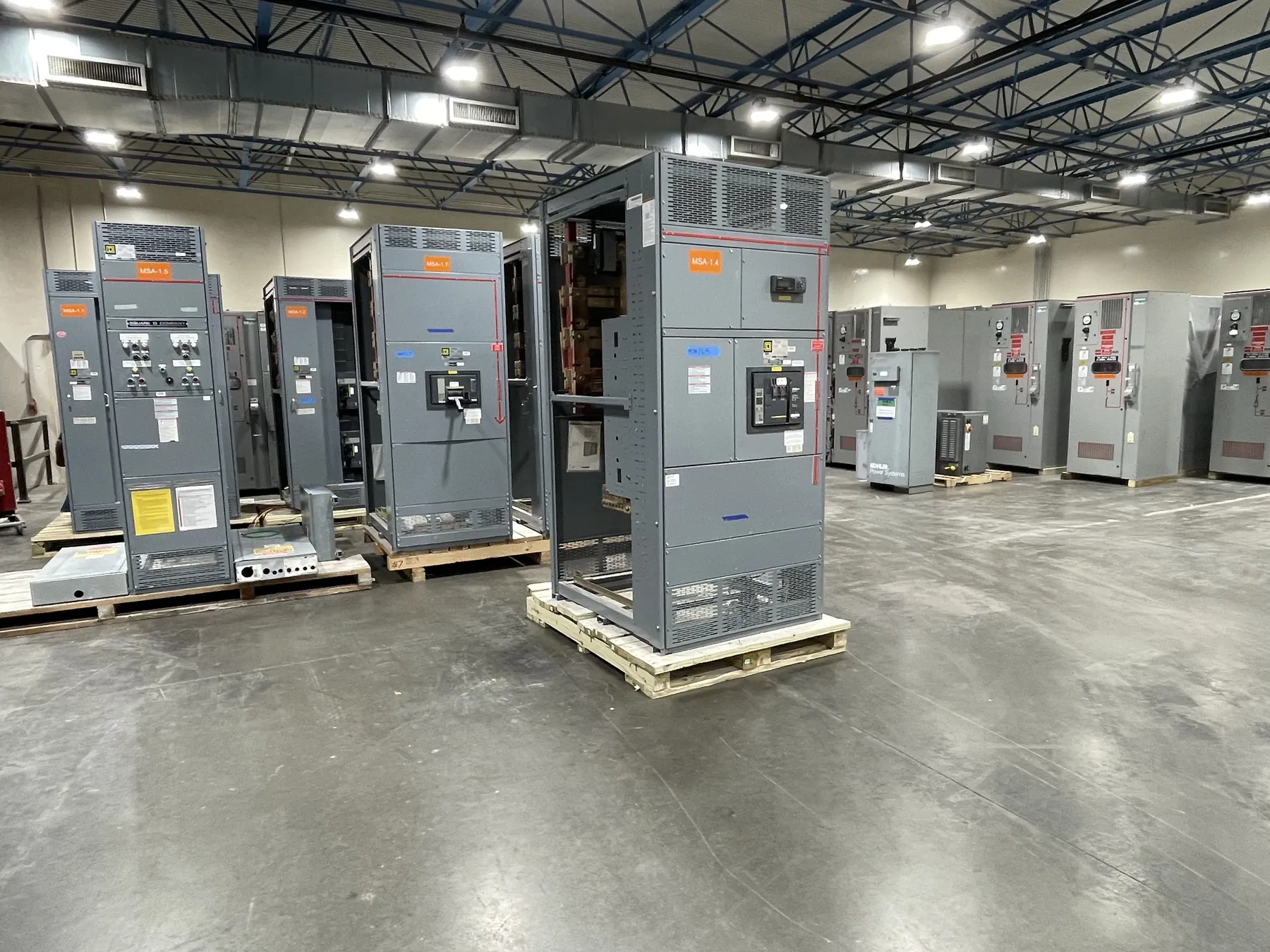
Commercial Switchgear Planning for Hawthorne, Nevada
Commercial electrical distribution in Hawthorne starts with the building’s service arrangement and the loads it must support—not with a catalog rating alone. A retail space, office, workshop, or mixed-use property may need different combinations of service equipment, tenant feeders, metering provisions, and spare capacity. Our U.S. manufacturing business builds new custom switchgear and power-distribution equipment for customer projects, with all-American components. Equipment can ship nationwide, including to Nevada; the project design still needs to reflect the actual building, utility interface, and installation conditions.
Early coordination helps establish where the service enters, how distribution is divided among tenants, and which loads may change over time. These decisions affect the equipment lineup, feeder arrangement, compartment needs, and space reserved for future work. A qualified electrical engineer should determine the design and confirm its suitability for the site.
Tenant Feeders, Metering, and Service Boundaries
For multi-tenant properties, identify which loads belong to the building and which are assigned to individual occupants. Tenant feeders may serve separate panels or downstream distribution equipment, while metering requirements can influence the layout and the interfaces that must be coordinated with the utility or metering provider. The owner’s operating plan matters: a property with frequent tenant changes may benefit from clearly organized feeder provisions and space for anticipated modifications.
Metering equipment is not interchangeable across every utility arrangement. Confirm who furnishes and approves the metering components, where they are installed, and what service configuration applies before finalizing the switchgear design. The utility’s requirements, project documents, and local review process should be checked by the responsible design team. A quotation should distinguish manufacturer-supplied equipment from components or services provided by others.
Source Arrangement, Ratings, and Fault Duty
Describe the intended source arrangement, including whether the project has one service source or additional sources such as a generator. Transfer equipment, interconnections, and the relationship between sources can affect equipment configuration and protective-device coordination. These choices cannot be settled from a building address or a general description of the loads; they require project-specific engineering and review.
Equipment ratings must be evaluated against the electrical system and available fault current. A voltage rating is not the same as a current or short-circuit rating, and none should be assumed from another. The engineer should provide the system information and fault-duty basis needed for equipment selection, then confirm that the proposed assembly and protective devices are appropriate. UL 891 applies to relevant low-voltage switchboards; it should not be treated as a blanket standard for every type of switchgear or distribution equipment. Applicable ratings, listings, and project details require confirmation.
Future Capacity Without Oversizing by Guesswork — Commercial Switchgear in Hawthorne, NV
Commercial owners often want room for tenant improvements, added equipment, or changed occupancy. Future capacity can involve spare feeder positions, reserved physical space, or provisions for a planned load increase. Those are distinct design choices. Empty spaces do not automatically establish that a lineup can accept any future load, and a larger rating alone does not ensure that the site’s source, conductors, or protective scheme can support expansion.
Ask the design team to identify which future loads are reasonably anticipated and what infrastructure must be reserved now. Balancing flexibility against footprint, cost, and present requirements can keep the equipment practical without relying on an unsupported growth assumption. Documenting the intended expansion also gives the manufacturer a clearer basis for configuring the lineup.
Hawthorne Site Conditions, Access, and Working Space
Hawthorne project logistics should be considered alongside electrical design. Confirm the equipment-room location, delivery route, door and corridor constraints, floor and handling provisions, and the space available for installation and later service access. Site conditions vary by property, so these details should be measured and reviewed rather than inferred from the city or building type. Shipping arrangements can then be coordinated with the project schedule and receiving plan without assuming a particular delivery date.
Practical working clearances are a design and coordination matter. The electrical engineer and project team should review applicable code requirements, equipment access, adjacent systems, and the final room layout. Keep clearances and access provisions coordinated with architectural, mechanical, and construction documents; do not treat a preliminary equipment footprint as approval of the finished installation.
Information for a Hawthorne Commercial Equipment Quotation
A useful quotation package describes the service and source arrangement, system information, available fault-current data, tenant and building feeder schedule, metering responsibilities, expected future provisions, and the project’s equipment-room constraints. Include drawings or specifications when available, along with required ratings, applicable listing expectations, connection details, and any project-specific review or access requirements. The responsible engineer should identify information that remains preliminary and resolve it before equipment details are finalized.
We manufacture new custom power-distribution equipment in the United States and support short lead times, with timing dependent on the confirmed scope and project requirements. Complete inputs help align the proposed configuration with the design intent and reveal interface questions early. Final ratings, listings, utility coordination, code compliance, and installation suitability must be confirmed for the specific Hawthorne project by the appropriate qualified professionals.