Casino Switchgear Planning for Hawthorne Facilities
Casinos depend on coordinated electrical distribution for guest areas, gaming operations, kitchens, back-of-house spaces, building systems and life-safety functions. A switchgear package for a Hawthorne project should reflect how the facility actually operates, not just its connected load. Early planning should identify which loads must remain available during an outage, which can be transferred to an alternate source, and which may be interrupted or scheduled around maintenance.
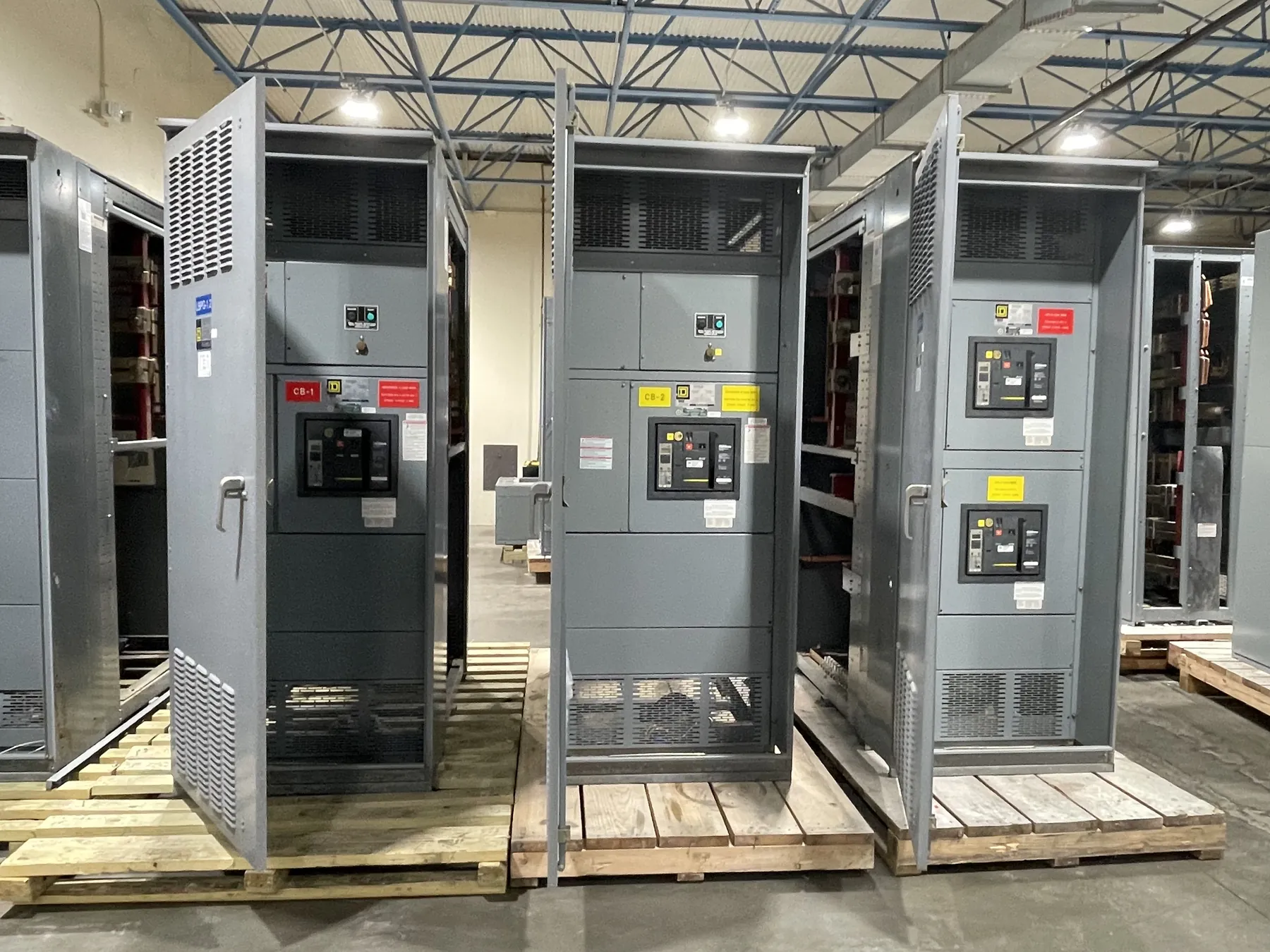
Our U.S. manufacturing business builds new custom switchgear and power-distribution equipment for customer projects. Assemblies use all-American components, are built in the USA and can ship nationwide, including to Nevada. The equipment configuration, ratings, listing needs and suitability for a particular casino application require project-specific confirmation; they cannot be established from the city or building type alone.
Separate Critical, Life-Safety and General Loads — Casino Switchgear in Hawthorne, NV
Load grouping is a fundamental design choice. Life-safety loads, such as applicable emergency lighting or fire-protection support, may have distinct code and system requirements. Other critical loads could include selected security, communications, information technology or operational systems, depending on the owner’s continuity plan. General loads may include areas or equipment that can tolerate interruption or be restored in stages. These categories should be defined with the facility team and qualified electrical engineer rather than assumed from a typical casino layout.
Distribution sections, feeders, transfer equipment and monitoring interfaces should follow the approved one-line diagram and control sequence. Separating functions can make source relationships clearer, but additional sections and interfaces affect footprint, coordination and maintenance planning. The design team should also consider how future tenant changes, gaming-floor reconfiguration or added building systems could affect spare capacity and feeder routing.
Coordinate Emergency Power and Source Arrangement
The project team should establish the normal source arrangement and identify any alternate sources, such as an emergency generator or other project-defined supply. The switchgear design depends on where sources connect, how transfers are controlled, which loads are served by each source, and whether any loads require a defined restoration sequence. Confirm interfaces with transfer equipment, generator controls, protective devices and facility monitoring systems before equipment details are finalized.
Emergency-power requirements are not interchangeable across all loads. The engineer of record must determine applicable code obligations, source capacity, transfer approach and the treatment of life-safety circuits. The equipment manufacturer can build to an approved design, but should not substitute for engineering judgments about the facility’s power system or its required behavior during abnormal conditions.
Confirm Fault Duty, Ratings and Applicable Standards
Quotation and design review require the electrical characteristics at the connection point, including system voltage, available fault current or the information needed to establish it, and the protective-device coordination basis. A switchgear rating is not the same as system voltage, and a rating cannot be selected reliably from a general description such as “casino distribution.” The qualified engineer must evaluate the source arrangement, upstream protection, grounding, load conditions and site information to determine the applicable requirements.
UL 891 applies to applicable low-voltage switchboards; it should not be read as a blanket standard for every switchgear assembly or for medium- or high-voltage equipment. Any required listing, labeling, construction details and ratings must be confirmed for the specific product and project. Avoid assuming a particular assembly is listed or suitable until those details are documented and verified.
Plan Phased Maintenance Around Casino Operations — Casino Switchgear in Hawthorne, NV
Casinos may operate continuously or have limited windows for planned interruptions. The owner’s maintenance plan should identify which distribution sections can be taken out of service, what loads need temporary support, and whether work can be divided into stages. Physical separation, feeder access, clear identification and the placement of monitoring or control interfaces can influence how practical those phases are. These are design and coordination topics, not instructions for working on energized equipment.
Before release, facility operations, the electrical engineer, contractors and equipment manufacturer should align on shutdown boundaries, temporary-power assumptions, access constraints and the sequence for future additions. Hawthorne site conditions—including delivery access, equipment-room dimensions, routing paths and installation timing—should be verified by the project team. No site-specific access or logistics condition should be presumed from the city name.
Prepare Complete Inputs for a Hawthorne Project Quote
A useful quotation package includes the current one-line diagram, load and feeder schedules, source and transfer details, available fault-duty information, required ratings and any specified listing requirements. Include enclosure and room constraints, cable entry preferences, control and communications interfaces, metering needs, drawings, project milestones and phased-maintenance expectations. Identify who will resolve engineering questions and approve submittals so that open decisions are visible before fabrication planning.
Complete inputs help establish a practical scope and support schedule discussions without promising an unverified delivery date. Our team manufactures new custom equipment and can discuss short lead times based on the confirmed design, components and project requirements. Final suitability, code compliance, protection coordination and site integration remain subject to qualified engineering review and the project’s approved documents.