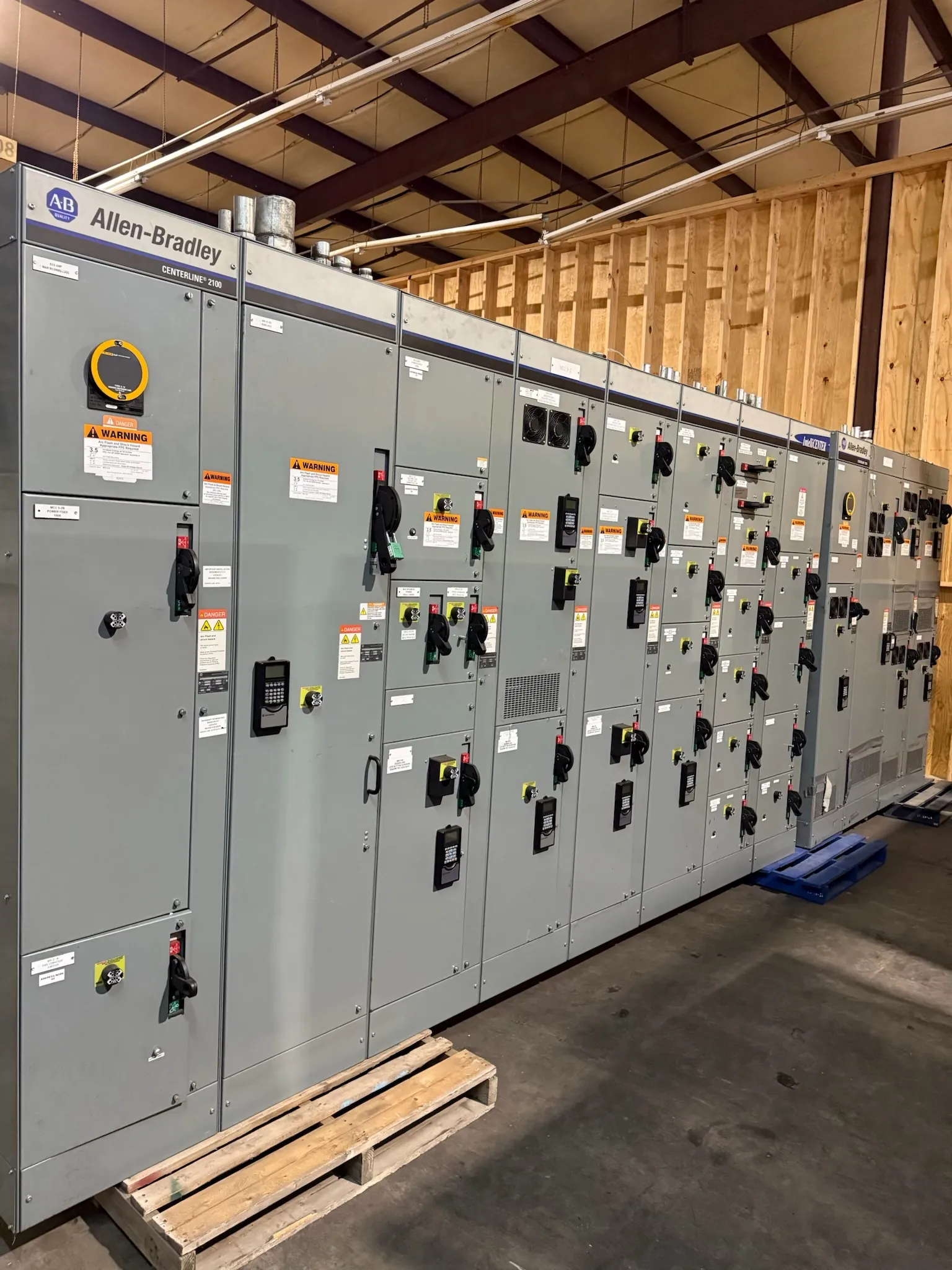
Motor Control Centers for Gardnerville, NV Projects
Motor control centers (MCCs) bring motor starters, protective devices, control components and related distribution functions together in an organized assembly. For a Gardnerville facility, the right configuration depends on the driven equipment, the electrical system, the installation environment and how operators and maintenance teams need to access the lineup. A custom-built MCC can be arranged around project requirements rather than treated as a one-size-fits-all package. Site conditions and engineering details must be reviewed before equipment ratings and construction are finalized.
Projects may involve new facilities, equipment additions or changes to an existing distribution arrangement. Each situation calls for a review of available electrical capacity, upstream protection, control interfaces and physical space. A manufacturer can use project drawings and equipment schedules to develop a proposed lineup, but final selection and application require qualified engineering review.
Starter and VFD Choices for Connected Motors
Motor starters and variable-frequency drives (VFDs) serve different operating needs. A starter may suit an application that runs at a fixed speed and needs a defined method of starting and stopping. A VFD can provide adjustable speed control when the process and motor are designed for that operation. The choice can affect enclosure space, heat management, wiring, control architecture and coordination with other equipment in the MCC.
For VFD integration, project information should identify the motor data, required speed range, control signals, communications expectations and any process interlocks. Drive selection also needs to account for the electrical supply and the application’s operating characteristics. Not every motor or driven load is suitable for every drive arrangement; the equipment manufacturer and project engineers should confirm compatibility and applicable requirements.
Starter and drive units can be arranged to match the intended maintenance and operating approach. Unit size, withdrawable or fixed construction, control power needs and spare spaces may influence the lineup design. These choices should reflect the facility’s procedures and future plans, rather than being assumed from a general product description.
Short-Circuit Ratings and Feeder Protection — Motor Control Centers in Gardnerville, NV
An MCC’s short-circuit rating is not the same thing as the system voltage. The rating must be evaluated against the available fault current at the installation point and the protective devices and equipment in the assembly. Confirming an appropriate rating requires project-specific electrical information and coordination with qualified engineers; it should not be inferred from a nominal voltage or a typical facility type.
Feeder protection affects both the MCC’s design and how connected loads are protected. The review should consider upstream devices, feeder conductors, motor branch protection and the requirements of the equipment being served. Protective-device selections and settings need to be coordinated with the overall system design. Changes to the source, transformer or upstream protection can alter the available fault current and may require the rating review to be revisited.
Provide available one-line diagrams, source and transformer data, protective-device information and motor schedules when requesting a quotation. If those details are incomplete, the proposal can identify information still needed, but it cannot substitute for a site-specific fault-current and coordination study.
UL 845 and Applicable Equipment Requirements — Motor Control Centers in Gardnerville, NV
Determine whether the project specification, owner requirements or authority having jurisdiction requires MCC construction evaluated to UL 845. The applicable standard and any required listing or evaluation should be confirmed for the exact equipment configuration. Do not assume that a general switchboard standard applies to an MCC, or that a product is listed merely because a particular standard is mentioned in a discussion or quotation.
Specifications should also clarify the required voltage, bus and feeder ratings, enclosure type, control components and any project-specific documentation. Ratings, listings and construction details depend on the selected assembly and must be confirmed during engineering. Requirements can differ among facilities and applications, so early review of the procurement documents helps avoid mismatches.
Gardnerville Site Conditions and Installation Planning — Motor Control Centers in Gardnerville, NV
Gardnerville project teams should confirm the installation elevation, indoor or outdoor placement and environmental specifications at the actual site. Elevation and ambient conditions may affect equipment application and require engineering review. Outdoor placement can bring additional enclosure and environmental considerations, while an indoor installation still needs suitable room conditions and protection from site-specific contaminants or moisture.
Shipping to Gardnerville should be planned around the receiving location, unloading arrangements, access route and final equipment room or pad. The available doorway, turning space, floor or foundation conditions and clearance for positioning can influence how the assembly is divided and delivered. These logistics are best checked against the proposed lineup dimensions before production planning. A U.S. manufacturer can build new custom power-distribution equipment with all-American components and ship nationwide; project timing and delivery details should be confirmed for the specific order.
Maintenance Access and Quotation Information — Motor Control Centers in Gardnerville, NV
Maintenance access begins with a practical layout. Allow space for the intended unit access, cable entry and termination, inspection, and any required removal or replacement path. Consider where operators will work, how control wiring is routed, and whether adjacent equipment or building features could obstruct access. The facility’s qualified electrical and safety professionals should establish the applicable clearances and work practices; an equipment layout alone does not determine safe operating procedures.
For a useful quotation, provide motor and load schedules, control narratives, one-line diagrams, site conditions, installation location, required standards or listing expectations, and any dimensional constraints. Include preferred starter or VFD functions and known communication interfaces. This information supports a focused design review and helps identify open engineering questions before the MCC configuration is finalized.