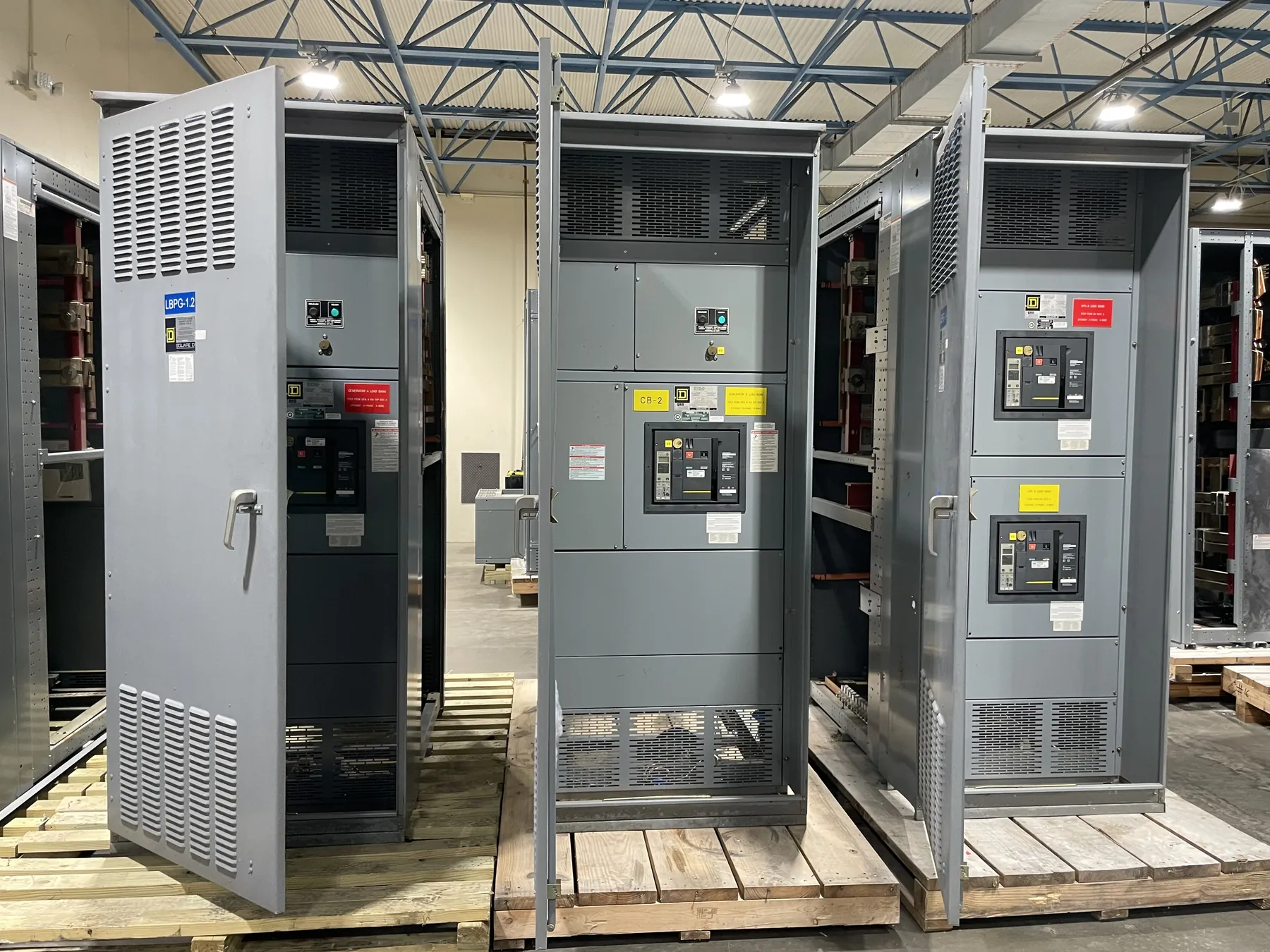
High-Voltage Switchgear for Gardnerville Substation Projects
High-voltage switchgear is not selected by voltage label alone. For a Gardnerville project, the design starts with the system’s nominal and maximum operating voltage, the available fault conditions, the substation arrangement, and the equipment’s intended function. A project may require switching, isolation, protection, or a defined combination of these functions. The proposed equipment construction and scope must be confirmed for the application; configurations and voltage classes are not interchangeable.
System voltage and equipment ratings are related, but they are not the same thing. Engineers must verify that the selected equipment is suitable for the system and its operating conditions, including insulation requirements and short-circuit duty. A rating by itself does not establish suitability for a particular installation or utility connection.
Voltage Classification and Insulation Coordination — High-Voltage Switchgear in Gardnerville, NV
Insulation selection accounts for more than normal operating voltage. The engineering review considers expected overvoltages, switching events, grounding conditions, protective devices, and the insulation coordination basis for the substation. The applicable insulation level may be expressed through project-specific withstand requirements, including impulse withstand where relevant. These requirements should be identified by the project engineer and coordinated with the equipment manufacturer rather than inferred from a general product description.
Gardnerville’s site elevation is an important design input. Air density can affect the performance of air-insulated equipment and clearances, so the installation elevation should be provided for engineering review. The team should also establish whether the equipment will be indoors or outdoors and specify ambient conditions, precipitation exposure, wind, dust, solar loading, and any other environmental factors relevant to the site. These details may influence enclosure design, insulation selection, materials, and equipment layout.
Protection, Switching, and Substation Interfaces
Protection requirements shape the switchgear arrangement and its interfaces. The design team should identify the protective relays, instrument transformers, control power, trip and close circuits, alarms, communications, and interlocking functions required by the project. The selected arrangement needs to coordinate with upstream and downstream protection so that the intended portions of the system are isolated under defined fault conditions. Relay settings and protection studies remain project-specific engineering work.
Mechanical and electrical interfaces also need early attention. Confirm the one-line diagram, bus arrangement, cable or conductor entry, grounding approach, termination requirements, physical clearances, and connection points to transformers or other substation equipment. These choices affect layout, maintainability, and the division of work between the switchgear supplier, engineer, installer, and utility. No single arrangement should be assumed suitable before the site and system design are reviewed.
Utility Interconnection and Applicable Standards — High-Voltage Switchgear in Gardnerville, NV
A utility interconnection can impose requirements beyond the equipment’s basic ratings. The project should establish the utility’s accepted voltage classification, switching arrangement, protection and metering interfaces, communications needs, grounding requirements, and review process. Utility criteria can vary by service territory and project, so the design team should verify current requirements with the relevant utility before finalizing equipment specifications.
Applicable IEEE or IEC requirements depend on the equipment type, voltage class, construction, and project specification. The engineer and manufacturer should identify the standards that govern the proposed assembly and confirm how they apply to its components and performance criteria. Standards coverage should not be presumed from the term “high-voltage switchgear,” and a reference to a standard is not, by itself, proof of a product listing or project approval.
Information Needed to Define the Equipment
For a useful quotation and engineering review, provide the single-line diagram, system voltage, available fault information, required continuous and interrupting ratings, insulation requirements, and intended switching functions. Include the substation layout, installation elevation, indoor or outdoor placement, environmental specifications, cable or bus interfaces, control schematics, protection and metering needs, and any utility or project standards. Identify the required scope clearly, including whether the request covers switchgear alone or related control and connection components.
Complete inputs help reveal tradeoffs early. For example, an outdoor installation may call for different enclosure and environmental provisions than an indoor room, while a specific bus arrangement or cable entry can affect footprint and access. Final ratings, construction, standards, and interfaces require confirmation by qualified engineers using the actual system and site information.
Manufacturing and Delivery to Gardnerville
Custom equipment is manufactured in the United States using all-American components and can be shipped nationwide, including to Gardnerville. Short lead times are supported, but the schedule for a particular order depends on the confirmed design, scope, component requirements, and project documentation; an exact timeline should be established during quotation and order review. Site access, receiving arrangements, and coordination with the installation schedule should also be planned without assuming local inventory or a Nevada manufacturing facility.
Early communication among the owner, engineer, utility, installer, and manufacturer helps align the substation design with actual site conditions. With voltage classification, insulation coordination, protection interfaces, environmental needs, and utility criteria defined, the project team can evaluate the appropriate high-voltage switchgear construction for a Gardnerville installation.