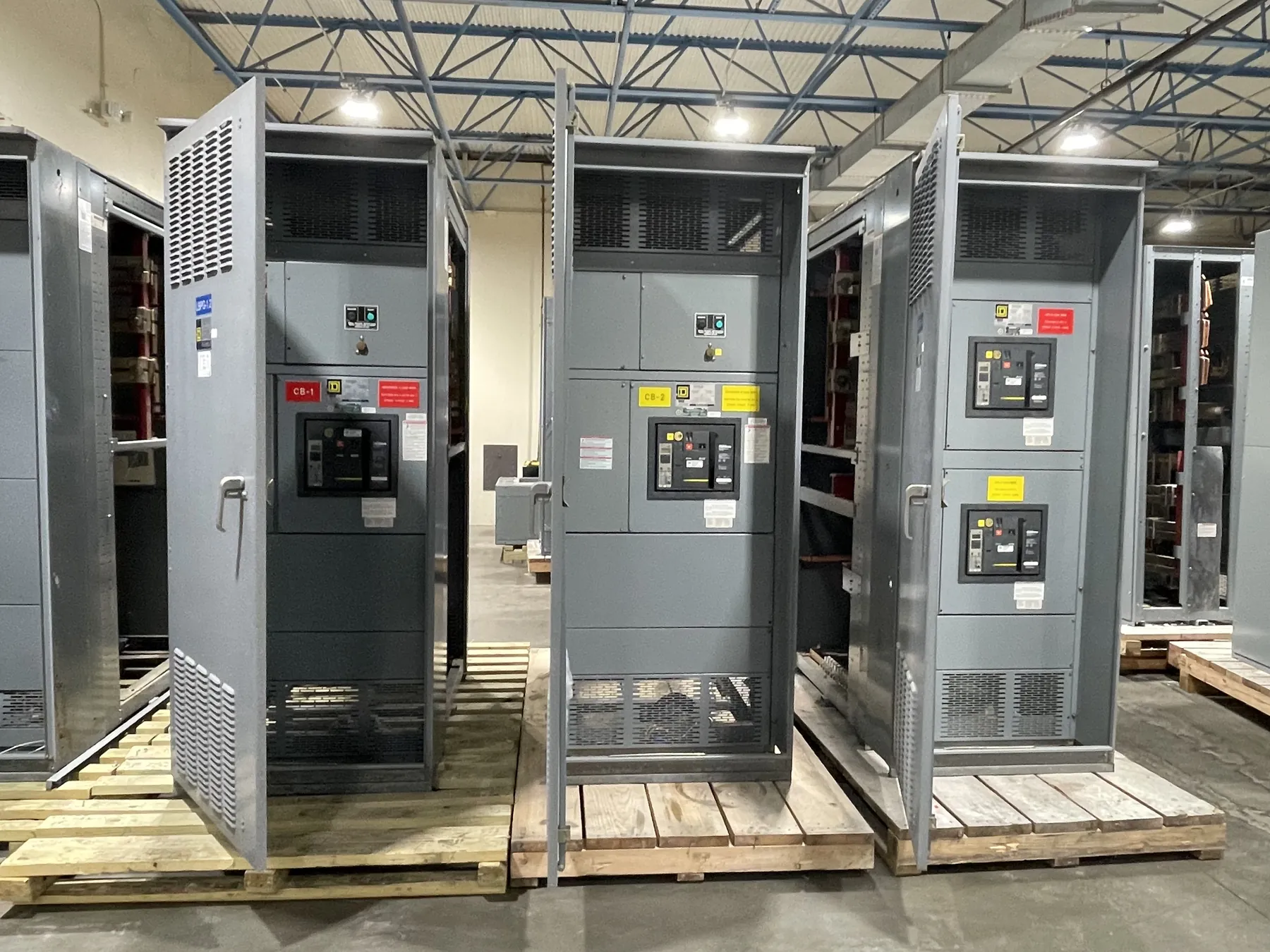
Wastewater Switchgear for Fernley Pumping and Treatment Facilities
Wastewater electrical distribution has to support equipment that performs different jobs across a facility: moving influent, managing process flows, handling solids, and maintaining treatment operations. For a Fernley project, the switchgear or switchboard arrangement should begin with the actual load schedule and operating sequence—not a generic equipment lineup. Pump and motor loads, control interfaces, standby-power arrangements, and the installation environment all shape the appropriate configuration.
Our U.S.-built, newly manufactured custom power-distribution assemblies use all-American components and ship nationwide, including to Nevada. Equipment selection and design details are developed for the project’s documented requirements. Final ratings, construction, listings, and interfaces must be confirmed against the electrical design, applicable requirements, and site conditions by qualified project professionals.
Account for Pump and Motor Loads — Wastewater Switchgear in Fernley, NV
Pump motors can affect distribution equipment through starting and running demands, operating frequency, and the way multiple units are sequenced. The design team should provide motor nameplate information, starting method, control scheme, and any known operating combinations. A pump that starts across the line may impose different demands than one operated through a variable-frequency drive or other reduced-starting arrangement. Those choices can influence feeder selection, protective-device coordination, and the space and connections required for associated controls.
Where pumps operate in lead-lag groups or alternate duty, identify which combinations can run together and how the process responds to a failed unit. Switchgear planning should also account for loads beyond the motors, such as process equipment, building services, instrumentation, and control power. A complete load picture helps engineers assess distribution requirements rather than sizing around a single prominent pump.
Plan the Standby-Power Interface
Wastewater facilities may have continuity requirements that call for standby generation or another alternate source. The switchgear design depends on the project’s chosen power-source arrangement, the loads intended to remain available, and the transition and control strategy. Provide the electrical one-line diagram, generator information when applicable, transfer equipment details, and the intended sequence of operation for review. The equipment lineup should not be assumed to include transfer functions unless the project scope specifically establishes them.
For Fernley projects, confirm the required response to loss or restoration of normal power with the facility owner and design team. Some loads may be essential to process continuity while others may be delayed or shed; that distinction affects feeder grouping and control interfaces. Source capacity, fault-current information, protective-device coordination, and the interaction of transfer equipment with the distribution assembly require project-specific engineering.
Match the Enclosure to the Installation Conditions
Moisture and corrosion exposure vary by installation location. An indoor electrical room, a damp process area, and an outdoor equipment pad present different environmental conditions. Before selecting an enclosure rating or construction, document whether the equipment will be exposed to rain, washdown, condensation, airborne contaminants, or corrosive agents, and describe nearby process conditions. The appropriate enclosure depends on the actual exposure and installation—not simply on the fact that the equipment serves a wastewater facility.
Also confirm available floor space, access and working clearances, cable entry direction, conduit or bus connections, ventilation needs, and the route from delivery point to final location. Fernley delivery planning should be coordinated with site access, receiving capacity, and construction sequencing. These details help avoid a mismatch between the manufactured lineup and the room or outdoor location prepared to receive it.
Reserve Feeder Capacity Deliberately
Future process additions may make spare feeder provisions useful, but “spare” needs a clear definition. The project should state whether it requires unused physical spaces, installed protective devices, or capacity reserved for identified future loads. These are not interchangeable. Available lineup space does not establish that a future feeder can serve a particular load; its voltage, current, fault-duty, cable interface, and protection requirements still need evaluation.
Discuss anticipated expansion with the electrical engineer and facility team before the equipment layout is finalized. Leaving practical room for future work can influence lineup dimensions, bus arrangements, and access planning. Any reserved provision should be documented so its intended limits are understood and verified when the future load is designed.
Prepare the Information for a Project Quote
A useful quotation request for Fernley wastewater distribution equipment includes the one-line diagram, load and motor schedules, system voltage, available fault-current data, specified ratings, enclosure and environmental requirements, standby-source details, feeder schedule, and applicable project specifications. Include drawings or notes showing installation location, cable entry, space constraints, and required spare provisions. If a requirement is not yet established, identify it as pending rather than treating an assumption as a confirmed specification.
For applicable low-voltage switchboards, UL 891 may be relevant when specified and appropriate to the equipment. It does not apply to every switchgear product or establish suitability for every project. Ratings, listing status, scope, and project interfaces must be confirmed for the actual assembly. Our team can use the project documents to develop a custom manufacturing proposal, with engineering coordination and site review addressing details that cannot be settled from a location name alone.