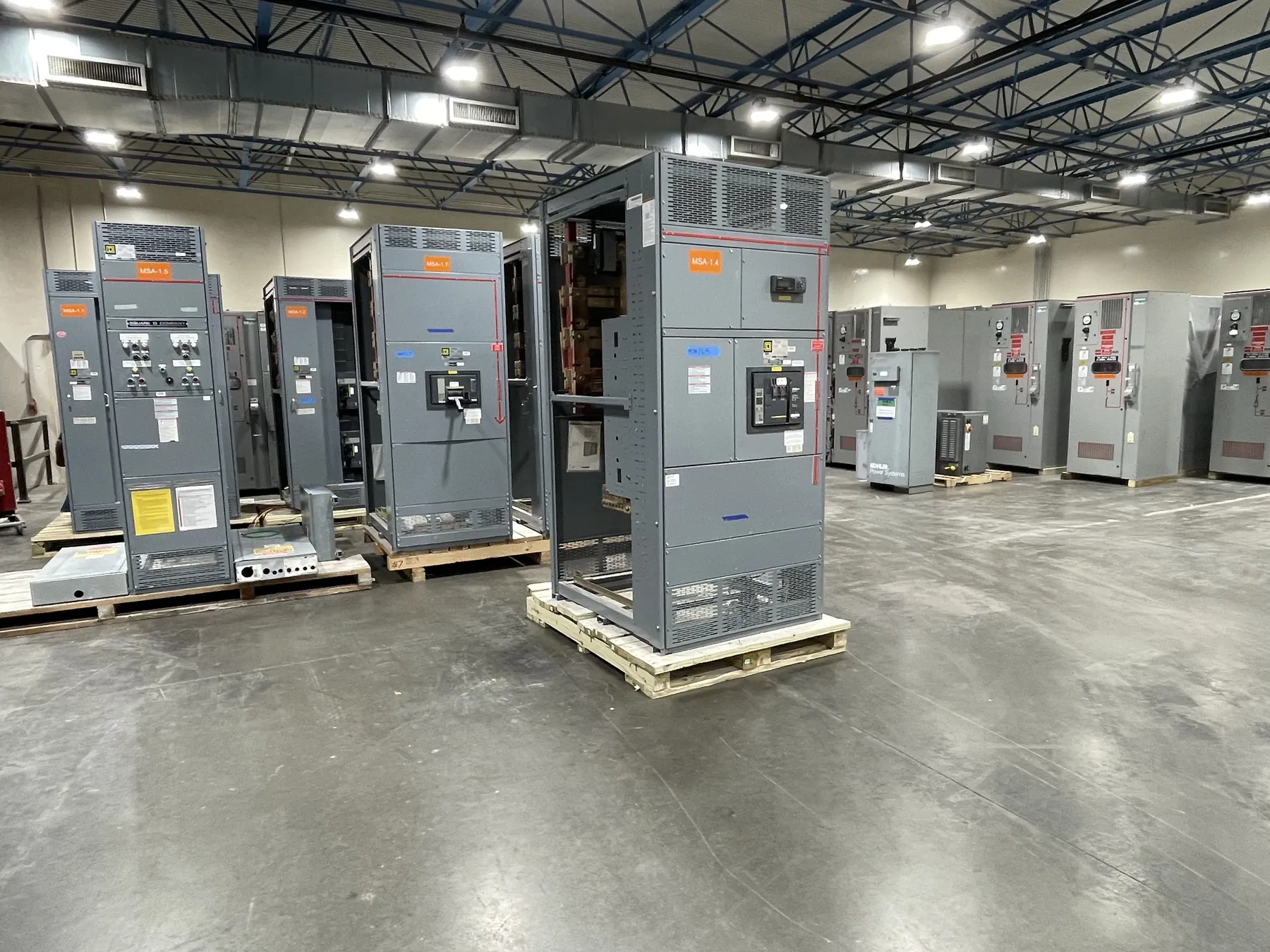
Pad-Mounted Switchgear for Fallon, Nevada Projects
Pad-mounted switchgear can provide outdoor switching and protection at a point where an electrical distribution system branches or serves a facility. For a Fallon project, the equipment must be selected around the actual source, connected loads, operating needs, and site conditions—not simply the enclosure’s appearance or a nominal system voltage. Our U.S.-manufactured assemblies use all-American components, are made new to project requirements, and can ship nationwide, including to Nevada. Final configuration, ratings, and any applicable listing must be confirmed for the specific design.
Potential applications may include commercial, industrial, agricultural, or other distribution projects, but the right arrangement depends on the electrical one-line diagram and the role the switchgear will perform. Early coordination among the owner, electrical engineer, installer, and relevant utility or service provider can clarify the boundary between utility-owned and customer-owned equipment, required interfaces, and responsibility for protection and operation.
Outdoor Enclosure, Foundation, and Fallon Site Conditions
The enclosure protects internal components from outdoor exposure, but protection depends on selecting a suitable design and installing it as intended. Project review should account for the proposed location, exposure to windblown dust, moisture, sunlight, temperature variation, and the possibility of water collecting around the equipment. These conditions are site-specific; a Fallon address alone does not establish an enclosure rating or environmental requirement.
Foundation design and equipment layout affect access, cable routing, and long-term serviceability. The civil and electrical drawings should establish the pad dimensions, equipment orientation, conduit locations, working clearances, and the relationship to adjacent structures or traffic areas. The foundation must suit the equipment’s mounting requirements and site conditions. Drainage, finished grade, and conduit stubs should be coordinated before concrete work so that field routing does not conflict with compartments or access doors.
Cable Entry and Utility Interfaces — Pad-Mounted Switchgear in Fallon, NV
Cable entry is a design choice, not a detail to leave until installation. The engineer and equipment manufacturer need to review whether cables enter from below or another approved direction, the number and arrangement of circuits, conductor types and sizes, termination space, and the routing needed to reach each compartment. Conduit placement and bend space should be checked against the selected equipment layout. Incorrect assumptions can create difficult field transitions or restrict access.
Utility interfaces require particular care. Confirm the service arrangement, ownership boundary, source characteristics, connection method, required switching functions, and any utility-specific design or documentation criteria with the responsible parties. Do not assume that a utility will accept a particular configuration based on location or product type. The project team should resolve interface requirements before release for manufacture.
Ratings, Load Profiles, and Motor Starting
Equipment ratings must match the system and the duties the assembly will perform. Voltage, continuous-current, short-circuit, and switching ratings describe different limits; a rating is not itself the system voltage. Selection also depends on available fault current, protective-device characteristics, system grounding, and the planned operating arrangement. These values require engineering review and confirmation against the project documents. Applicable product listings also need to be verified for the specific equipment and intended use.
For a Fallon project, provide a load profile that distinguishes steady operating demand from expected peaks, starting events, and future additions. Motor starting requirements deserve specific attention: motor size and starting method, frequency of starts, simultaneous starting, and the source’s ability to support the resulting demand can affect equipment selection and protection. A summary of connected load alone may not reveal these conditions. The engineer should evaluate expected operating scenarios rather than rely on a general service description.
Protective-Device Coordination Objective
Before specifying protective devices, define the coordination objective with the project engineer. The goal may involve limiting the extent of an outage when a fault occurs, meeting equipment protection needs, or balancing selectivity with available fault-current and device constraints. Coordination is not determined by switchgear alone: upstream and downstream devices, their settings or characteristics, conductor limits, and the system configuration all matter.
Provide available fault-current information, upstream protection details, downstream loads and devices, and any required coordination or arc-flash study criteria. A qualified engineer must evaluate the complete system and confirm device selection and settings. No protective-device arrangement should be represented as coordinated or suitable without that review.
Information for a Project-Specific Quotation — Pad-Mounted Switchgear in Fallon, NV
A useful quotation package includes the one-line diagram, system voltage and grounding information, load schedule, motor data, available fault-current basis, cable and conduit approach, site layout, foundation assumptions, environmental considerations, and utility interface criteria. Identify required switching functions, operating preferences, future provisions, and project documentation needs as well. If any data are preliminary, label them clearly so open design items can be identified before manufacturing.
Our focus is new, custom-manufactured power-distribution equipment built in the USA, with short lead times supported by the manufacturing process and nationwide shipping. Actual scope, schedule, ratings, listings, and configuration depend on engineering review and confirmed project requirements. For Fallon installations, coordinate delivery access and site readiness with the project team so the foundation, conduits, and receiving plan align with the approved equipment design.