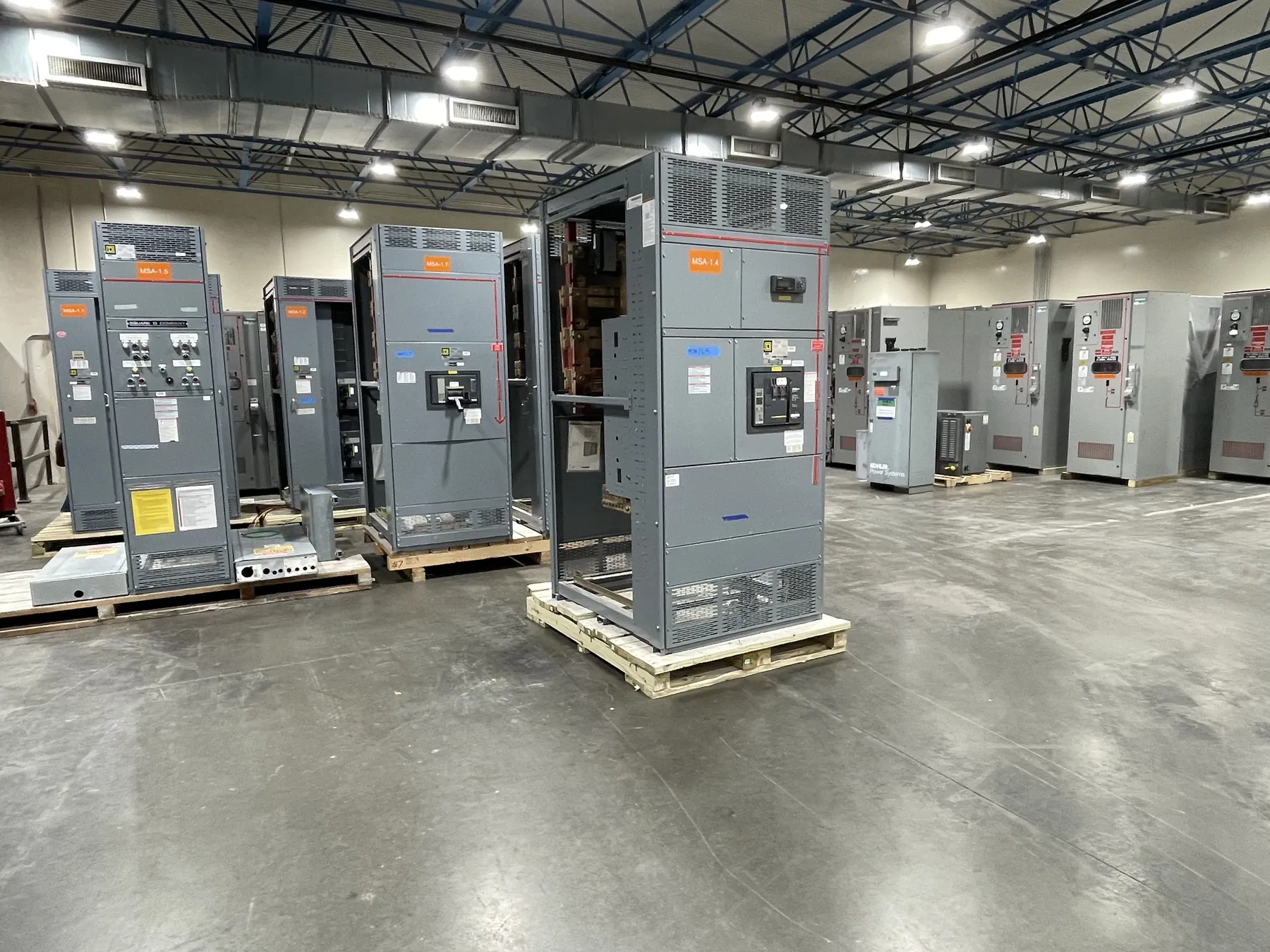
Utility Switchgear for Fallon Electrical Distribution Projects
Utility distribution work in Fallon calls for equipment selected around the actual service, operating plan and acceptance requirements—not a generic “utility-rated” label. A new custom switchboard or related distribution assembly can be configured to suit a project’s defined electrical interfaces, but the utility’s requirements and the consulting engineer’s design govern the details. Early coordination helps establish what the equipment must connect to, what it must measure and protect, and what documentation is needed before release for manufacture.
For a Fallon facility, the project team should clarify whether the assembly serves a utility facility, a customer service entrance, or another point in the distribution system. Those applications can have different ownership boundaries, access expectations and approval paths. The project documents should identify the source, downstream loads, available fault information, operating modes and any planned future connections. Site conditions and delivery access should also be reviewed for the intended installation location; shipping to Fallon does not establish that a particular route, unloading method or site layout is suitable.
Confirm Interconnection, Metering and Acceptance Requirements
Interconnection requirements are specific to the serving utility and the project. Before equipment is specified, confirm the service arrangement, system voltage, phase and wire configuration, connection points, grounding method, ownership demarcation and any required isolation or switching provisions. Do not infer these details from a nominal voltage or from equipment already present at the site. Written utility requirements and coordinated electrical drawings provide a more reliable basis for selection.
Metering needs should be resolved at the same time. The utility or project engineer may define the metering location, instrument-transformer arrangement, wiring interfaces, compartment access and physical separation from other functions. Requirements can differ depending on whether metering is for utility billing, facility monitoring or another purpose. The quotation package should identify who supplies each component and who is responsible for field wiring and commissioning interfaces. Equipment acceptance criteria—including submittals, review steps, inspection expectations and records—should be confirmed with the relevant parties rather than assumed from a product description.
Match Protection to Loads and Operating Conditions
Protective-device selection depends on the system study, equipment duty and the utility’s protection objectives. The engineering team needs applicable fault-current information, source and transformer data, conductor details, device settings or setting ranges, and the expected operating configuration. The protective-device coordination objective should be stated clearly: for example, which devices are intended to operate for defined fault conditions, and where selectivity is required. Final settings and coordination conclusions belong to qualified engineers using project-specific data.
Load profiles matter as much as connected load totals. Provide anticipated demand, significant load changes, continuous operating patterns and any emergency or alternate-source arrangements. Motor starting requirements deserve particular attention: motor size and type, starting method, frequency of starts and other large concurrent loads can affect voltage performance and protective-device choices. A switchboard’s current rating is not a substitute for confirming system voltage, interrupting capability, short-circuit withstand requirements or the suitability of connected devices. Each rating and product configuration needs review against the project design.
Grounding, Environmental Conditions and Physical Interfaces
Grounding and bonding provisions should follow the project’s engineered grounding scheme and the applicable service requirements. Confirm the location and arrangement of grounding connections, the relationship between neutral and equipment grounding conductors, and any interface to site grounding infrastructure. These decisions are not interchangeable across installations. Equipment drawings should show connection points and relevant barriers or compartments so the field installation can be reviewed against the approved design.
Fallon-area conditions should be documented rather than addressed through assumptions. The project team should provide indoor or outdoor placement, ambient and site environmental conditions, exposure to dust or moisture, elevation information when relevant to equipment performance, and enclosure or access constraints. Physical details—including cable entry direction, conductor space, floor or wall clearances, lifting and handling constraints, and equipment-room access—can shape the arrangement. These inputs help avoid a design that meets an electrical schedule but cannot be installed or serviced as intended.
Prepare a Complete Request for Quotation — Utility Switchgear in Fallon, NV
A useful quotation request includes one-line diagrams, equipment schedules, service and utility criteria, load data, motor-starting information, available fault-current data, grounding requirements, preferred arrangement, site conditions and required submittals. Identify known future provisions separately from present loads, and flag any items still awaiting utility or engineering confirmation. State the required equipment ratings and construction features where established; request clarification where they are not. This allows the manufacturer to identify open technical questions without treating assumptions as approved design decisions.
Our U.S. manufacturing operation builds new custom power-distribution equipment using all-American components and supports short lead times, with nationwide shipping that includes Nevada. Actual scope, schedule and configuration depend on the final requirements and quotation review; no standard delivery interval applies to every project. For applicable low-voltage switchboards, UL 891 may be relevant, but it does not cover every type of switchgear or establish that a particular assembly is listed. Confirm applicable standards, listings, ratings and acceptance requirements for the specific equipment with the project engineer and relevant utility.