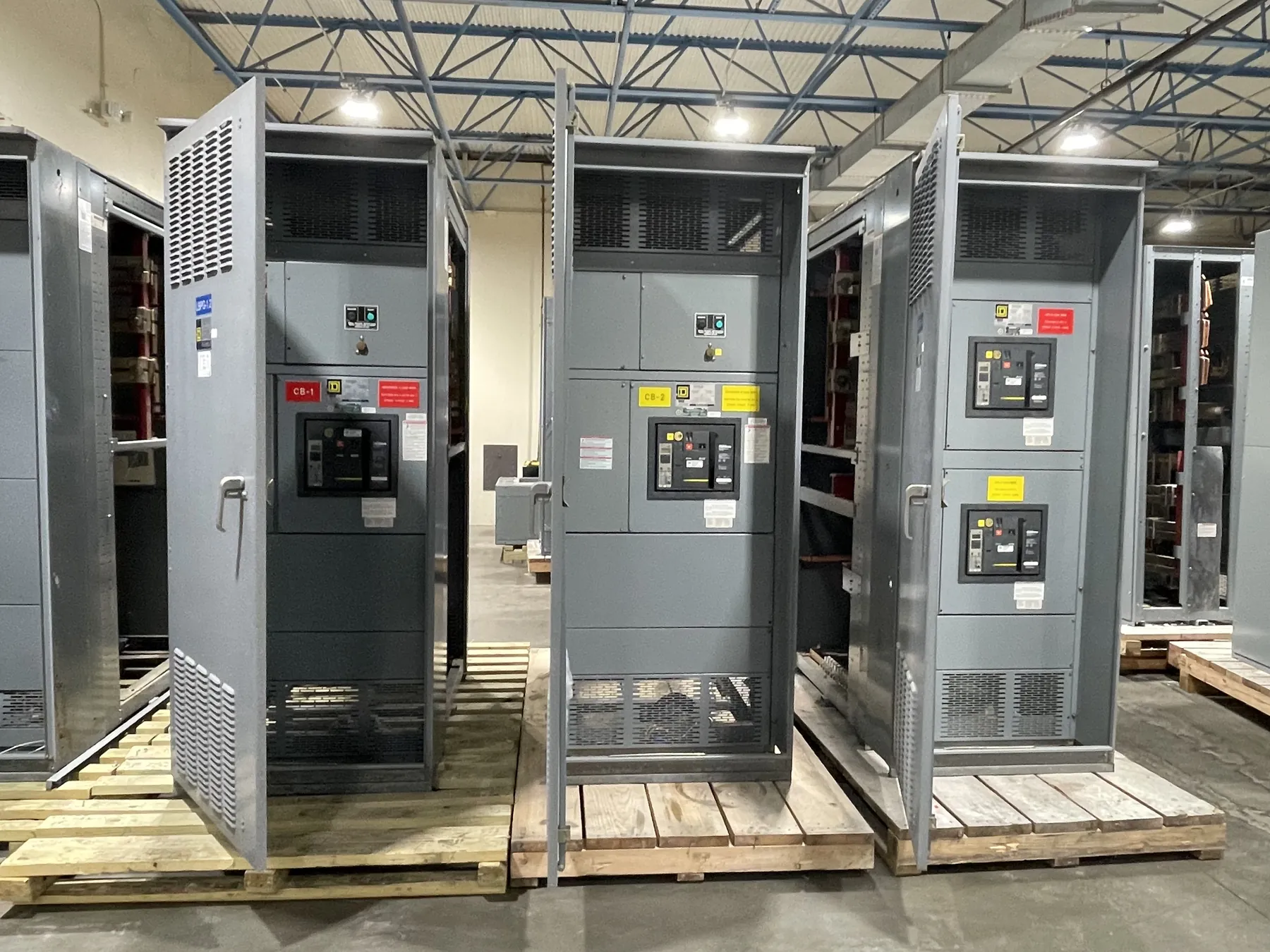
Commercial Switchgear Planning for Fallon Buildings
Commercial electrical distribution in Fallon should be laid out around how a building is actually used, not just its initial connected load. A retail space, office, restaurant, warehouse, or mixed-use facility can have different peak-demand patterns, operating hours, tenant needs, and plans for expansion. Those details influence the service arrangement, switchboard configuration, feeder destinations, metering approach, and space reserved for future work. Our U.S.-manufactured custom switchgear and power-distribution equipment is built new to project requirements, using all-American components, with nationwide shipping that includes Nevada.
Early planning is especially useful when equipment must fit a defined electrical room or coordinate with construction sequencing. Fallon project teams can share available room dimensions, access routes, service information, and anticipated installation timing so the proposed arrangement can be reviewed before equipment details are finalized. Shipping and site logistics depend on the actual project and destination; no local factory or fixed delivery schedule is implied.
Tenant Feeders, Loads, and Metering Interfaces
For multi-tenant properties, the distribution plan should clearly identify which feeders serve common areas and which serve individual tenant spaces. That separation can support operational accountability and future tenant changes, but it also affects the number and placement of feeder devices, metering provisions, and the space required for conductors and terminations. The design team should confirm who owns each part of the service and distribution system, where metering is required, and how tenant changes will be handled.
Metering arrangements must align with the serving utility’s requirements, the project’s ownership structure, and the electrical design. Utility service details and approval requirements are project-specific and should be confirmed with the utility and qualified electrical professionals. A quotation should identify requested metering interfaces and any utility documents available; it should not assume that a particular arrangement has been accepted.
Load Profiles and Motor Starting Requirements
A useful equipment specification describes more than a single total-load figure. Provide load schedules where available, expected demand patterns, major equipment, and any planned additions. For commercial facilities, HVAC systems, refrigeration, pumps, elevators, and other motor loads may influence feeder sizing and the way the distribution system responds to starting events. Motor starting requirements can depend on motor characteristics, starting method, operating sequence, and the strength of the electrical source.
These inputs help engineers evaluate the intended system and identify questions that may affect equipment selection. Do not treat a general switchboard rating as proof that a specific motor-starting condition is acceptable. The project’s electrical engineer must assess the system, source characteristics, loads, and applicable requirements before finalizing the design.
Future Capacity Without Guesswork
Future capacity is best discussed as a defined planning objective rather than an unspecified request for “extra room.” A project may need reserved spaces for future feeders, provisions for anticipated tenant growth, or a layout that leaves practical access for later modifications. Each choice has tradeoffs: reserved positions and larger equipment can affect the footprint, bus arrangement, and cost, while an undersized initial plan may limit later changes.
Tell us which loads or areas are expected to grow, what is known about their likely electrical needs, and whether future work must be accommodated within the original lineup. These are planning inputs, not a substitute for engineering calculations. Final ratings, physical configuration, and available provisions require review against the complete project requirements.
Protective-Device Coordination and Equipment Ratings — Commercial Switchgear in Fallon, NV
State the protective-device coordination objective for the project. The design team may be seeking selective coordination for specified portions of the distribution system, a particular response to faults, or coordination with upstream and downstream devices. The appropriate objective depends on the system, devices, settings, available fault information, and applicable project requirements. Coordination cannot be confirmed from a product description alone; qualified engineers need to review the system and supporting data.
Switchgear ratings are not the same as system voltage, and a rating should not be inferred from a building’s nominal service description. Confirm the required voltage, current and interrupting or withstand characteristics as applicable, along with the requested device types and enclosure conditions. UL 891 applies to applicable low-voltage switchboards; it does not establish coverage for every switchgear product or for medium- or high-voltage equipment. Any requested listing, standard, or rating must be confirmed for the specific assembly.
Working Clearances, Quotation Inputs, and Fallon Logistics
Room layout affects both equipment configuration and maintainability. Provide dimensioned plans showing walls, doors, columns, overhead obstructions, cable entry points, and nearby equipment. The electrical designer must determine required working clearances and access provisions under the applicable project conditions; a manufacturer’s proposed outline is not a substitute for site review. Fallon facilities may also have project-specific access, construction, or delivery constraints, so note known route limitations and receiving arrangements without assuming a particular site condition.
For a useful quotation, share the one-line diagram, equipment schedule, service and utility information, load profile, motor data, metering needs, coordination objective, room drawings, and requested ratings or listing requirements. Identify open items rather than treating them as settled. Our team manufactures new custom equipment in the United States and supports short lead times, but final scope and timing depend on confirmed design inputs, review, and project requirements.