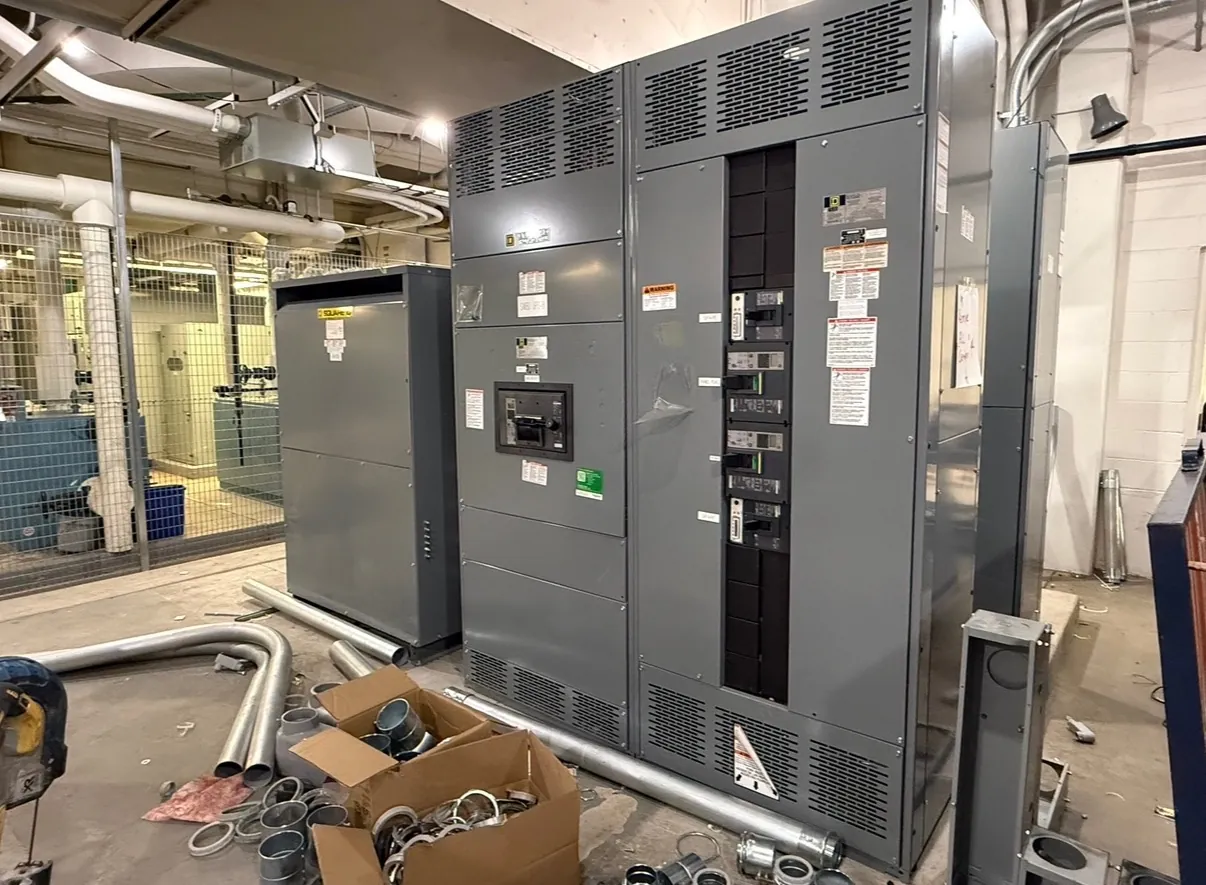
High-Voltage Switchgear for Fallon Substation Projects
High-voltage switchgear is selected as part of a substation system, not by choosing a voltage label alone. For a Fallon project, the design team needs to establish the system’s nominal and maximum operating voltage, insulation requirements, fault duty, switching functions, and the equipment’s location in the one-line diagram. These details determine which construction is appropriate and how the switchgear interfaces with transformers, incoming lines, bus, and downstream distribution. We manufacture new custom power-distribution equipment in the United States and can review project requirements for equipment intended to ship to Fallon. The exact available construction must be confirmed against the application and engineering scope.
Voltage Classification and Insulation Coordination — High-Voltage Switchgear in Fallon, NV
“High voltage” is not a complete equipment specification. Project documents should state the system voltage and identify the applicable equipment voltage class, while treating those values as related but distinct. Insulation levels must be selected for the actual system conditions, including grounding method, switching events, and expected exposure to transient overvoltages. Outdoor installation, elevation, contamination, and weather exposure may also influence insulation and enclosure choices. Fallon-area conditions should be documented by the project engineer rather than assumed from the city name. A proposal should identify the requested ratings and their basis, with final values subject to qualified engineering review and confirmation.
Switching Functions, Protection, and Utility Interconnection
Substation switchgear may provide functions such as circuit switching, isolation, grounding provisions, and protection, depending on the selected arrangement. The required devices and interfaces depend on the utility interconnection, ownership boundaries, operating responsibilities, and project drawings. Protection design requires more than selecting a device rating: engineers consider fault-current information, instrument-transformer inputs where applicable, relay functions, trip circuits, and coordination with upstream and downstream protective devices. The utility’s interconnection requirements and review process must be established by the project team. Applicable IEEE or IEC standards should be identified by the engineer and procurement documents; which standards apply depends on the equipment type, design, and jurisdiction. No standards designation by itself establishes utility approval or project compliance.
Load Profiles, Motor Starting, and Coordination Objectives
For facilities with substantial motor loads, provide operating load profiles and identify starting methods, starting frequency, and the effect of motor starts on the electrical system. Large motors can influence voltage conditions and protective-device settings, so their behavior should be evaluated alongside transformer characteristics, feeder loads, and available fault current. The coordination objective also needs to be explicit. A design may seek selective isolation for specified faults, while balancing equipment protection, system continuity, and the limits of the available data. A qualified engineer must determine the study assumptions and settings; switchgear cannot be specified responsibly from a motor nameplate list or total load alone.
Construction Choices and Project Interfaces
Construction decisions follow the service environment and one-line design. The project team should define indoor or outdoor placement, access and maintenance clearances, cable or bus connections, control-power sources, metering and communications interfaces, and required provisions for future expansion. Equipment arrangements must also account for foundations, conduits, cable routing, grounding, and coordination with adjacent substation components. These interfaces are especially important when the switchgear is part of an existing site or a phased installation: field dimensions and connection points should be verified before drawings are released. We can discuss custom construction against supplied documents, but availability and configuration require confirmation for each project.
Information for a Fallon Switchgear Quotation
Useful quotation inputs include the one-line diagram, equipment schedule, system voltage and grounding details, requested ratings, fault-current data, insulation requirements, protection philosophy, and applicable IEEE or IEC specifications. Include utility interface criteria, load profiles, motor-starting information, environmental conditions, enclosure requirements, and connection details. Note any drawing, inspection, documentation, or delivery-site constraints that affect manufacturing and shipment. Complete, consistent information helps identify open engineering questions early; missing or conflicting values should be resolved by the responsible engineer rather than inferred. Our assemblies use all-American components, are built in the USA, and can ship nationwide. Lead times depend on the confirmed scope and project requirements, so timing should be reviewed during quotation and order planning.