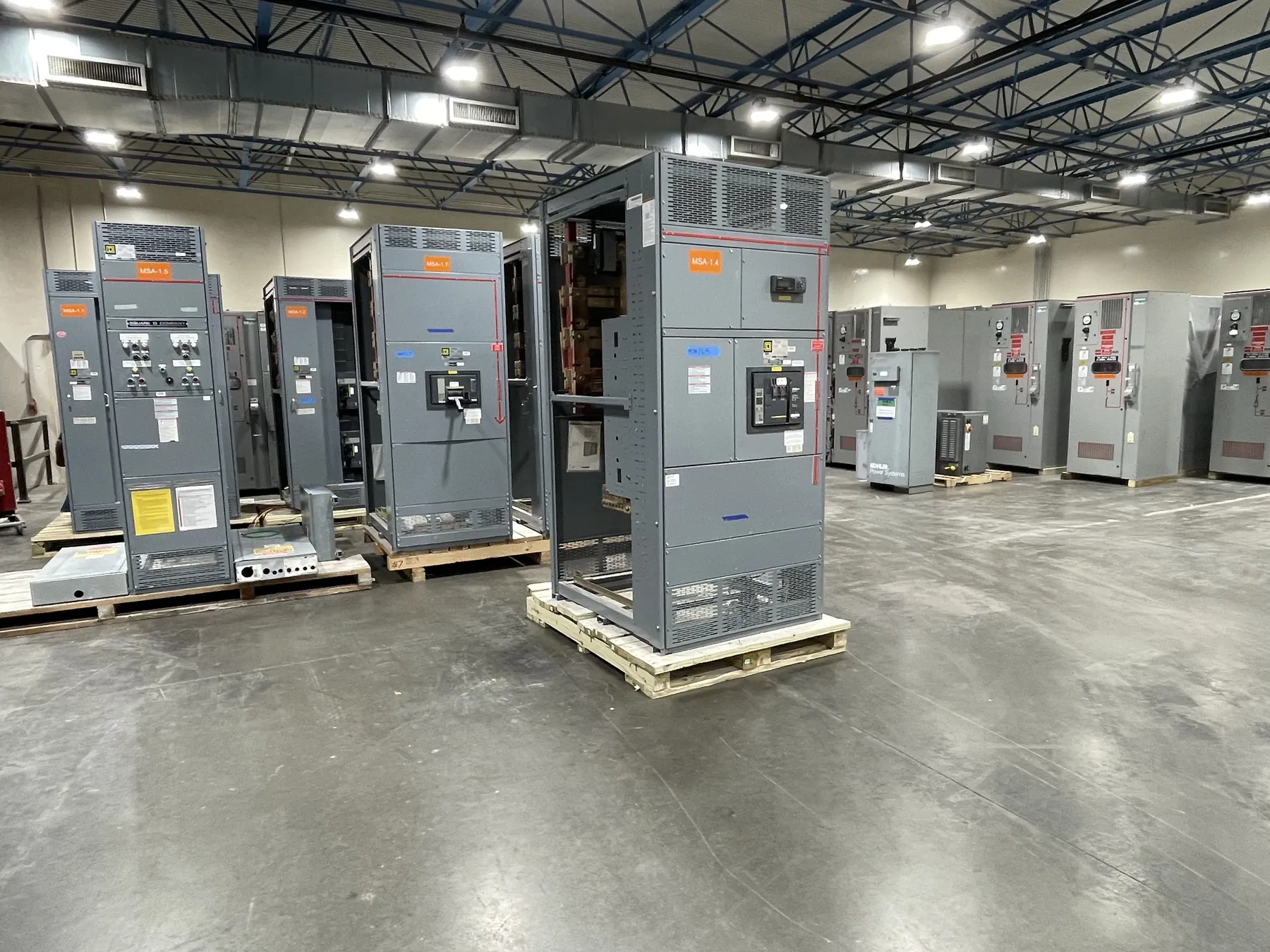
Low-Voltage Switchboards for Ely, Nevada Projects
Planning a low-voltage switchboard for a facility in Ely starts with the electrical service, the distribution loads, and the conditions where the equipment will operate. A switchboard is not selected by nominal system voltage alone: its bus and device ratings, interrupting capability, configuration, and enclosure details must suit the project. We manufacture new custom power-distribution equipment in the United States using all-American components and ship nationwide, including to Nevada. Final configuration depends on project documents and review by qualified electrical professionals.
For an initial quotation, useful inputs include the one-line diagram, system voltage and phase, service and feeder information, load data, available fault current at the equipment, installation location, and any required specifications or listing documentation. If the design is still developing, identify open items rather than treating preliminary values as final. That helps distinguish a budgetary configuration from equipment that can be released for manufacture.
Service and Feeder Arrangements Shape the Lineup
The service section establishes how power enters the switchboard and how the incoming equipment interfaces with the electrical system. The design may call for a main overcurrent device or another specified service arrangement; the selected configuration must follow the approved design, applicable requirements, and project utility interface. Metering, monitoring, control wiring, and compartment needs should be identified early because they affect space, component selection, and coordination.
Feeder sections distribute power to downstream panels, machinery, HVAC equipment, or other loads. Each feeder needs an appropriate device type and rating, with provisions coordinated to the connected conductors and load. The schedule should make clear which circuits are essential, whether future feeder positions are required, and how cable entry and termination space will be handled. Spare spaces are not a substitute for defining future electrical demand or reserving the bus capacity that demand may require.
Bus Sizing Depends on More Than the Nominal Voltage
Bus selection must reflect the design current, expected loading, ambient conditions, enclosure arrangement, and applicable equipment requirements. The bus rating is an equipment rating, not a statement of system voltage. A designer should confirm how the specified rating relates to the actual service and load profile, including any applicable conditions that could affect equipment performance. Connections, transitions, and the arrangement of sections also matter when a lineup contains multiple service or distribution compartments.
For an Ely installation, verify the site altitude and the ambient conditions expected at the equipment location. Temperature, ventilation, indoor or outdoor placement, and enclosure exposure can influence design choices. The equipment designer should determine whether altitude or other site conditions require derating or a different configuration. These details should be supplied with the inquiry when known, rather than assumed from the city name.
Available Fault Current Must Be Established at the Equipment
Available fault current is central to selecting and coordinating switchboard devices. The project team should provide the calculated value at the switchboard location, along with the relevant source and transformer information when available. The selected equipment and its protective devices must be suitable for the system’s fault conditions and coordinated with the upstream and downstream design. A voltage designation alone does not establish short-circuit suitability.
Confirm the required short-circuit ratings and device characteristics against the current study and project specifications. Changes to the source, transformer, conductors, or system configuration can affect available fault current and coordination. Qualified engineers must review the system and equipment details; a quotation or preliminary layout is not a substitute for that review.
Where UL 891 May Apply—and What to Confirm
UL 891 is a standard applicable to low-voltage switchboards. It should not be treated as a blanket designation for every type of switchgear or power-distribution equipment, nor does a reference to the standard establish that a particular proposed assembly is listed. If the project requires a UL 891-listed switchboard, state that requirement in the specification and request documentation for the exact equipment configuration under consideration.
Listing scope, ratings, device combinations, and project-specific details require confirmation. The project team should review the equipment submittal and applicable listing documentation before approval. Requirements may differ by application, and no listing or system approval should be assumed from a product description alone.
Prepare a Complete Ely Switchboard Inquiry
A well-defined inquiry reduces avoidable revisions. Include the latest one-line and load schedule, service and feeder requirements, available fault-current data, bus and device rating requirements, metering and control needs, cable-entry preferences, enclosure location, and any specifications governing documentation. Note site altitude, expected ambient conditions, and installation constraints such as access or room clearances where known. Also identify required submittal content and the project review sequence.
After design information is reviewed, the manufacturer can develop a configuration for customer and engineering review before production. We build new custom equipment in the United States with all-American components and support short lead times; actual timing depends on the approved scope and project requirements and should be confirmed for each order. Shipping to Ely is coordinated around the equipment configuration and delivery needs. Ratings, listing status, and final suitability remain subject to confirmation against the project documents and qualified engineering review.