Hospital Electrical Distribution Planning for Ely, Nevada
Hospital power distribution in Ely must be designed around the facility’s clinical functions, the loads that cannot tolerate an interruption, and the sources available at the site. A switchgear package is one part of that system: its configuration depends on the electrical design, generator and transfer equipment, downstream distribution, and the hospital’s documented essential electrical system (EES) requirements. For an Ely project, confirm site altitude, expected ambient conditions, enclosure location, and any equipment derating requirements with the equipment designer. These conditions can affect equipment selection and ratings; they should not be assumed from the city name alone.
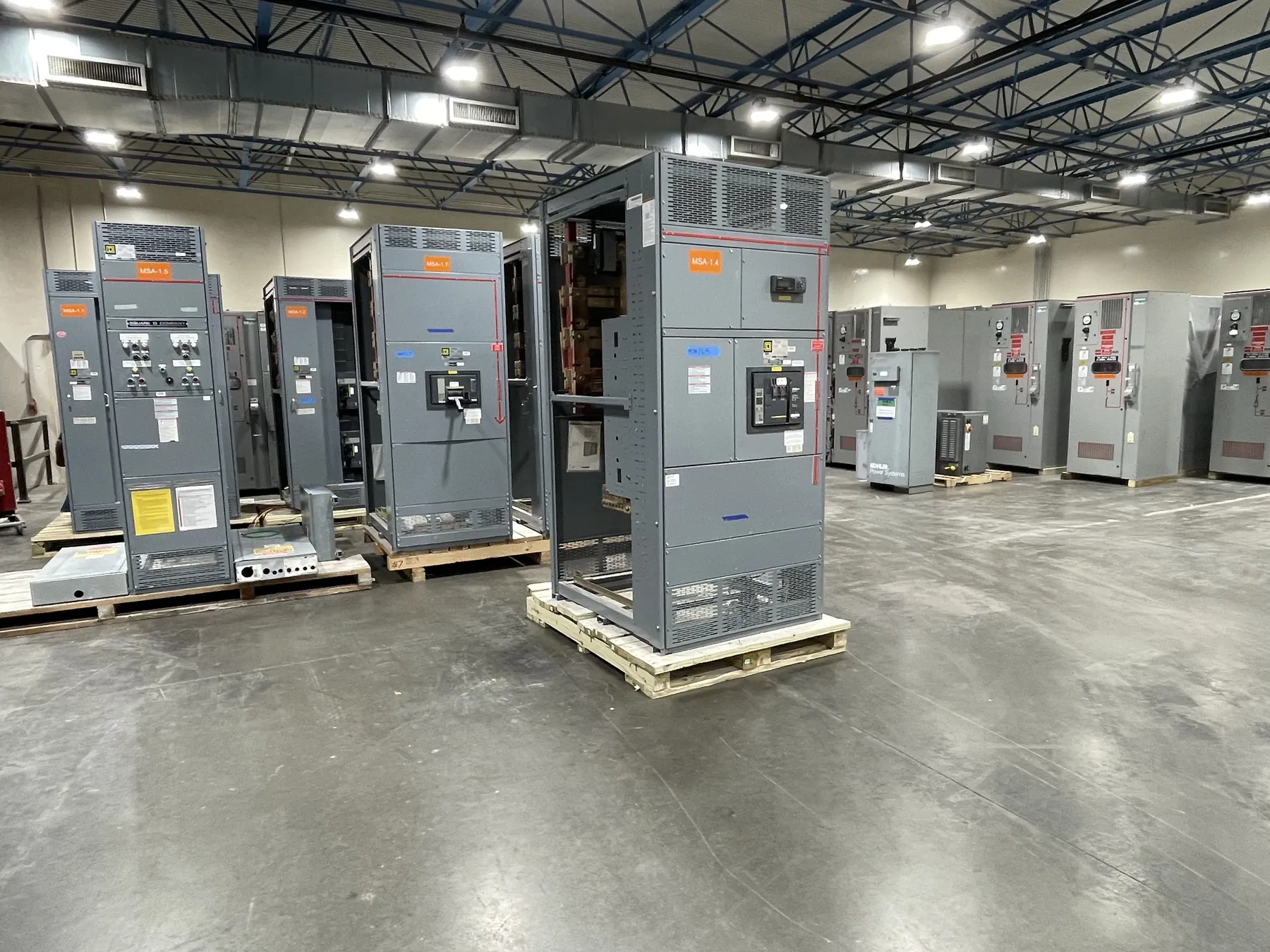
We manufacture new custom switchgear and power-distribution equipment in the United States using all-American components. Equipment can be configured to project requirements and shipped nationwide, including to Nevada. The design basis, applicable product standards, ratings, listing needs, and interfaces must be confirmed for each project rather than inferred from a general description of hospital service.
Map Essential Electrical System Branches to Real Loads
NFPA 99 establishes health care facility requirements that inform the EES, while the facility’s classification and adopted codes determine which provisions apply. The system is commonly organized into life safety, critical, and equipment branches, but the loads assigned to each branch must follow the project’s code analysis and approved electrical design. The switchgear design should preserve those separations where required and make the intended source and downstream path clear to the people responsible for engineering, construction, testing, and maintenance.
Begin with a current load schedule that identifies each branch, connected equipment, expected demand, and the panel or distribution section it serves. Include clinical and support functions such as emergency lighting, selected receptacles, medical support systems, and mechanical equipment only as assigned by the engineer. A load that seems important operationally is not automatically assigned to a particular EES branch. Clear schedules help avoid misapplied feeders, ambiguous section labels, and late changes to breaker or bus arrangements.
Coordinate Source Transfer with Generators and Downstream Gear
Emergency power architecture determines where transfer occurs and which distribution sections receive alternate-source power. Depending on the design, transfer equipment may be separate from the switchgear or integrated into a coordinated assembly. That choice affects footprint, feeder routing, equipment access, control wiring, and how the normal and alternate sources are represented in drawings. The engineer should establish transfer locations and sequences, including any required separation between branches, before the switchgear layout is finalized.
NFPA 110 addresses emergency and standby power systems, including requirements that may apply to the emergency power supply system and its components. Applicability depends on the project and adopted requirements; NFPA 110 does not by itself define every switchgear arrangement. The generator supplier, transfer-equipment designer, switchgear manufacturer, electrical engineer, and commissioning team need consistent information about source characteristics, control interfaces, protective-device coordination, and the intended operating sequence. Confirm these details in approved submittals rather than relying on a single-line diagram alone.
Confirm Ratings, Environment, and Equipment Configuration
Specify the system voltage and the equipment ratings as separate design inputs. Switchgear ratings must suit the electrical system and be evaluated against the available fault conditions, protection scheme, and applicable design criteria. A voltage designation alone does not establish interrupting, withstand, or continuous-current requirements. Required values and product scope need review by qualified engineers and confirmation during quotation and submittal review.
For Ely, provide the project elevation, indoor or outdoor location, expected ambient range, ventilation or enclosure constraints, and any known site-specific exposure conditions. The equipment designer can then assess whether environmental adjustments or derating are required. Also identify space limitations, cable entry preferences, incoming and outgoing feeder arrangements, metering, control needs, and the intended locations of future provisions. UL 891 applies to applicable low-voltage switchboards; it should not be treated as a blanket standard for every switchgear product or voltage class. Any requested listing and its applicability must be confirmed for the specific assembly.
Supply Complete Inputs for a Useful Quotation
A practical quotation package includes the one-line diagram, branch and feeder schedules, source and transfer arrangement, system voltage, required equipment ratings, fault-current information, protective-device requirements, enclosure and site conditions, and project specifications. Indicate the applicable code basis and any owner or authority requirements, while allowing the engineer to resolve conflicts and confirm compliance. Include drawing milestones, required submittal information, and site delivery constraints so manufacturing details can be coordinated without assuming an unverified schedule or delivery date.
Early coordination is especially valuable when generator, transfer, and distribution equipment come from different suppliers. Identify who provides controls, interconnection wiring, metering, and protective-device settings. Documenting these boundaries reduces uncertainty about what is included in the equipment package and what must be supplied or completed by others.
Define Commissioning Roles Before Hospital Turnover
Commissioning verifies that the installed electrical system performs as designed; it is not a substitute for engineering review or code approval. The project team should define responsibilities for factory documentation, installation checks, control-interface verification, transfer sequence testing, protective-device coordination, and integrated system testing. The electrical engineer, commissioning authority, contractors, equipment suppliers, facility representatives, and relevant authorities may each have distinct duties. Agree on test procedures, acceptance criteria, records, and resolution of deficiencies before testing begins.
For a hospital in Ely, include site conditions and delivery access in the coordination plan, but confirm those details with the facility and contractor rather than presuming local infrastructure or project logistics. We build new custom distribution equipment to the confirmed design basis and coordinate product details through the project documentation process. Final configuration, ratings, standards, listing status, and interface responsibilities require project-specific review by qualified professionals.