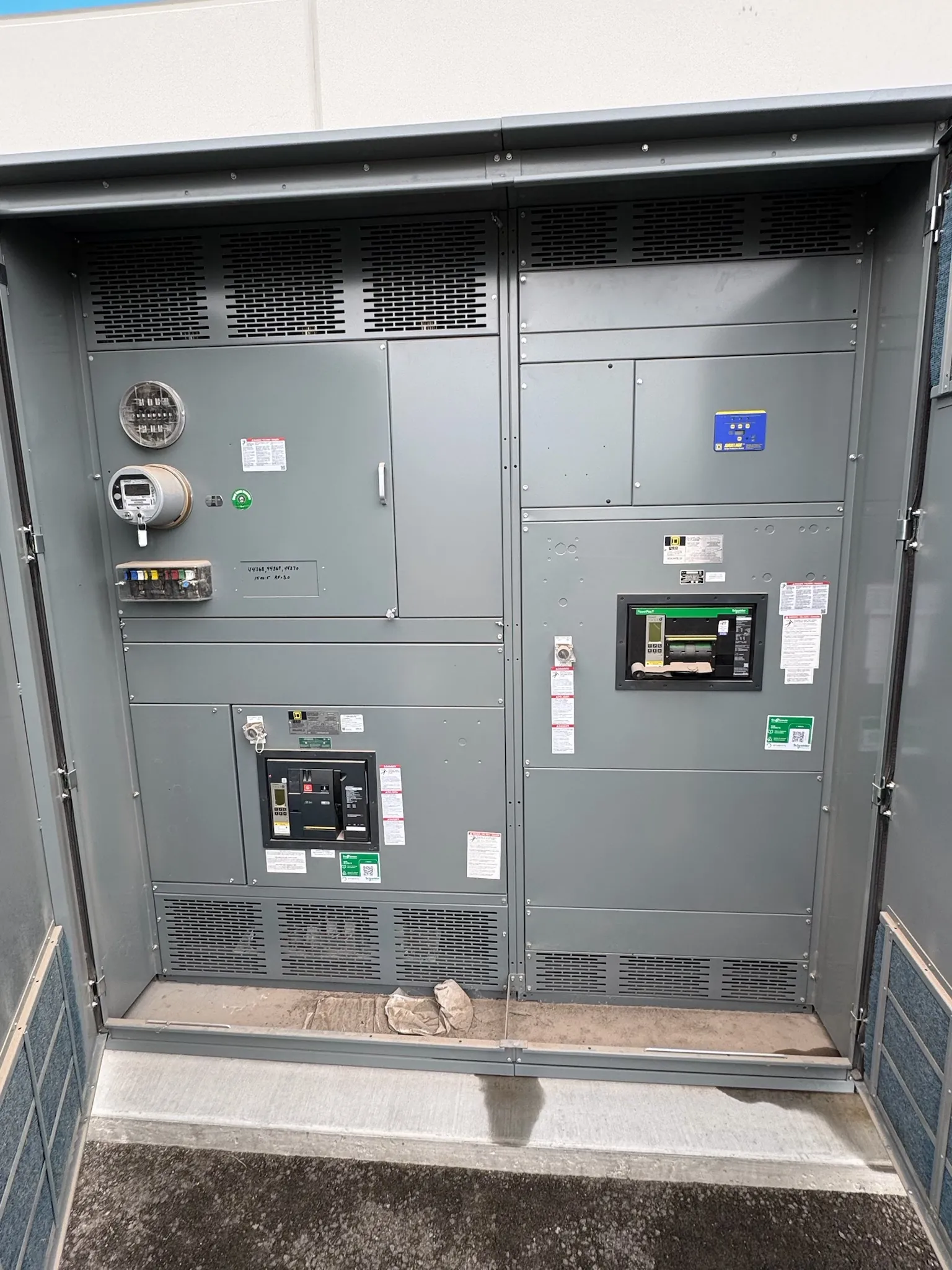
Motor Control Centers for Elko Facilities
Elko-area projects may serve industrial, commercial, municipal, or other facilities, each with its own motor loads and operating conditions. A motor control center (MCC) groups motor-control units and associated distribution components into an organized assembly. Its configuration should follow the project’s equipment schedule, electrical design, site conditions, and maintenance plan—not a generic package. We manufacture new custom power-distribution equipment in the United States using all-American components, and ship nationwide, including to Nevada. Project requirements determine the appropriate MCC arrangement and ratings.
Motor Starters and VFD Integration — Motor Control Centers in Elko, NV
Starter selection begins with the motor and driven equipment: the specified voltage, load characteristics, control method, and required protection all matter. Across a lineup, the mix of across-the-line starters, reduced-voltage starting, and variable frequency drives (VFDs) affects unit layout, heat management, wiring, and service access. VFDs can support adjustable motor speed where the application calls for it, but they also introduce interface questions such as control signals, communications, bypass expectations, and coordination with upstream protection. Those details should be settled with the project engineer and equipment suppliers before the MCC is finalized.
Provide a motor schedule that identifies each load and its starting method, along with available control diagrams and interface requirements. Note any owner or process requirements for local controls, remote commands, status points, or integration with a building or plant control system. A VFD’s inclusion in an MCC does not, by itself, establish that the drive is suitable for a particular motor, process, or electrical system; those choices require application review.
Short-Circuit Ratings and Feeder Protection — Motor Control Centers in Elko, NV
An MCC’s short-circuit rating must be evaluated against the available fault current and the protective-device arrangement at its installation point. It is a rating of equipment under specified conditions, not another name for system voltage and not a substitute for a system study. Feeder breakers or other specified protective devices, unit-level protection, and upstream coordination all affect how the assembly is configured. Interrupting ratings, short-circuit ratings, and coordination requirements should be confirmed from the project documents and reviewed by qualified electrical professionals.
For a quotation, provide the system voltage and grounding information, available fault-current data when established, upstream device details, and the required protection scheme. If that information is pending, identify it as an open design item rather than assuming a rating. The final arrangement depends on the electrical design and the manufacturer’s applicable equipment ratings.
Elko Site Conditions, Enclosure, and Access
Document the actual installation environment for the Elko site, including specified ambient conditions, indoor or outdoor placement, exposure to dust or moisture, and any other environmental factors identified by the project team. These conditions inform enclosure selection, ventilation considerations, and the arrangement of drives and other heat-producing equipment. Avoid choosing an enclosure solely by appearance or assuming that a standard configuration suits the site. The required enclosure type and environmental performance should be stated in the specification and confirmed during engineering review.
Maintenance access deserves attention at the same time as footprint and cable entry. Identify the intended working clearances, approach direction, door swing, adjacent equipment, and any site constraints that could affect installation or future service. Actual access requirements and installation clearances must be confirmed against the applicable codes, equipment instructions, and site design by qualified personnel. Planning access early can help avoid a lineup location that conflicts with walls, piping, process equipment, or routine facility use.
UL 845 and Project Requirements — Motor Control Centers in Elko, NV
Confirm whether the project specification requires UL 845 for the MCC and whether a particular listing or other approval is required for the installation. UL 845 applies to motor control centers; it should not be treated as a blanket qualification for every type of switchgear or power-distribution assembly. Listing requirements, product scope, and any requested markings need to be checked against the actual specification and the equipment being proposed. Do not assume a listing or approval applies until it has been verified for the specific configuration.
Submit the specification, one-line diagram, load and motor schedules, control requirements, enclosure criteria, and any stated listing requirements with the inquiry. Include cable-entry preferences, lineup constraints, and the project’s expected review and submittal process where known. Clear documentation helps identify design questions before equipment details are set.
Custom Manufacturing and Quotation Review
We manufacture new custom equipment rather than broker products. For an Elko project, the quotation and engineering review should establish the motor-unit mix, feeder protection, control interfaces, specified ratings, enclosure needs, and practical maintenance access. We support short lead times, but timing depends on the finalized scope, design review, component requirements, and project schedule; a specific lead time must be confirmed for the order. Nationwide shipping can serve Nevada destinations, while site receiving conditions, unloading arrangements, and delivery access should be coordinated by the project team.
Before release, qualified engineers and the relevant project parties should resolve open questions about fault-current data, protection coordination, VFD application, site environment, access, and required approvals. These checks keep the proposed MCC tied to the actual Elko installation rather than relying on assumptions about the facility or electrical system.