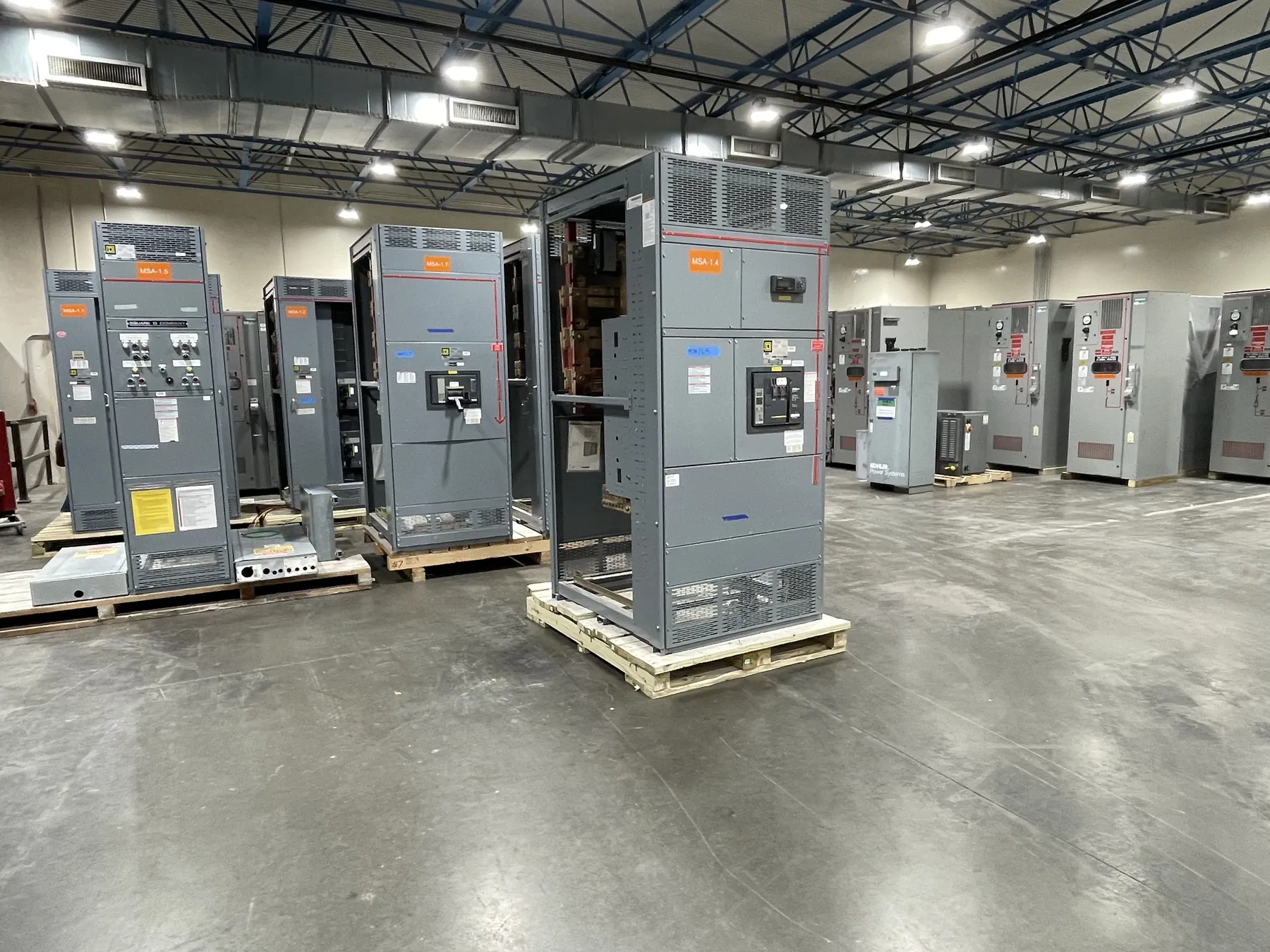
High-Voltage Substation Switchgear for Elko Projects
High-voltage switchgear for an Elko-area substation must be selected around the electrical system it will serve—not by relying on a product label alone. The project’s nominal system voltage, maximum operating conditions, grounding arrangement and equipment ratings all matter, and those values are not interchangeable. A switchgear rating describes the capability of particular equipment under defined conditions; it does not by itself establish the voltage classification or suitability of the complete installation. We manufacture new custom power-distribution equipment in the United States and can review project specifications for a proposed configuration. Exact construction, ratings and scope must be confirmed through engineering review against the site and utility requirements.
Voltage Classification, Insulation and Construction
Start with the one-line diagram and the owner’s or utility’s stated electrical requirements. These establish the system context for selecting switching devices, bus, instrument transformers, terminations and related components. Insulation coordination is a separate but connected decision: specified withstand levels, overvoltage exposure, clearances and the chosen insulation system must suit the application. Outdoor and indoor arrangements can call for different construction, interfaces and maintenance provisions. The available construction should be confirmed for the requested voltage class and project configuration; not every switchgear arrangement or component is suitable for every high-voltage application. Ratings and insulation requirements need review by qualified electrical engineers, not inference from a general product description.
Protection and Utility Interconnection in Elko
Protection and control must coordinate with the equipment and the connected system. Project documents should identify the required relays and functions, instrument-transformer ratios and accuracy requirements, trip and close circuits, control power, communications interfaces, and any metering or monitoring responsibilities. The utility’s interconnection criteria may also govern switching arrangements, protective settings, grounding, isolation points, testing documentation and interface boundaries. These requirements vary by utility and project; no equipment description alone establishes acceptance or approval. Early review of utility documents, protection studies and the division of responsibilities among the owner, engineer, utility and equipment supplier helps surface mismatches before a final configuration is quoted.
Applicable IEEE or IEC Requirements — High-Voltage Switchgear in Elko, NV
Specifications may reference IEEE or IEC requirements for particular equipment types, ratings, tests or interfaces. The applicable documents depend on the proposed construction and project jurisdiction; a reference to one standard does not automatically define the requirements for every component in an assembly. The engineer of record and utility should identify the governing standards, editions, exceptions and project-specific acceptance criteria. We can review those references as part of configuration discussions, but compliance claims, listings and test requirements must be verified for the actual equipment and scope. UL 891 applies to applicable low-voltage switchboards; it should not be treated as a blanket standard for high-voltage substation switchgear.
Elko Site Conditions, Enclosures and Access — High-Voltage Switchgear in Elko, NV
For an Elko project, provide site-specific ambient conditions and installation details rather than assuming that a general outdoor or indoor designation settles the enclosure design. Relevant inputs can include the documented temperature range, exposure to wind, dust, moisture or contaminants, elevation where it affects equipment selection, and whether equipment will be installed in a building, yard or other protected area. State enclosure expectations, cable or bus entry directions, foundation and anchorage interfaces, and the space available for installation and future maintenance. Access clearances, lifting routes, doors, barriers and component-removal paths can affect the layout. These details support a more realistic design review and help identify site constraints early.
Information for a Project-Specific Quote — High-Voltage Switchgear in Elko, NV
A useful request package includes the one-line diagram, equipment schedule, utility criteria, applicable standards, site conditions, control schematics or interface requirements, and the expected division of supply. Identify the intended switching arrangement, incoming and outgoing connections, metering and protection scope, enclosure requirements, and any project milestones that affect submittal or shipment planning. If some information is still in development, mark assumptions clearly so they can be reviewed rather than mistaken for confirmed requirements. Our assemblies use all-American components, are built in the USA and ship nationwide, including to Nevada. Lead times depend on the finalized design, component requirements and project scope; timing should be confirmed for the specific quotation. Final ratings, construction and interfaces require qualified engineering review and confirmation against the actual site and utility requirements.