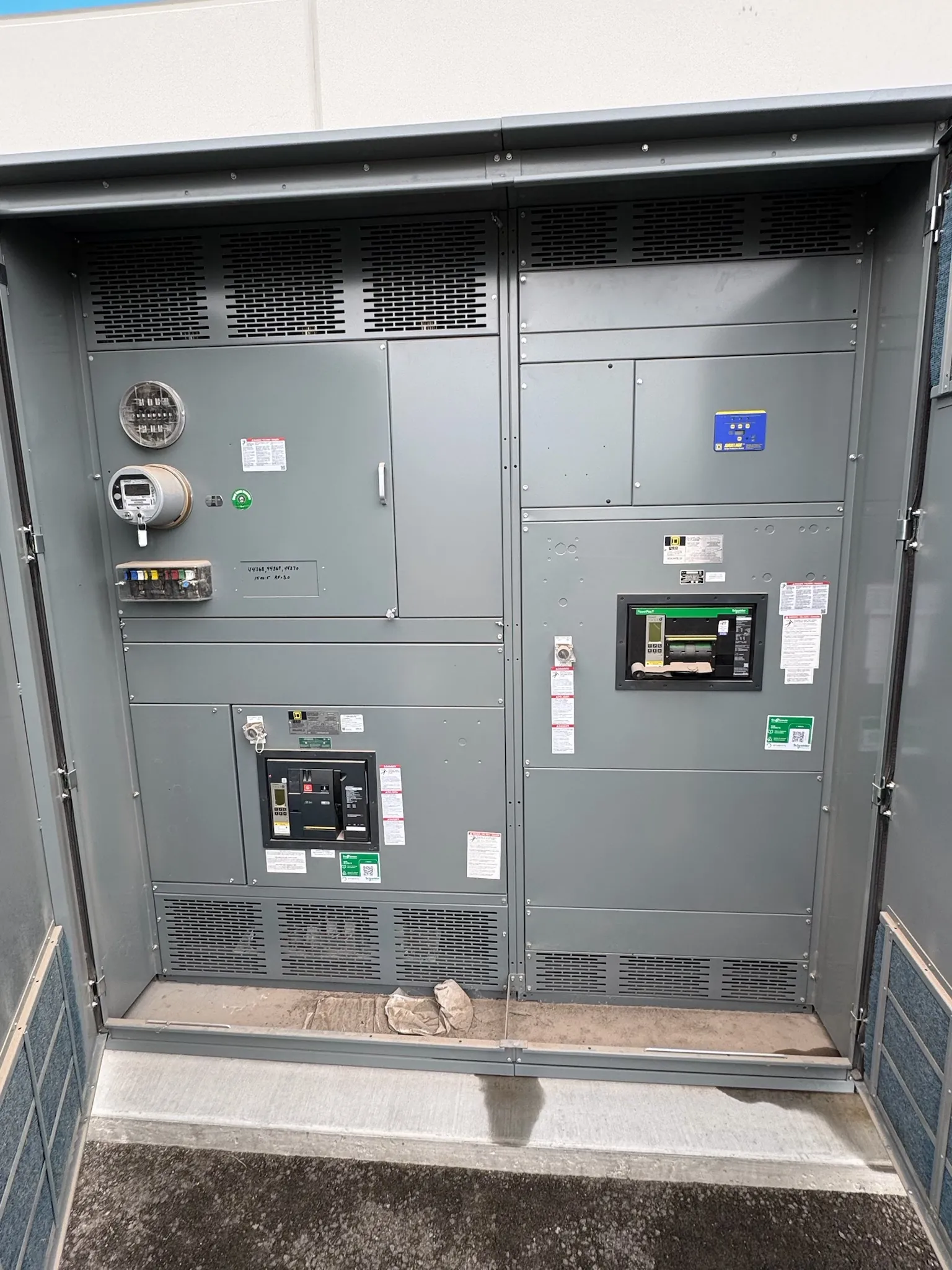
High-Voltage Substation Switchgear for Dayton Projects
High-voltage switchgear for a substation or other Dayton-area installation must be specified around the electrical system it will serve—not selected from a voltage label alone. The required construction depends on the system’s nominal voltage, maximum operating conditions, insulation requirements, fault duty, switching functions, and connection to upstream and downstream equipment. A new custom assembly can be manufactured in the United States with all-American components and shipped to Nevada; the available construction and project fit must be confirmed during engineering and quotation.
Start by identifying whether the equipment is intended for a utility substation, an industrial service, a generation connection, or another application. These settings can call for different switching arrangements, protective-device interfaces, access provisions, and utility coordination. “High voltage” is not a complete equipment specification, and a product’s voltage class or rating should not be confused with the system’s nominal voltage. Qualified project engineers must review the one-line diagram, site conditions, and governing requirements before a design is established.
Voltage Classification and Insulation Coordination — High-Voltage Switchgear in Dayton, NV
Voltage classification sets a boundary for selecting equipment, but insulation coordination requires a fuller picture. The design team should identify operating voltage, system grounding, expected switching conditions, and exposure to lightning or other transient overvoltages. Those factors inform insulation levels and the coordination of equipment clearances and protective devices. They also affect interfaces to cables, bus, transformers, instrument transformers, and surge protection where included in the project scope.
Do not assume that two assemblies described with the same nominal voltage are interchangeable. Their insulation ratings, environmental suitability, interrupting duties, construction, and interface dimensions may differ. The proposal should state the intended ratings and construction clearly, with any assumptions identified for review. Final selection depends on system studies and the applicable design basis, not on a general product description.
Protection, Switching, and Utility Interconnection — High-Voltage Switchgear in Dayton, NV
Protection and switching functions should be developed with the project’s operating and interconnection requirements in view. The design team may need to define breaker or switching-device duties, relay and control interfaces, metering provisions, communications, and trip or close circuit requirements. The required configuration depends on the protection philosophy, fault analysis, operating sequence, and the division of responsibilities between the facility and the serving utility.
Utility interconnection is a project-specific interface, not an automatic property of a switchgear assembly. Confirm utility requirements early, including any preferred arrangement, drawings, equipment data, protection functions, or review milestones. Applicable IEEE or IEC requirements should be identified by the project engineer and tied to the actual equipment and jurisdiction. Which standards apply—and whether a particular design meets them—requires confirmation for the specified construction. Utility acceptance and approval must likewise be established through the project process.
Dayton Site Conditions and Equipment Interfaces
For a Dayton installation, site review should connect the electrical design to the actual substation layout and installation route. Provide available room dimensions, entry points, equipment orientation, cable trench or duct-bank locations, and the intended cable approach. Cable entry direction and termination space can affect compartment arrangement and field connections, so they should be resolved before the assembly layout is finalized.
Floor loading and support details also matter. The responsible structural and electrical teams should verify the equipment’s anticipated loads against the foundation or building design and account for anchorage and installation conditions. Working space, access for inspection and maintenance, egress, and any required clearances need review against the applicable codes, standards, and site plan. Nevada delivery logistics should be coordinated with the receiving location, unloading capability, access constraints, and the desired installation sequence; no specific Dayton site conditions should be assumed without customer information.
Manufacturing Scope and Project Submittals
Custom manufacturing begins with a defined electrical and mechanical scope. Useful quotation inputs include the one-line diagram, system voltage and grounding information, required ratings, fault-duty study data, protection and control requirements, cable and bus interfaces, environmental conditions, and the applicable standards. Site drawings, floor and anchorage information, access limits, and the preferred shipment or installation sequence help identify practical construction needs. If a detail is not yet established, mark it as pending rather than treating an assumption as final.
After the design basis is reviewed, the manufacturer can confirm the available construction, identify open interfaces, and develop submittal information for project review. All-American components and U.S. manufacturing are part of the stated product approach; they do not by themselves establish a particular listing, utility acceptance, or compliance status. Ratings, component selection, listings where applicable, and project-specific requirements must be confirmed for the offered assembly before release to manufacture.
Planning a Dayton High-Voltage Switchgear Quote
A useful quote should reflect the actual application rather than a broad equipment category. Include the intended service, required switching arrangement, voltage classification, insulation basis, protection interfaces, utility criteria, and known site constraints. Clarify who will provide relays, cables, terminations, foundations, and other equipment outside the manufacturer’s scope. This reduces ambiguity in both the technical review and the installation plan.
Short lead times may be supported by the manufacturing approach, but schedule depends on the approved design, component requirements, submittal review, and project coordination. Nationwide shipping can serve Dayton projects; transportation and receiving details should be discussed as part of the project plan. A qualified engineer and the relevant utility or authority must review the final design and site integration before equipment selection is treated as complete.