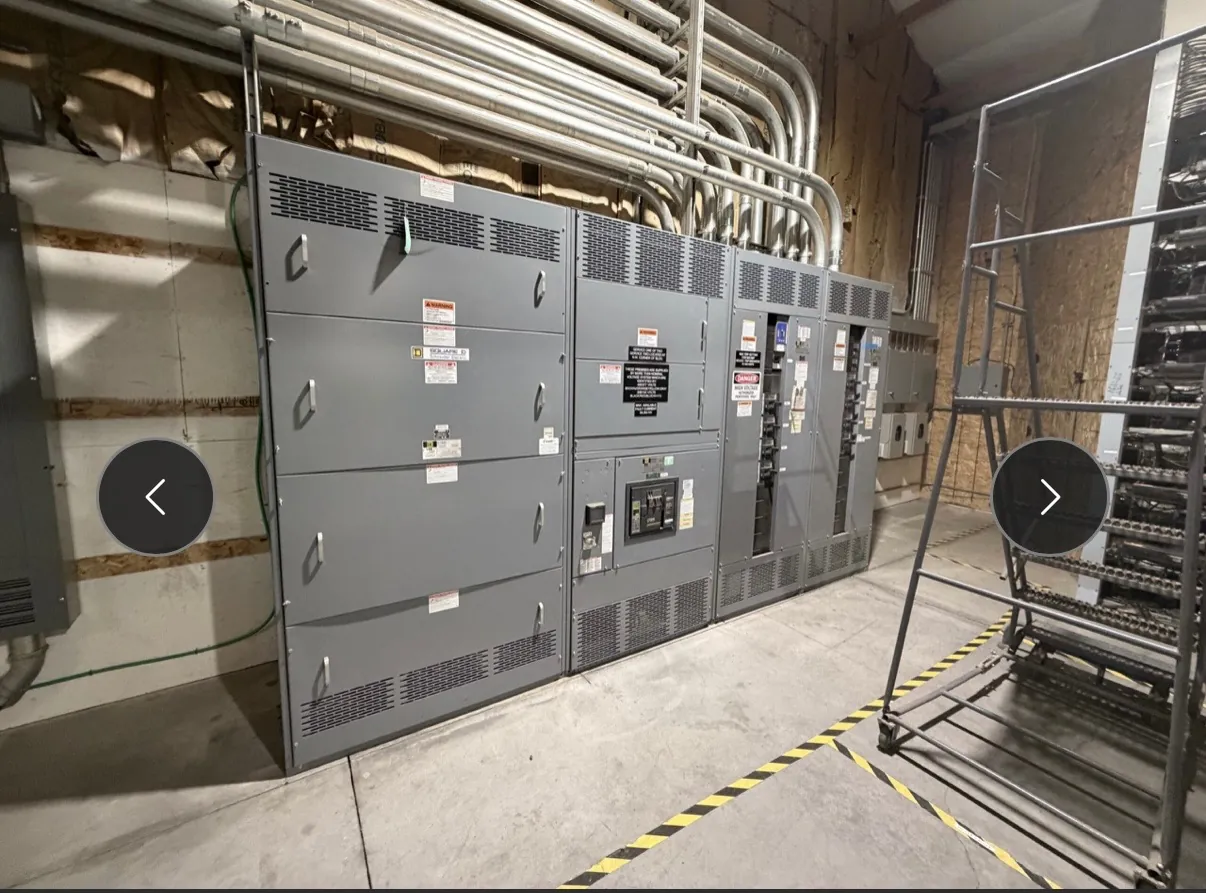
Motor Control Centers for Carson City Projects
Carson City facilities that operate pumps, fans, compressors, conveyors, process equipment or building services may need several motor circuits grouped in a coordinated assembly. A motor control center (MCC) can bring motor starters, feeder devices, controls and related equipment together, but the right configuration depends on the loads and the facility’s electrical system. A new MCC should be developed around the project’s one-line diagram, equipment schedules, control requirements and installation conditions—not selected from a generic description of the application.
Our U.S.-manufactured assemblies use all-American components and can be configured for new projects in Carson City and shipped nationwide. Early discussion of the equipment lineup, interfaces and site constraints helps identify design questions before a quotation is finalized. Lead time depends on the approved scope, component selection and current project requirements; a specific schedule should be confirmed for each order.
Starter Types and Motor Load Requirements
Across an MCC lineup, motor circuits may use different starting and protection arrangements. A full-voltage starter is one option for a motor that can start directly on the supply, while reduced-voltage or other engineered starting methods may be considered when the load, starting behavior or electrical system calls for them. The choice affects the starter unit, protective devices, control scheme and available space.
Useful quotation inputs include each motor’s nameplate information, horsepower, voltage, phase, full-load current, duty, driven equipment and expected starting frequency. Identify which motors are essential, whether automatic restart or interlocking is required, and how local and remote commands should work. These details help engineers coordinate motor protection and controls with the actual application; they do not replace review of the system design and site conditions.
VFD Integration, Controls and Interfaces
Variable-frequency drives (VFDs) can provide adjustable motor speed where the process or equipment requires it. Integrating drives in an MCC involves more than specifying a drive rating: the design may need to account for motor and load characteristics, drive input requirements, ventilation and heat dissipation, control signals, communications, bypass expectations and maintenance access. A drive’s suitability and configuration require project-specific engineering.
Clarify whether drives will be mounted in the MCC or supplied separately, and identify any required interface with a building management system, programmable controller or other control equipment. Provide available control drawings, preferred communications information and the intended operating modes. The project team should also review the installation environment and drive manufacturer requirements so that enclosure, cooling and cable arrangements fit the facility.
Short-Circuit Ratings and Feeder Protection — Motor Control Centers in Carson City, NV
An MCC’s short-circuit rating must be suitable for the available fault current at its point of installation and coordinated with the upstream protective device. A rating is not the same thing as system voltage, and neither should be inferred from the other. The project engineer should confirm the system voltage, available fault-current information, protective-device selections and applicable assembly rating requirements. Any proposed combination of equipment and protective devices needs appropriate verification for the actual design.
Feeder protection also affects the lineup. Identify the incoming supply arrangement, feeder sizes and loads, upstream breaker or fuse information, and any downstream equipment served by the MCC. Coordination decisions can influence device selection, compartment layout and continuity of operation. Final ratings and configuration require qualified engineering review of the one-line diagram and relevant site data; they cannot be established from a city name or motor list alone.
UL 845 and Assembly Documentation
Determine whether UL 845 is required for the MCC assembly under the project specifications, owner requirements and applicable authority review. Do not assume that a particular listing applies to every project or that a component-level mark establishes the status of the complete assembly. Confirm the requested standard, listing scope and documentation expectations with the project’s electrical engineer and relevant reviewers before equipment is specified. The applicable requirements depend on the project and the equipment configuration.
For a useful quotation, provide the specification, one-line diagram, load schedule, control narrative, requested drawings and any stated listing or documentation requirements. Flag open items rather than treating them as settled. This gives the manufacturer and project team a basis to identify scope, interfaces and decisions that need resolution before approval and production.
Carson City Permits, Reviews and Maintenance Access
For a Carson City installation, the project team should identify the permitting authority and confirm which electrical permit, plan review and inspection steps apply to the specific work. Requirements can depend on the facility, project scope and adopted rules. The serving utility may also need to review service-related changes or other matters within its scope. Confirm those requirements with the relevant authority and utility; there is no single approval path that can be presumed for every MCC installation.
Site planning should account for the equipment room or outdoor location, access route, floor and mounting conditions, working clearances, ventilation, cable entry and the ability to remove or service units. Maintenance access should be considered during layout development, alongside doors, barriers, adjacent equipment and facility operations. Include available room drawings and installation constraints with the quotation request. A qualified engineer must review the final design against the site, code requirements, inspection process and utility conditions before installation.