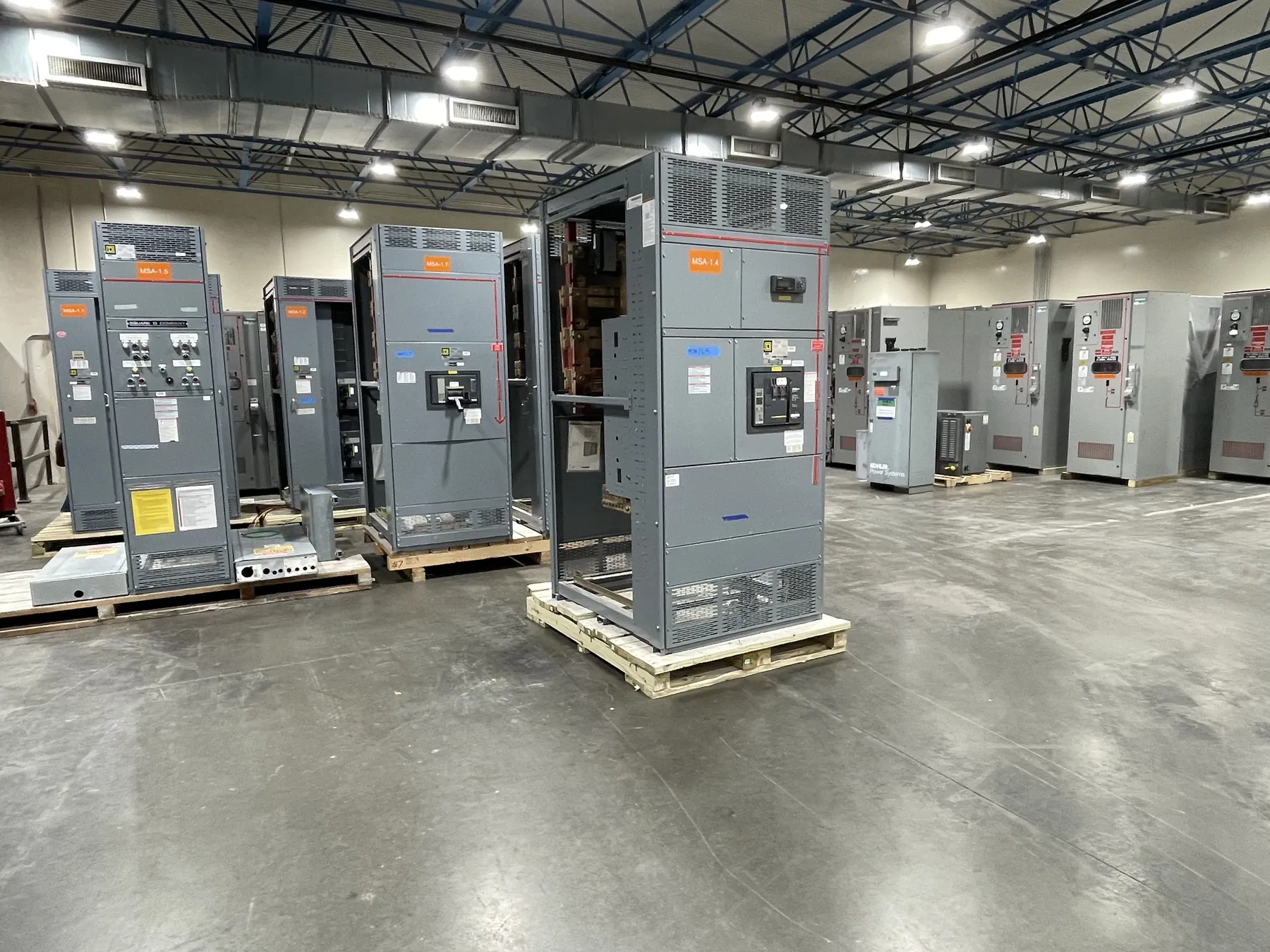
Metal-Enclosed Switchgear for Carson City Project Conditions
Metal-enclosed switchgear can provide a coordinated arrangement of switches, fuses or circuit breakers within a metal enclosure for controlling and protecting electrical circuits. For a Carson City project, the right configuration depends on the installation’s one-line diagram, service arrangement, available fault current, load requirements and site layout—not simply on the city name or a nominal voltage. A new custom assembly can be manufactured in the United States with all-American components and shipped to Nevada. Project-specific ratings, component selections, listings and interfaces must be confirmed during engineering review.
Start by identifying the equipment’s role: utility service, a transformer primary, a distribution point, or another part of the facility system. The supply source and downstream equipment affect switching duty, protection, metering and coordination. Site conditions such as indoor or outdoor placement, available footprint, cable routing, access and exposure to weather also shape the enclosure and arrangement. Nevada shipment logistics can be planned around the receiving site, but unloading access, staging space and any restrictions on delivery vehicles should be established by the project team.
Choosing Switch, Fuse and Breaker Arrangements
A switch-and-fuse arrangement may suit applications where the specified protective function and operating scheme are compatible with the selected fuse and switch. Fuse characteristics, interrupting capability, voltage rating and coordination with upstream and downstream protection require engineering review. A circuit-breaker arrangement offers a different protection and control approach; breaker type, trip functions, control power, accessories and required interface signals must be defined for the application. These options are not interchangeable by default.
Specify which circuits need switching or protection and describe normal and alternate feed arrangements, if applicable. Include transformer information where the switchgear serves a transformer, along with the intended protective devices and any metering or control requirements. The design team can then evaluate how the proposed arrangement fits the system rather than selecting components in isolation. A quotation based on incomplete source data may need revision when fault-current calculations, utility requirements or the final one-line diagram become available.
Enclosure Barriers, Compartments and Access
Metal-enclosed equipment is an enclosure and construction category, not a promise that every internal component has the same compartmentalization or access provisions. Describe the separation desired between functional sections, the locations of cable and bus connections, and any barriers required by the project design. The arrangement should account for how conductors enter and leave, where field connections will be made, and whether other equipment or building features constrain access. Barrier design should be reviewed as part of the complete assembly and its intended application.
Access requirements also affect the enclosure layout. Identify which doors, covers or operating points need to be accessible in the installed position and provide the surrounding clearances established by the project’s qualified electrical and building professionals. Do not assume that a particular enclosure format or barrier arrangement resolves all installation or maintenance requirements. The final design must match the equipment documentation and applicable site conditions.
Metal-Enclosed Versus Metal-Clad Construction
Metal-enclosed and metal-clad are related terms, but they do not describe identical construction. Metal-clad switchgear is a more specifically defined construction category, generally associated with separated compartments and particular construction features. Metal-enclosed switchgear is the broader description; its internal separation, component access and construction details depend on the applicable design. A specification that requires metal-clad construction should not be treated as satisfied by equipment described only as metal-enclosed.
For Carson City project documents, use the exact construction terminology required by the engineer, owner or utility, and confirm it against the proposed equipment drawings and specifications. Product ratings and standards depend on the equipment type and application. UL 891 applies to applicable low-voltage switchboards; it should not be used as a blanket designation for metal-enclosed switchgear or assumed to cover other voltage classes. Any requested listing or standard must be confirmed for the specific assembly.
Fault Duty, Grounding and System Interfaces — Metal-Enclosed Switchgear in Carson City, NV
Fault duty is a central design input. Provide the available fault-current information at the equipment location, the system voltage, grounding method and relevant source or transformer data. A voltage rating is not the same as system voltage, and a current rating alone does not establish that equipment is suitable for the available fault condition. Engineers must verify the applicable ratings and coordinate protective devices with the system design.
Grounding provisions and connections must align with the facility’s grounding design and the equipment configuration. Document incoming and outgoing conductor requirements, neutral arrangements where applicable, cable entry direction, control wiring and any communication or interlocking interfaces. Utility-owned equipment, service requirements and metering arrangements may impose additional constraints. Those details should be resolved with the responsible utility and project professionals rather than inferred from a general product description.
Carson City Permits, Reviews and Quotation Inputs
Before release, the project team should identify which permits and inspections apply to the specific installation and confirm them with the authority having jurisdiction for the site. The responsible electrical professional should establish the required plans, permit submittal and inspection sequence under the applicable local process. If the installation involves utility service or a utility-controlled interface, confirm the utility’s design-review, metering and connection requirements directly; the review steps depend on the project and service arrangement.
For a useful quotation, provide the one-line diagram, equipment function, system voltage, available fault-current data, grounding information, specified construction, desired switch or fuse or breaker arrangement, required ratings, connection locations, control and metering needs, and known permit or utility criteria. Include site access and delivery constraints that could affect receiving and placement. The manufacturer can review the requested configuration and identify information still needed, while qualified engineers and the relevant reviewing authorities determine the final design and installation requirements.