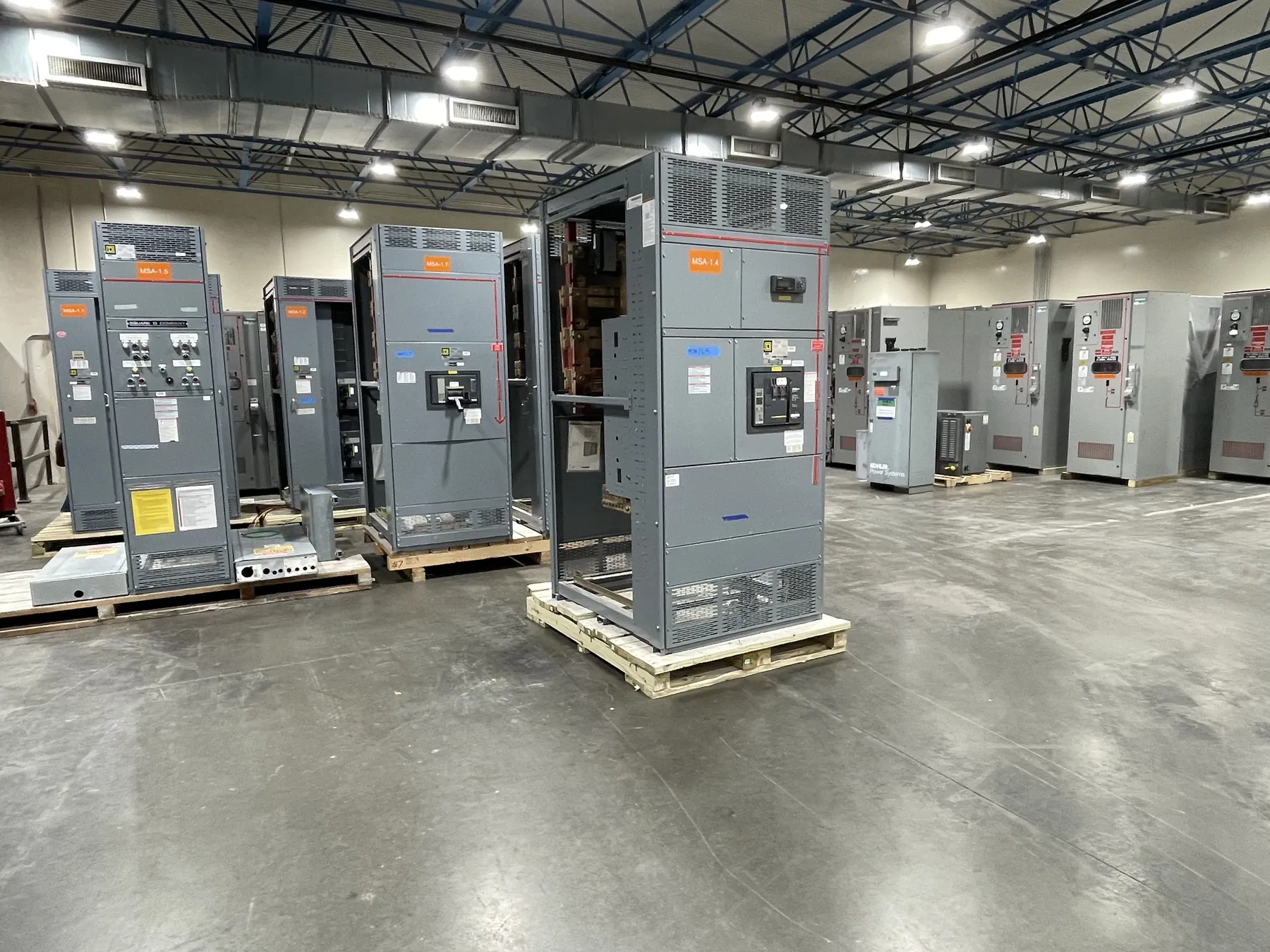
Casino Electrical Distribution for Carson City Projects
Casino facilities combine public areas, gaming operations, food service, offices, back-of-house functions and building systems that may have different continuity requirements. A switchgear design for a Carson City casino project should begin with the facility’s actual load groups and operating priorities, not with a single assumption that every circuit needs the same source or level of backup. New custom switchgear and power-distribution equipment can be configured around project requirements; the final arrangement depends on the electrical design, site conditions and review by qualified professionals.
A useful early step is to identify critical operating loads, life-safety loads and general loads separately. The project team can then determine which loads need normal power, which are supplied by emergency or legally required standby systems, and which may be shed or restored in stages. These categories are not interchangeable, and the required arrangement must be established by the responsible electrical engineer and authorities having jurisdiction. Clear load schedules and one-line diagrams help prevent assumptions from carrying into equipment specifications.
Keep Critical, Life-Safety and General Loads Distinct
Casino operations may depend on communications, security, surveillance, gaming-related systems, refrigeration, kitchen equipment, elevators, HVAC, lighting and other services. Their importance to operations does not automatically determine their code classification or emergency-power source. The engineer should evaluate each load’s function, applicable requirements, operating sequence and consequences of interruption. Life-safety systems require particular attention to their applicable code and approved supply arrangements.
Physical and electrical separation can support a more understandable distribution plan. Depending on the design, separate sections, distribution paths or dedicated equipment may be considered for different load groups. These choices affect footprint, feeder routing, fault coordination, maintenance access and future changes. Equipment ratings and configuration must be selected from the project’s system conditions and available fault-current information; a rating is not the same as system voltage, and neither can be established from the facility type alone.
Coordinate Emergency Power and Restoration Sequences
Emergency generators, transfer equipment and switchgear need to function as a coordinated system. The project design should identify which source serves each designated load, how transfer is initiated, and what restoration or load-shedding sequence is intended. Generator capacity, starting characteristics, transient loads and the behavior of connected equipment can affect those decisions. Any proposed sequence should be checked against the equipment submittals and the engineer’s system study rather than assumed from a general casino template.
Operational priorities may also differ by area. For example, a project team may need to consider whether selected ventilation, refrigeration or communications loads should be restored before less time-sensitive general loads. Such sequencing can affect controls, feeder arrangements and commissioning plans. The equipment manufacturer can use the approved drawings and specifications to develop the proposed assembly, while the engineer retains responsibility for the overall design and coordination.
Plan Phased Maintenance Around Live Operations
Casinos may operate for extended hours, so maintenance planning can influence the distribution architecture from the outset. The owner and design team should identify which equipment can be taken out of service, what work must occur during a planned outage, and whether alternate feeds or temporary arrangements are part of the approved design. Redundant paths can improve flexibility but may add equipment, space, coordination work and operational complexity. They should be justified by the facility’s continuity goals and reviewed for proper protection and switching arrangements.
Access matters as well. Switchgear rooms need workable space for installation, inspection and future equipment removal, along with attention to heat, ventilation, housekeeping, cable entry and the route from receiving areas to the final location. Carson City delivery planning should account for the actual site entrance, unloading equipment, staging space and any building access limits. These details are project-specific; they should be confirmed with the facility team and construction manager before equipment dimensions and shipment arrangements are finalized.
Identify Carson City Review and Permit Interfaces
Permit, inspection and utility-review requirements depend on the installation’s location, scope, serving utility and applicable rules in effect when the project is submitted. The project team should confirm the permitting authority for the specific Carson City site, determine which electrical and building permits apply, and establish required plan-review and inspection milestones. Utility coordination may involve service characteristics, metering, service equipment or other interconnection details, as applicable. The utility and authority having jurisdiction—not a general equipment description—determine their review requirements.
Early coordination helps align equipment submittals with the project schedule. The engineer, electrical contractor, owner, utility and relevant reviewers should resolve service details, protection requirements, equipment location and inspection documentation before fabrication is released. If the project changes after review, the team should assess whether revised drawings or approvals are needed.
Prepare a Complete Switchgear Quotation Package — Casino Switchgear in Carson City, NV
For a useful quotation, provide the current one-line diagram, load schedules, system voltage, available fault-current data, required equipment ratings, source and transfer arrangement, enclosure and room conditions, incoming and outgoing connection details, and project specifications. Include the intended separation of critical, life-safety and general loads, plus any approved phased-maintenance or restoration requirements. Identify the project location and anticipated delivery access so logistics can be evaluated without assuming site conditions.
We manufacture new custom switchgear and power-distribution equipment in the United States using all-American components, and ship nationwide, including to Nevada. Short lead times are supported, but the schedule for a specific Carson City project depends on the finalized scope, engineering review and production requirements. Applicable ratings, product listings and standards must be confirmed for the specified assembly; UL 891 applies to applicable low-voltage switchboards, not to every switchgear or power-distribution product. Qualified engineers and the project’s review authorities must confirm the design and approvals for the installation.