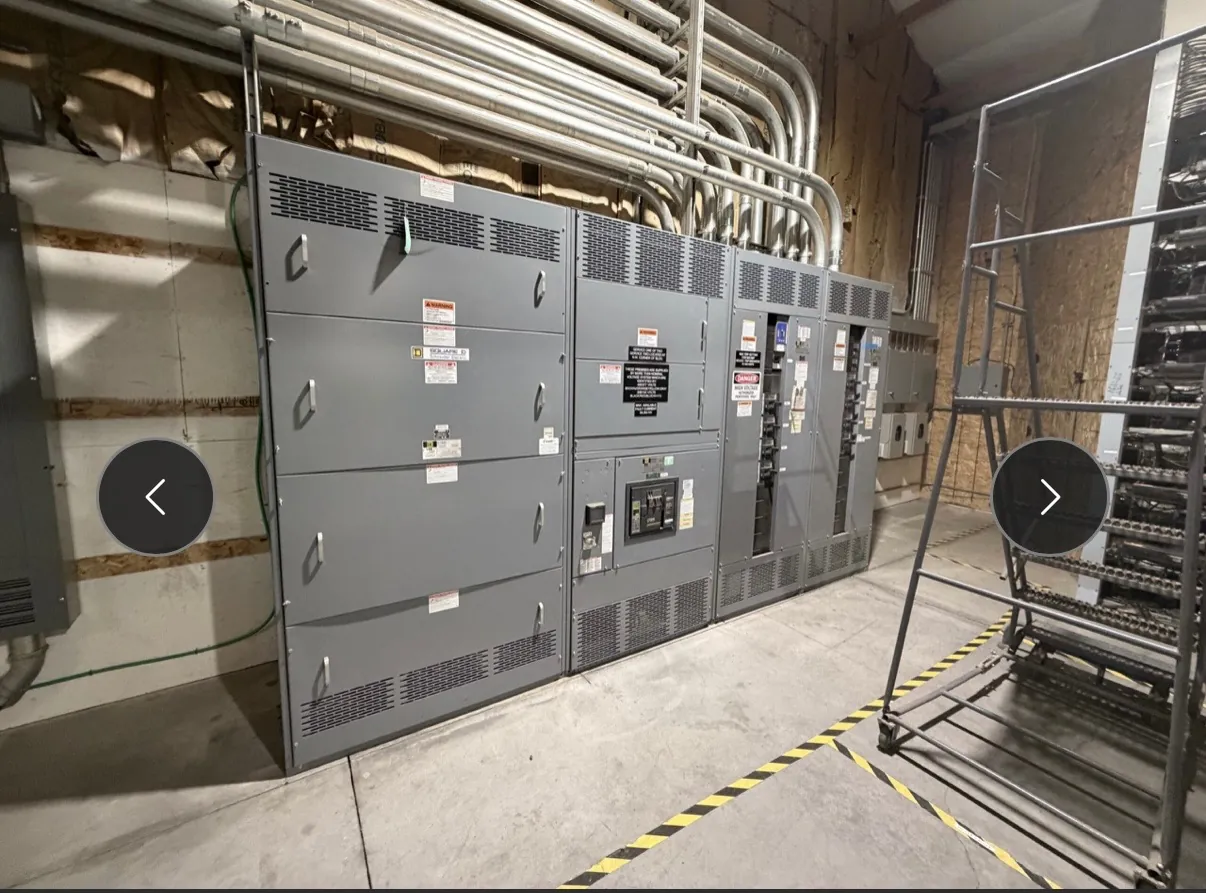
Utility Interconnection Planning for Carson City Projects
Utility distribution work in Carson City begins with the serving utility’s requirements for the specific service—not with a generic switchgear specification. Before selecting an assembly, the project team should establish the service point, ownership boundary, available fault-current information, metering arrangement, and the utility’s review and acceptance process. These details determine how utility conductors connect to customer equipment and where metering, isolation, protection, and grounding provisions belong.
Requirements can differ by service type, project scope, and the utility’s current standards. A replacement, service expansion, new facility, or distributed-energy interconnection may involve different reviews. The owner, electrical engineer, contractor, and utility should resolve those distinctions early. Our U.S.-built assemblies use all-American components, are custom manufactured for the project, and ship nationwide; project-specific engineering and utility acceptance still depend on the approved design and applicable requirements.
Metering, Protection, and the Ownership Boundary
Metering requirements affect enclosure layout, compartment access, instrument-transformer provisions, and the interface between utility and customer equipment. Confirm whether metering is utility-furnished, customer-furnished, or coordinated through another arrangement, and obtain the utility’s requirements for compartments, wiring routes, sealing provisions, and access. Do not assume a metering configuration from another site will be accepted at a Carson City service.
Protection must also match the actual system and the utility’s approved coordination approach. The engineer needs available fault-current data, protective-device information, grounding details, and the intended operating configuration to evaluate equipment ratings and protection settings. Interrupting or withstand ratings are not the same as nominal system voltage; neither should be inferred from a broad description such as “utility service.” Final ratings and device selections require confirmation against project data and qualified engineering review.
Grounding and Equipment Interfaces
Grounding provisions should be coordinated across the service equipment, facility grounding system, utility connection, and any separately derived sources. The design team should identify the grounding method, neutral treatment, bonding points, and how conductors enter and terminate at the assembly. These decisions influence bus arrangements, compartment dimensions, terminal locations, and the information needed for shop drawings. Changes made late in design can affect both layout and review timing.
Other interfaces matter as well: incoming conductor material and size, lug requirements, cable or bus connection, control wiring, communications, and physical separation between utility and customer sections. Available room, routing access, wall and floor conditions, ventilation, and the planned installation sequence can constrain enclosure dimensions and placement. Carson City sites vary, so site measurements and contractor coordination—not assumptions about local facility conditions—should guide the final configuration.
Carson City Permits, Inspection, and Utility Review — Utility Switchgear in Carson City, NV
Permit and inspection steps depend on the installation, jurisdiction, scope of work, and applicable code requirements. The project team should identify the authority having jurisdiction and confirm the required electrical permit, plan-review documents, inspection stages, and closeout records for the particular address and scope. Separately, the serving utility may require service applications, drawings, equipment data, or approval before connection. A permit, inspection, or utility review is not a substitute for the others, and their sequence should be confirmed with the responsible parties.
Coordinate submittal timing so utility comments, engineering revisions, equipment drawings, and field construction schedules remain aligned. Clarify who submits each document and who resolves comments. Utility acceptance criteria can affect compartments, labeling, access, metering provisions, and connection details; these items should be settled before release for manufacture wherever possible.
Information for a Custom Switchgear Quotation — Utility Switchgear in Carson City, NV
A useful quotation request gives the manufacturer and engineer enough information to evaluate the intended assembly without treating unknowns as settled. Include the one-line diagram, service characteristics, available fault-current data, equipment schedule, metering and protection requirements, grounding approach, conductor entry and termination details, and any utility standards or written review comments. Identify indoor or outdoor placement, environmental conditions, access limitations, and the expected installation sequence.
Also state which party supplies metering components, protective devices, control wiring, and field connections. If a utility requirement or site condition is still pending, mark it as unresolved rather than selecting a substitute by assumption. Complete inputs help expose design dependencies early and support a more dependable manufacturing schedule; short lead times may be supported, but timing depends on the approved scope, component selection, and outstanding reviews.
Manufacturing and Acceptance Coordination
After requirements are established, the custom assembly can be developed around the approved electrical design, interface dimensions, and project documentation. Applicable construction standards depend on the product type: UL 891 applies to applicable low-voltage switchboards, not universally to all switchgear or to medium- and high-voltage equipment. Any requested listing, rating, or acceptance requirement must be confirmed for the specific product and configuration rather than presumed.
Before manufacture, review drawings for utility/customer boundaries, metering access, terminations, protection, grounding, and physical fit. The project engineer remains responsible for electrical design and site suitability, while the utility and relevant authorities determine their own review and acceptance requirements. Early, documented coordination helps prevent mismatches between the approved service, the manufactured equipment, and Carson City field conditions.