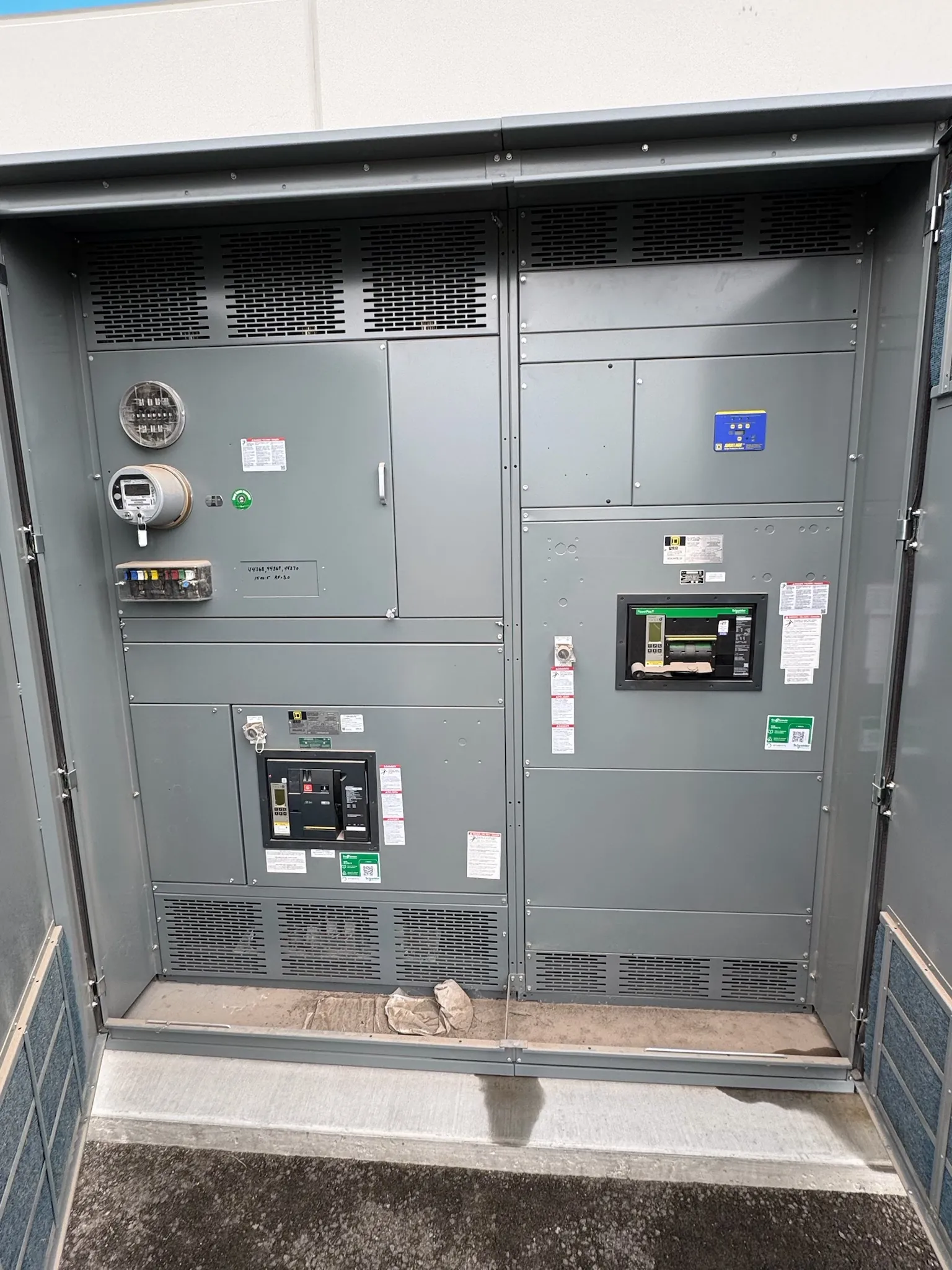
High-Voltage Substation Switchgear for Carson City Projects
High-voltage switchgear for a Carson City installation is selected around the electrical system it must serve—not a citywide default specification. Substation equipment may connect a utility source to transformers, feeders, or other parts of a facility’s power system, with switching and protection arranged for the project’s operating requirements. The system voltage, equipment voltage class, continuous-current rating, and short-circuit withstand or interrupting duties are related but distinct design considerations. They must be established from the utility information and engineering studies for the actual site.
We manufacture new custom power-distribution equipment in the United States using all-American components and ship nationwide, including to Nevada. The exact high-voltage construction available depends on the project’s voltage class, configuration, component requirements, and applicable standards. Early discussion can identify whether the requested scope fits our manufacturing capabilities or requires a different equipment approach.
Voltage Classification and Insulation Coordination — High-Voltage Switchgear in Carson City, NV
A project specification should state the system voltage and the required equipment classification separately. Selecting equipment solely by nominal system voltage can overlook maximum operating conditions, grounding method, transient overvoltage exposure, and the insulation coordination needed at the installation. The engineer of record and utility should confirm the applicable voltage class and insulation levels, including the withstand requirements relevant to the project and its environment.
Insulation choices are tied to more than a nameplate value. They can affect clearances, bushings, terminations, enclosure arrangement, and the interfaces with cables, transformers, or overhead connections. Carson City site conditions and the substation layout should be reviewed as part of that selection. Temperature, elevation, contamination exposure, and available space may influence design requirements; none should be assumed from the city name alone.
Protection, Switching, and Utility Interconnection — High-Voltage Switchgear in Carson City, NV
Switchgear protection must coordinate with the connected system. Relay functions, instrument-transformer interfaces, breaker characteristics, and communication or control requirements depend on the utility’s interconnection criteria and the facility’s protection study. A equipment quotation cannot establish relay settings or prove coordination without the necessary system data and qualified engineering review.
Useful quotation inputs include the one-line diagram, utility service requirements, fault-duty information, grounding details, transformer data, required switching arrangement, and defined control and protection scope. Identify whether the request includes breakers, disconnecting devices, buswork, metering interfaces, protective relays, control wiring, or only specified portions of the assembly. Clear scope boundaries help distinguish manufacturer-furnished equipment from field-supplied components and installation work.
Standards and Construction Must Match the Application
Applicable IEEE or IEC requirements depend on the equipment type, voltage class, intended duty, and project specification. The design team should identify the governing standard and edition, along with any utility-specific requirements. A reference to a standard does not, by itself, establish that a particular construction, rating, or listing applies. UL 891 concerns applicable low-voltage switchboards; it should not be treated as a general qualification for high-voltage substation switchgear.
Construction details also require confirmation. Indoor or outdoor installation, metal-enclosed arrangements, access and maintenance provisions, cable entry, bus configuration, and control-compartment requirements can vary by product and project. Do not assume that a requested arrangement is available until drawings and scope have been reviewed. Ratings, listings, components, and compliance documentation must be confirmed for the specific proposed equipment.
Carson City Permits, Inspection, and Review Coordination
Permitting and inspection steps depend on the installation’s location, ownership, scope of work, and governing authorities. Before equipment release, the project team should determine which building or electrical permit authority has jurisdiction, what plan submittals it requires, and which inspection stages apply. The authority having jurisdiction should confirm local requirements rather than relying on a generic checklist.
Utility review is a separate coordination item. Confirm the utility’s interconnection or service application process, required drawings and studies, equipment acceptance criteria, witness or inspection expectations, and approval milestones. The utility, local authority, owner, engineer, and installing contractor may each have distinct review responsibilities. Their requirements should be reconciled before final design and procurement to reduce the risk of late changes.
Information for a Project-Specific Proposal
For an initial review, provide the project one-line diagram, system and equipment voltage requirements, available fault-duty data, utility specifications, site and installation constraints, preferred standards, protection scope, and target project schedule. Include known permit and inspection requirements, cable or bus interfaces, environmental conditions, and any drawing or document submittal requirements. If some information is pending, identify its source and expected confirmation path instead of treating it as settled.
Our team can review the requested scope and confirm the available construction, ratings, and documentation for a proposed new assembly. Lead time depends on the approved design, component requirements, and project schedule; timing should be confirmed during quotation and order review. Final equipment selection, protection coordination, code compliance, and utility acceptance require review by qualified engineers and the responsible authorities for the Carson City installation.