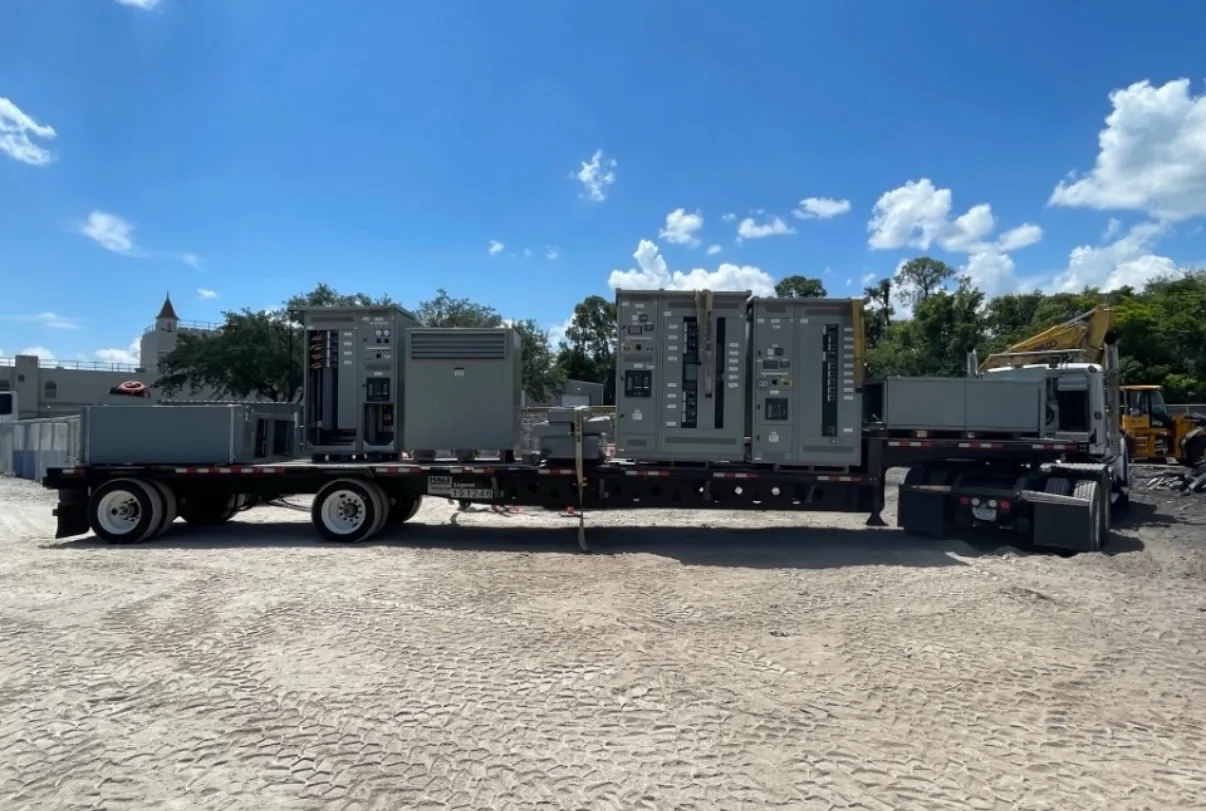
Hospital Switchgear Planning for Boulder City, Nevada
Hospital electrical distribution must support patient-care functions while allowing planned maintenance, testing, and response to a loss of normal power. For a Boulder City project, the switchgear design begins with the facility’s actual loads, the serving utility’s requirements, and the hospital’s essential electrical system—not with a generic equipment lineup. Our U.S.-manufactured assemblies use all-American components, are built in the USA, and can ship nationwide. The final configuration, ratings, listing status, and schedule depend on the project documents and engineering review.
Early design coordination is especially valuable where the electrical service, emergency sources, and distribution equipment have separate procurement or construction packages. Agreeing on interfaces before release helps avoid mismatches in service conductors, protective devices, metering provisions, grounding, and equipment dimensions.
Separate Essential-System Branches and Their Loads
Hospital essential electrical systems are organized into branches with distinct functions and load priorities. The life safety branch, critical branch, and equipment branch serve different categories of loads under the applicable codes and the facility’s approved design. Switchboards, panelboards, transfer equipment, and feeder arrangements must preserve that separation where required; simply placing all emergency loads on one emergency panel does not establish compliance.
The design team should provide a current one-line diagram and branch-by-branch load schedule. Identify which loads are served from normal power, which transfer to an alternate source, and which may be subject to load sequencing or shedding. Include anticipated additions, such as imaging or other major equipment, only when their electrical requirements are defined. The electrical engineer of record determines the required arrangement based on facility classification, applicable codes, and authority review.
Source Transfer and Normal-Power Interfaces
Transfer equipment connects designated loads to an alternate source when normal power is unavailable and returns them to normal service under the approved control scheme. The number and placement of transfer switches affect feeder routing, equipment space, coordination, and the ability to isolate portions of the system for maintenance. A centralized arrangement may simplify some distribution paths, while distributed transfer equipment can place source selection closer to particular loads. These choices require review of the hospital’s operating plan and electrical design.
For Boulder City service design, define the utility interface before releasing the service equipment. Confirm the point of connection, available service information, metering requirements, service conductors, fault-current data, and utility equipment responsibilities with the utility and project team. Also establish the grounding and bonding scheme, including how separately derived sources and transfer equipment are treated. These details influence the switchgear configuration and cannot be inferred from a nominal system voltage alone.
Applying NFPA 99 and NFPA 110 to the Design
NFPA 99 addresses health care facilities and includes requirements relevant to essential electrical systems. NFPA 110 addresses emergency and standby power systems, including equipment and performance considerations for applicable systems. Their provisions must be applied to the project’s facility type, adopted code editions, system classification, and authority having jurisdiction. A product description or equipment rating by itself does not demonstrate compliance with either standard.
Coordinate the electrical engineer’s drawings and specifications with the generator or other alternate-source design, transfer equipment, fuel and control interfaces where applicable, and required monitoring. Confirm which party furnishes each component, control connection, and alarm interface. The engineer and code officials determine applicable requirements; the equipment manufacturer can review the requested assembly and identify configuration questions, but does not replace project engineering or jurisdictional approval.
Ratings, Protection, and Quotation Information
Useful quotation inputs include the approved one-line diagram, system voltage and phase, required continuous-current and short-circuit ratings, protective-device schedule, incoming and outgoing connection details, enclosure and room conditions, metering requirements, and specified listing requirements. Ratings describe equipment capabilities and are not interchangeable with system voltage. Available fault current, equipment coordination, and interrupting or withstand requirements must be established by qualified project professionals.
UL 891 applies to applicable low-voltage switchboards; it should not be treated as a blanket listing for every assembly or as coverage for medium- or high-voltage equipment, busway, or an entire hospital electrical system. Any required listing and the exact product scope must be confirmed for the proposed equipment. Drawings, specifications, and project review determine whether a requested configuration is suitable.
Commissioning, Site Conditions, and Delivery Coordination
Commissioning responsibilities should be assigned before procurement. The project team should identify who verifies installation, feeder and control connections, protective-device settings, transfer functions, alarms, source availability, and required records. Testing and acceptance procedures must follow the approved design, applicable requirements, manufacturer instructions, and facility policies. The engineer of record and commissioning authority establish the test scope and acceptance criteria; the manufacturer’s role is defined by the purchase documents and project coordination.
For a Boulder City installation, confirm the electrical room layout, access route, equipment handling constraints, ambient conditions, and coordination with other trades before finalizing dimensions and shipping plans. Nevada site conditions and construction schedules can affect staging and access, so the contractor should verify them directly. We manufacture new custom power-distribution equipment for sale to customers and ship nationwide. Lead time, final equipment details, and delivery planning are confirmed against the completed scope and project schedule.