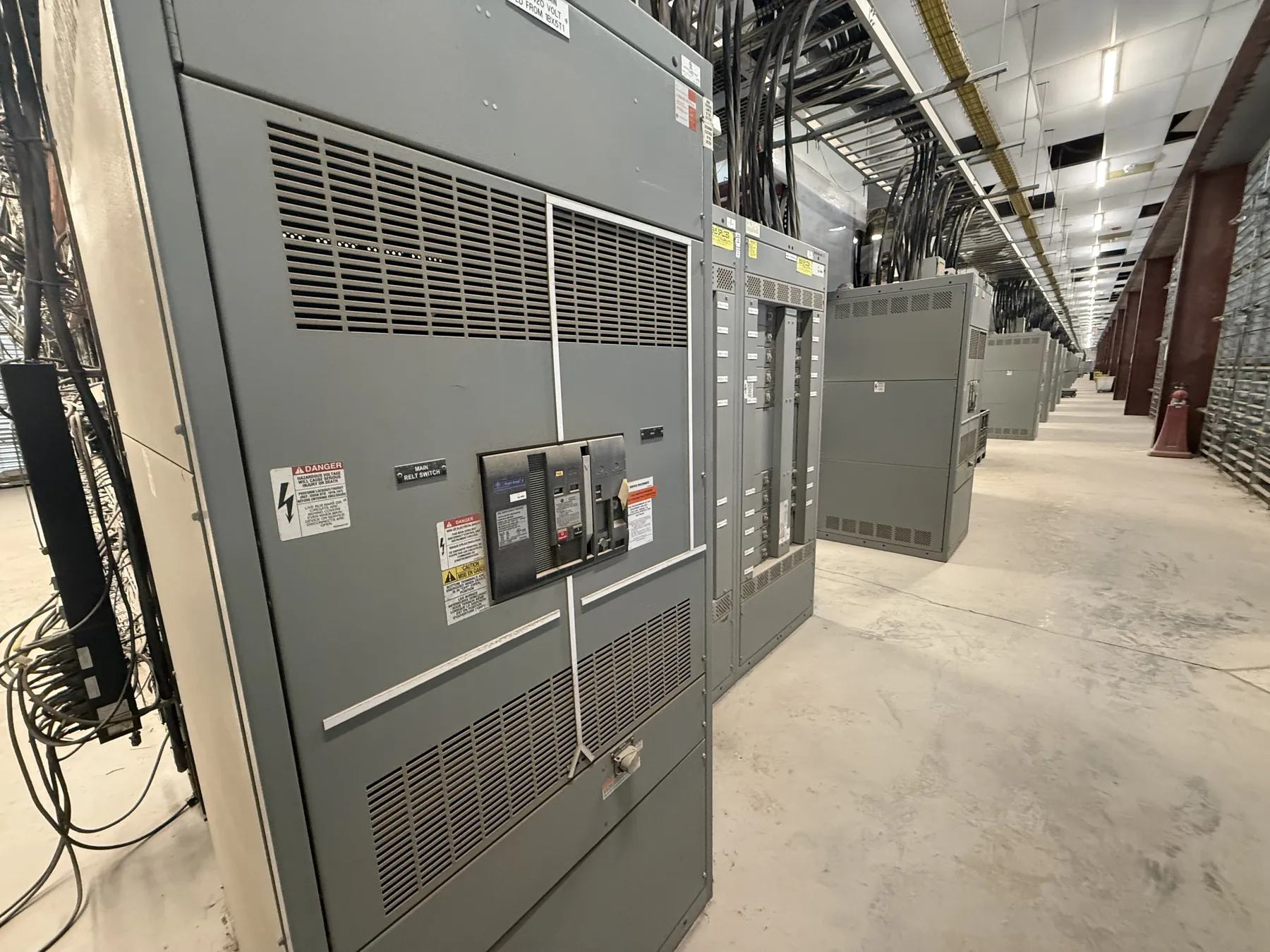
Casino Power Distribution for Boulder City Projects
Casino facilities combine public areas, gaming spaces, food service, lodging or event functions, back-of-house operations, and building systems. Their electrical distribution must make clear which loads need continuity, which depend on emergency power, and which can be treated as general loads. That separation affects switchgear lineup design, feeder assignments, transfer arrangements, metering, and space reserved for future work. For a Boulder City project, these decisions should follow the facility’s operating plan and electrical engineering documents—not a generic casino equipment schedule.
New custom switchgear and power-distribution equipment can be configured around the project’s defined service and load requirements. The manufacturer can provide equipment built in the USA with all-American components, with short lead times as a stated capability and nationwide shipping. Actual scope, ratings, schedule, and suitability depend on confirmed project documents and review by the responsible engineers.
Separate Critical, Life-Safety, and General Loads — Casino Switchgear in Boulder City, NV
Start by establishing load categories with the facility team and design professionals. Life-safety loads are determined by the applicable code, system design, and authority having jurisdiction; they should not be assumed to be interchangeable with operationally critical casino loads. Other loads may be important to business continuity—such as selected communications, security, gaming, refrigeration, or building controls—without belonging to the life-safety system. General loads may be shed or restored according to the facility’s operating strategy.
These distinctions influence which sources feed each distribution section and how circuits are identified. They also affect where transfer equipment belongs and whether separate distribution sections are needed. Combining different functions may simplify some aspects of a lineup, but can complicate isolation, maintenance, or load management. The design team should document priorities, permitted interruptions, and any required separation before equipment configuration is released.
Coordinate Emergency Power and Transfer Interfaces — Casino Switchgear in Boulder City, NV
Emergency-power planning involves more than reserving a breaker. The design must establish the source, transfer method, load sequence, available capacity, and interfaces between the generator or other source, transfer equipment, and downstream distribution. Controls and monitoring points should be coordinated with the facility’s electrical and building systems. Whether loads transfer together or in stages depends on the engineered system and the characteristics of the connected equipment.
For casino operations, phased restoration may help avoid unnecessary simultaneous demand when power returns, but sequencing must be developed and validated by qualified professionals. Identify which loads must be restored first, which may wait, and how the sequence interacts with HVAC, elevators, kitchen equipment, pumps, and other motor loads. Equipment scope should reflect the approved one-line diagrams, control narrative, and source information. Do not rely on a switchgear supplier alone to determine emergency-power adequacy or code compliance.
Define the Boulder City Utility Interface Early
Before releasing the service design, establish the utility point of connection and the requirements for service configuration, metering, grounding, and available fault-current information. Confirm who supplies and installs each interface component, where metering equipment is located, and what utility review or approval applies. Grounding and bonding details must align with the service arrangement and project design; assumptions can affect equipment configuration and coordination.
For Boulder City work, site logistics also belong in early planning. Confirm access to the electrical room, delivery route, staging constraints, equipment-room dimensions, and any restrictions on receiving or moving large assemblies. Existing facilities may have limited outage windows or occupied areas that constrain installation sequencing. These conditions should be communicated to the project team without assuming a particular site layout or local utility requirement.
Plan Phased Maintenance Around Operating Needs
Maintenance planning begins with an understanding of which sections can be isolated and what loads lose service when a section is unavailable. A lineup’s arrangement, bus configuration, feeder grouping, and provisions for future expansion can affect how practical a phased work plan will be. The facility and engineer should identify allowable outage windows, temporary-power needs, affected departments, and dependencies such as security, food service, or building controls.
Physical access matters too. Working space, cable entry, ventilation, room conditions, and clear identification should be coordinated with the building design. Avoid treating a proposed maintenance sequence as a substitute for qualified site-specific planning. The responsible electrical professionals must determine the appropriate work methods and controls for the installation.
Prepare a Complete Equipment Quotation Package
A useful quotation request includes the current one-line diagrams, service characteristics, load schedules, fault-current and coordination information when available, required metering and grounding details, emergency-source and transfer interfaces, enclosure and room conditions, and any specified listing or standards requirements. Include the project schedule, shipping destination in Boulder City, access or receiving limits, and the expected division of responsibilities among the manufacturer, electrical contractor, engineer, and utility.
Ratings, listings, and project-specific details require confirmation. A voltage class is not the same as an equipment rating, and ratings must be selected for the actual application. UL 891 applies to applicable low-voltage switchboards; it does not establish coverage for every switchgear assembly or for medium- or high-voltage equipment. The design team should confirm applicable requirements and requested listings for each product. With that information, the manufacturer can define a custom equipment scope, identify open interface questions, and provide a project-specific quotation for new equipment shipped to Nevada.