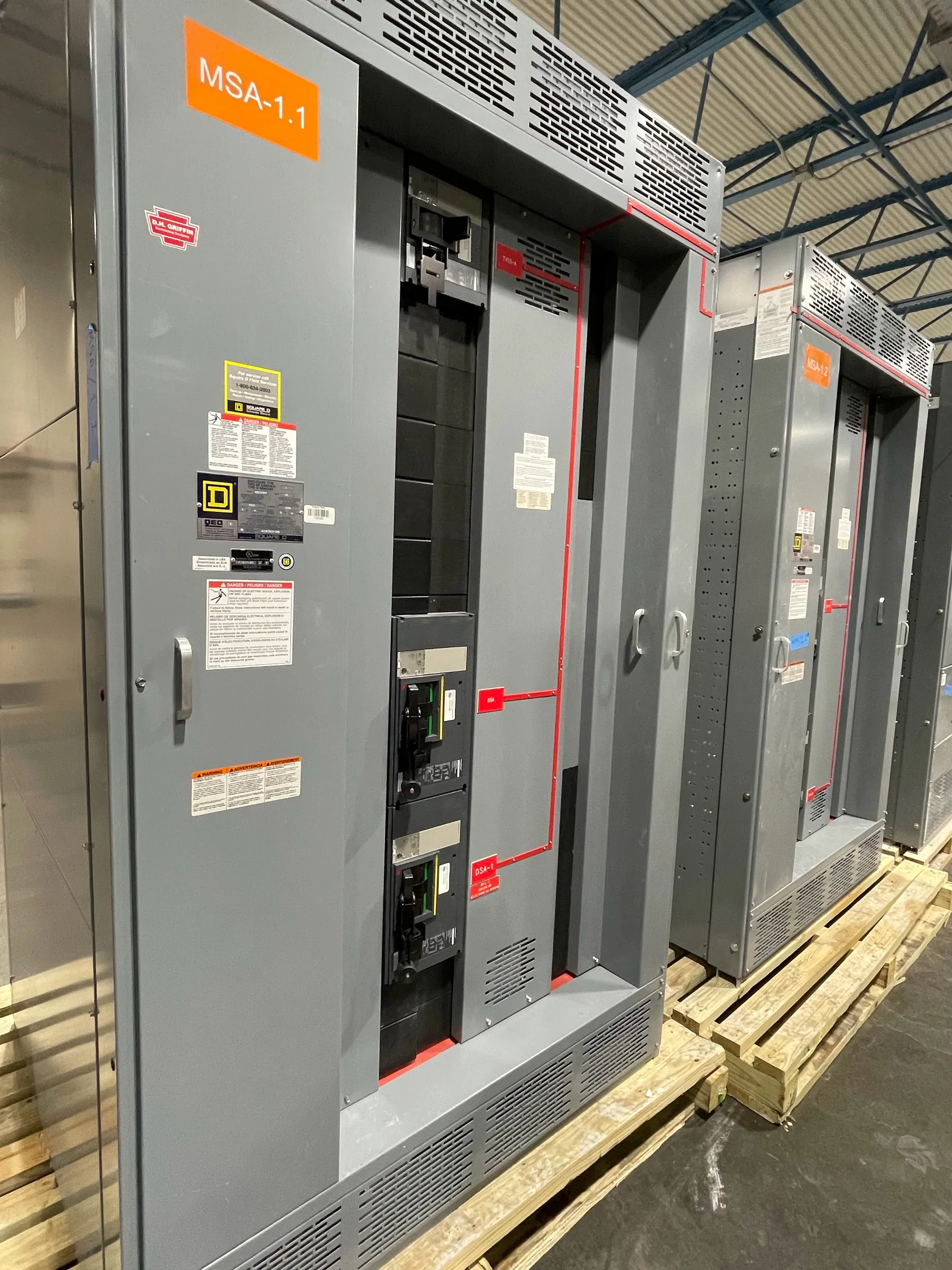
Switchgear Definition for Facility Owners and Project Teams
Switchgear is an arrangement of electrical devices used to switch, protect, and control circuits. Depending on its design, it can connect or disconnect parts of an electrical system, interrupt fault current, and provide a point for monitoring or control. The term describes a family of equipment, not one universal cabinet or standard. A facility may use different switchgear assemblies at different points between its incoming power supply and downstream loads.
For Nevada building owners, contractors, and engineers, the useful question is not simply whether a product is called switchgear. It is what the assembly must do in the specific electrical system, at the installation location, and under the project’s applicable requirements. Design, ratings, construction, and standards vary with voltage, equipment type, and intended use.
How Switching, Protection, and Control Work Together
Switching devices establish or interrupt electrical paths. Protective devices, such as circuit breakers or fuses, respond to specified electrical conditions and are selected to protect circuits and equipment. Control components can provide local or remote operation, status indication, metering, or communication with other systems. These functions may be coordinated within an assembly, but their presence and arrangement depend on the design.
For example, a project may require a main device and multiple feeder devices, while another may need metering, control wiring, or interfaces to a building automation or supervisory system. Each addition affects space, wiring, accessibility, and the information needed for design. Equipment selection and protection settings must be reviewed by qualified electrical professionals against the complete system, rather than inferred from a product name.
Switchgear, Switchboards, and Related Equipment
“Switchgear” is often used broadly in conversation, while terms such as switchboard, panelboard, and motor control center identify more particular equipment types. They are not interchangeable labels. A low-voltage switchboard, for example, is a distribution assembly with its own construction and application requirements. UL 891 applies to applicable low-voltage switchboards; it should not be taken as a blanket standard for every kind of switchgear.
Medium-voltage equipment has different design considerations and applicable standards from low-voltage assemblies. Busway is another distinct product category, even when it connects to switchgear or switchboards in the same distribution system. The project documents should identify the intended equipment type and function so that the quotation, design review, and submittal address the right product.
Ratings and Construction Depend on the Application
An equipment rating is not the same thing as system voltage. Voltage, continuous current, short-circuit capability, enclosure requirements, and other ratings describe different aspects of suitability. The correct values depend on the electrical system and installation conditions. A rating shown for one component or assembly should not be assumed to apply to another configuration, or to establish that the complete assembly is appropriate for a particular site.
Construction choices can include the arrangement of mains and feeders, breaker or fuse selection, bus configuration, metering, control provisions, and enclosure details. Engineers also consider the available fault current, protective-device coordination, grounding approach, environmental exposure, and how the equipment connects with upstream and downstream devices. Required clearances, room access, cable entry, and maintenance space can constrain the physical layout. These details need project-specific review.
Coordination and Site Information Before Selection
Protection coordination is the study of how devices respond to faults across connected portions of a system. The goal and acceptable settings depend on the project’s design criteria and applicable requirements. A switchgear quotation alone cannot establish coordination, arc-flash results, code compliance, or suitability for a site. Those determinations require qualified engineers, reliable system data, and review of the installation and connected equipment.
Useful quotation inputs include the one-line diagram, equipment type and function, system voltage, requested ratings, incoming and outgoing connections, protective-device preferences, metering or control interfaces, enclosure conditions, and project specifications. Available fault-current information and any required submittal documents also help define the scope. For Nevada installations, the project team should account for the actual facility environment and logistics, including equipment-room dimensions, access routes, and site-specific exposure conditions, rather than relying on assumptions based on location alone.
Custom-Built New Equipment and Project Fit
A custom assembly is developed around the documented application, not selected solely by matching a general term or a single rating. A U.S. manufacturer can review project requirements, clarify design inputs, and build new equipment to the confirmed scope. This manufacturer uses all-American components, builds in the USA, supports short lead times, and ships nationwide, including to Nevada. The actual schedule and configuration depend on the finalized design and project requirements.
Before an order is placed, confirm the equipment classification, ratings, applicable listing requirements, interfaces, and submittal expectations with the project’s electrical professionals and manufacturer. Clear inputs help keep the proposed assembly aligned with the system it must serve, while leaving engineering decisions grounded in the full design and site review.