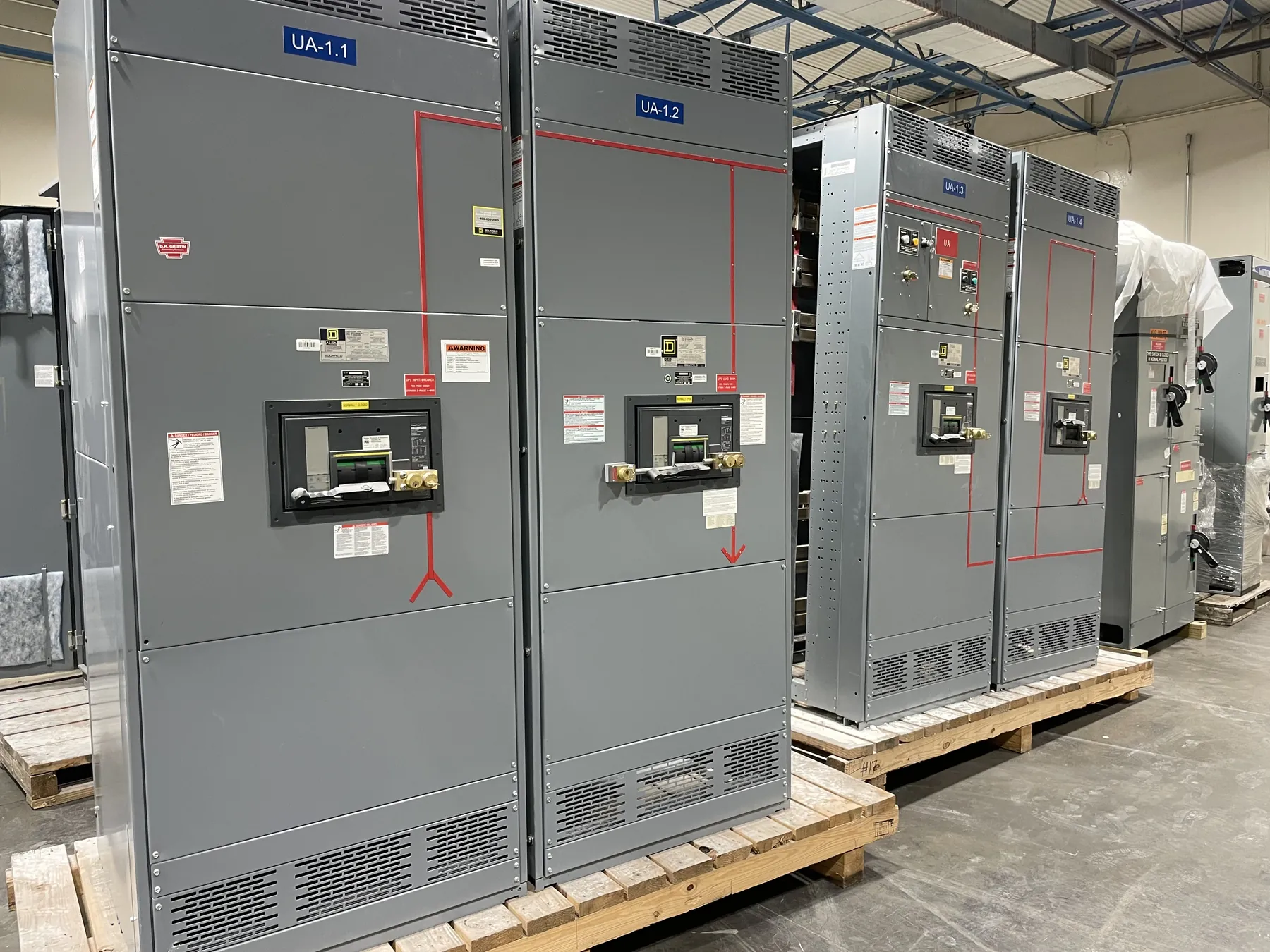
Short-Circuit Current Rating: What the Assembly Can Withstand
Short-circuit current rating, commonly abbreviated SCCR, describes the specified ability of an electrical assembly to withstand the effects of a short-circuit current under stated conditions. It is an assembly-level rating, not simply a label for the current a facility normally uses. A fault can produce current far above normal operating levels, creating intense mechanical and thermal stresses. The SCCR indicates a defined withstand capability when the assembly is properly applied with the protective device and system conditions considered in its evaluation.
For a switchboard or other power-distribution assembly, SCCR helps engineers determine whether the equipment is suitable for the available fault current at its intended installation point. It does not predict how often a fault will occur, nor does it mean the assembly can carry that fault current continuously. The rating must be read in context: equipment configuration, protective-device conditions, system voltage, and applicable product requirements all matter.
SCCR Is Not a Breaker Interrupting Rating
A breaker’s interrupting rating addresses the maximum short-circuit current that the breaker is designed and evaluated to interrupt at a specified voltage. SCCR, by contrast, applies to the assembly’s ability to withstand short-circuit effects under its stated conditions. These ratings relate to the same fault event but describe different capabilities.
A breaker with a high interrupting rating does not automatically give the entire switchboard an equally high SCCR. The assembly includes bus, supports, connections, devices, and other components whose performance must be considered as part of the equipment. Likewise, an assembly SCCR is not a substitute for checking the interrupting rating of the overcurrent protective device. Both values, along with the conditions under which they apply, need review.
Available Fault Current and the Installation Point
Available fault current is the current that the electrical system could supply at a particular point during a fault, based on system sources and impedance. It can differ between locations in the same facility, and system changes can affect it. An assembly selected for one location should not be assumed suitable at another simply because the nominal system voltage is the same.
For a project in Nevada, the design team should provide the installation location within the distribution system and the available fault-current information established for that point. Facility conditions also matter to equipment selection and layout: indoor or outdoor placement, environmental exposure, physical clearances, access, and the planned connection arrangement may affect the proposed assembly. These factors do not establish an SCCR by themselves, but they help define the equipment and installation conditions that engineering must assess.
Protective Devices, Series Combinations, and Coordination
Some equipment ratings depend on a specific upstream protective device or a tested combination of devices. Where a series rating or other conditional application is proposed, the exact device types, ratings, arrangement, and application conditions must match the documentation for that combination. A general statement that a breaker is “current limiting” is not enough to establish that a particular assembly has the required rating.
Coordination is a related but separate design concern. Protective-device coordination considers how devices respond to faults and overloads so that the intended device operates where practicable. SCCR establishes a withstand capability under specified conditions; it does not, by itself, show which device will trip first, guarantee continuity of service, or resolve the project’s coordination requirements. Engineers must review both fault withstand and protective-device behavior against the facility’s design objectives.
Information Needed to Specify or Quote an Assembly
When requesting custom switchgear or power-distribution equipment, provide the system voltage, the required assembly type and configuration, the available fault current at the intended location, and the protective-device information available to the design team. Include the distribution arrangement, feeder and main-device requirements, connection details, and relevant environmental or space constraints. Drawings, load information, and project specifications can help clarify interfaces and reveal conflicts before equipment details are finalized.
These inputs support a review of the requested SCCR, but they do not replace engineering confirmation. If the available fault current is unknown, identify that gap rather than substituting a guessed value. The project’s qualified electrical engineers should establish or verify the fault-current data and determine whether the proposed equipment and protective-device arrangement are suitable. Ratings, listings, and project-specific details require confirmation for the actual design.
Reading SCCR as Part of Equipment Selection
Compare the assembly’s marked or documented SCCR with the available fault current at its installation point, while checking voltage and any stated protective-device conditions. Do not compare numbers in isolation or treat a component rating as proof of the complete assembly’s capability. For low-voltage switchboards, UL 891 applies to relevant switchboard requirements; it should not be read as a blanket standard for every type of switchgear or for medium- or high-voltage equipment.
A manufacturer can use project information to develop a new custom assembly and clarify which design details remain subject to review. U.S.-built equipment using all-American components can be shipped nationwide, including to Nevada, but sourcing and shipping do not establish technical suitability. The responsible engineering review must confirm the applicable rating, listing status, system conditions, and installation requirements before the equipment is specified for a facility.