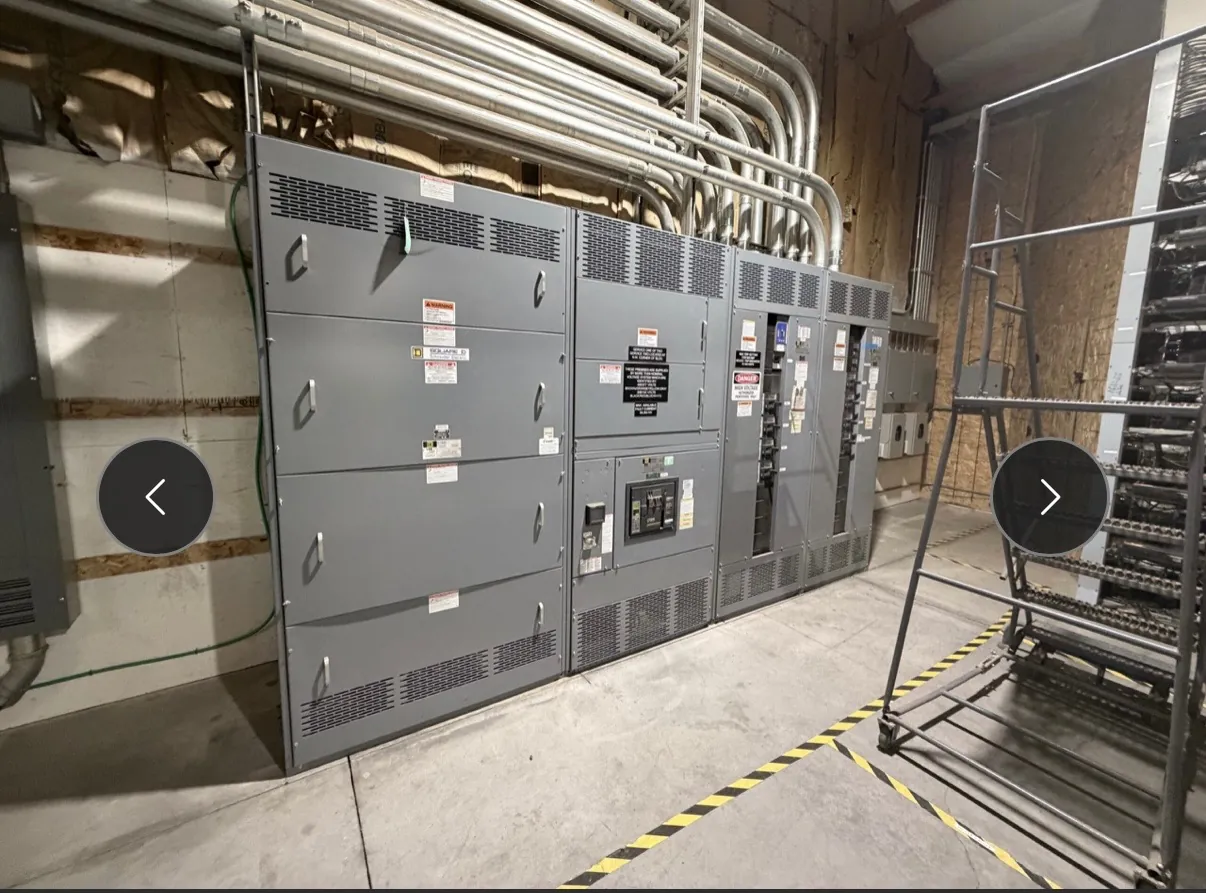
What “Medium Voltage” Means in Power Distribution
Medium voltage describes an equipment class used to distribute electrical power at voltages above the low-voltage range found in common building distribution systems. The term does not establish one universal dividing point: its precise meaning depends on the applicable standard, equipment type and project context. A voltage sometimes described as medium voltage in one setting may be categorized differently in another. For that reason, a project should identify actual system voltage and the governing equipment standard rather than rely on the label alone.
In a distribution system, medium-voltage equipment can receive power from a utility or another source, control and protect circuits, and feed transformers or downstream equipment. It is distinct from low-voltage switchboards and from the low-voltage systems supplied by a transformer. The dividing line is not just terminology; it affects insulation design, switching devices, protective functions, clearances, interfaces and the engineering information needed to select equipment.
System Voltage Is Not the Same as an Equipment Rating
System voltage describes the electrical conditions of the power system, including its nominal operating voltage and relevant voltage-to-ground relationships. Equipment ratings describe limits and capabilities assigned to particular components or assemblies under defined conditions. A rating cannot be substituted for the project’s system voltage, nor does a voltage label by itself establish that equipment is suitable for a particular installation.
Designers must consider how the system is grounded, the expected operating conditions and the equipment’s applicable ratings. Insulation requirements depend on more than nominal voltage: they relate to the electrical stresses the insulation must withstand and the equipment’s construction. The chosen switching and protective equipment also needs to match the system and the duty expected at its installation point. Qualified engineers should confirm these selections using project documents and site-specific conditions.
Insulation, Switching and Protection Are Interconnected
Insulation separates conductive parts from one another and from grounded surfaces. Its design is tied to the equipment class, construction and applicable standard. Enclosure arrangement, internal barriers, clearances and the way cables enter or connect to the equipment can all influence the design. These are not details that can be resolved by choosing a voltage category in isolation.
Switching and protection choices are similarly interdependent. The system’s available fault current, protective-device characteristics and coordination with upstream and downstream equipment affect what devices and ratings are appropriate. Protection must respond to the intended conditions while fitting the broader system design. A device’s interrupting capability, for example, is a distinct consideration from its continuous-current rating. The engineering review should evaluate these characteristics together rather than treat one rating as proof of overall suitability.
How Medium-Voltage Gear Relates to Other Equipment
Medium-voltage assemblies commonly interface with incoming utility or source connections, cables, transformers, control and protection systems, and downstream low-voltage distribution. Each interface raises practical questions: where cables enter, how they terminate, what signals or controls must connect, and how equipment dimensions fit the electrical room or outdoor installation. A transformer, for instance, links voltage classes, but its primary and secondary conditions must be reflected in the equipment and protection design on both sides.
Medium-voltage switchgear should not be confused with a low-voltage switchboard. UL 891 applies to applicable low-voltage switchboards; it is not a general standard for medium-voltage switchgear. The governing standard depends on the equipment and intended application. Listings and certifications also apply only within their stated scope, so the project team should verify the exact product, configuration and applicable requirements instead of assuming that a standard or listing covers every assembly.
Information Engineers Need to Specify or Quote Equipment
A useful specification or quotation request gives the manufacturer enough context to evaluate the proposed assembly. Key inputs include nominal system voltage, grounding method, frequency, continuous-current requirements, available fault-current information and the intended protection scheme. The request should also identify the number and purpose of circuits, incoming and outgoing cable arrangements, control-power needs, metering or communications interfaces, and any required integration with transformers or existing equipment.
Physical and environmental conditions matter as well. Provide available room dimensions, access and cable-routing constraints, indoor or outdoor location, ambient conditions and any project-specific enclosure requirements. Include one-line diagrams, equipment schedules and applicable owner or utility requirements when available. Missing or conflicting inputs can affect equipment selection, layout and scope, so assumptions should be identified and confirmed before design is finalized. A manufacturer can review the requested configuration, but engineering suitability requires qualified review of the complete system and site conditions.
Why the Applicable Standard and Site Review Matter
“Medium voltage” is a useful equipment-class term, not a complete specification. The actual system voltage, insulation design, protective-device characteristics, ratings, construction and applicable standard determine whether a proposed assembly fits the project. Those details also shape coordination with connected equipment and the physical installation.
For Nevada facilities, project teams should account for the actual building or site conditions, utility interface, equipment-room access and cable routes. Custom equipment built in the United States with all-American components can be shipped nationwide, including to Nevada; shipping location does not replace local engineering review. Ratings, listings, configuration and project requirements should be confirmed for each application, with decisions made by qualified electrical engineers familiar with the system and installation.